

To become a recruiter, you must be interested in a dynamic career that combines business acumen and a passion for helping people. This will enable you to match skilled candidates with suitable companies while ensuring an efficient hiring process.
Demand for recruiters stays strong. More than half of U.S. HR leaders plan to increase permanent headcount, according to Robert Half, while nearly 6 in 10 HR leaders say finding skilled HR professionals is harder than before. This creates opportunities for people looking to start a career in recruitment.
Contents
What is a recruiter?
What does a recruiter do?
What qualifications do you need to become a recruiter?
A recruiter’s salary
How to become a recruiter in 8 steps
How to become a recruiter with no experience
FAQ
What is a recruiter?
A recruiter connects employers looking to hire and potential employees looking to be hired. They source, identify, screen, and interview candidates, negotiate benefits and salaries with them, and guide candidates throughout the application process.
Recruiters generally work in-house or for external recruitment agencies. Companies employ internal recruiters to help them fill open positions, while staffing agencies hire external recruiters or headhunters to recruit candidates for various clients.
A recruiter’s role within a Human Resources (HR) team varies, depending on company size or structure. Small companies may manage the entire hiring cycle, from sourcing and screening candidates to making job offers. Due to limited resources, recruiters in these companies may use free resources and employee referrals to find applicants.
Recruiters at medium-sized enterprises may have specialized functions. They perform duties like sourcing candidates or conducting initial interviews. They also work with HR managers on more extensive talent acquisition initiatives, like developing employer branding strategies or participating in career fairs.
In large organizations, recruitment involves more specific functions, such as sourcing, screening, and interviewing job seekers. Those responsible for these functions may be recruitment specialists who collaborate with HR managers to fine-tune recruitment procedures. For example, if you’re a recruiter at a tech company, you may concentrate on sourcing candidates with specific tech skills.
As a recruiter, your career path can lead to more senior roles, including:
- Senior recruiter or team leader: This person typically handles a team of recruiters, delegates tasks, and ensures the team meets its hiring goals.
- Recruiting manager: This is a middle-management role that entails managing the recruitment budget, leading the recruitment function, or handling complex hires.
- Recruiting or talent acquisition director: This is a senior position that reports to the VP of HR and is responsible for the company’s overall recruitment strategy and direction.

What does a recruiter do?
Acting as a headhunter for one organization or different clients, a recruiter’s job involves strategic planning, administrative duties, and interpersonal communications.
A recruiter’s responsibilities usually include:
- Collaborating with hiring managers to understand the qualifications and requirements for open positions, such as skills, experience, and culture fit
- Crafting job descriptions that accurately reflect available vacancies
- Posting job listings on the company’s career pages, job boards, and social media platforms
- Sourcing candidates by searching job boards and online databases, attending industry events, using LinkedIn, and looking through employee referrals
- Contacting suitable candidates by phone, email, or direct message to gauge their interest
- Screening applications to shortlist candidates with relevant qualifications and experience
- Conducting initial interviews with candidates to evaluate their skills and suitability and joining panel interviews to assess applicants’ skills, experiences, and qualifications
- Participating in salary and benefits negotiations with selected candidates
- Assisting with the onboarding process to ensure a smooth transition for new hires
- Staying informed about labor industry trends, salary benchmarks, and employment laws in order to make informed hiring decisions
- Contributing to employer branding initiatives that enhance the company’s image in potential candidates’ eyes.

What qualifications do you need to become a recruiter?
You do not need a specific degree to become a recruiter. Many employers prefer a bachelor’s degree in HR, business, psychology, or a related field. However, requirements vary by employer, and relevant experience and practical recruiting skills can also help you qualify. Many successful recruiters move into the field from sales, customer service, or administrative roles.
Common ways to qualify as a recruiter include:
- A bachelor’s degree in HR, business, or psychology, which helps but is not always required
- A recruiting or HR certificate program, which helps you develop practical recruitment skills
- Transferable experience from sales, customer service, or HR support roles
- Confidence with an applicant tracking system (ATS), LinkedIn, and sourcing tools.
Recruiting combines sourcing, screening, communication, and relationship-building. Developing those skills gives you a stronger foundation to manage the hiring process and progress in your recruitment career.
AIHR’s Sourcing & Recruitment Certificate Program helps you learn how to:
✅ Run structured job intake conversations and define clear hiring requirements
✅ Source and engage candidates using proven channels and search techniques
✅ Apply screening methods and assessments to identify best-fit candidates
✅ Build employer branding and use recruitment data to improve hiring outcomes
💡 Explore AIHR’s Demo Portal to preview lessons and see how you can build practical recruiting skills.
A recruiter’s salary
How much a recruiter earns depends on experience, industry, education, and location. According to the U.S. Bureau of Labor Statistics, the median annual salary for human resources specialists, a category that includes recruiters, is $75,940.
Indeed reports an average recruiter base salary of approximately $73,330 per year in the U.S. Meanwhile, Glassdoor estimates median total annual pay at around $109,000, including additional compensation. These estimates use different pay measures and aren’t directly comparable.
Location also affects earnings. Glassdoor estimates median total annual pay for recruiters at approximately $110,000 in Chicago and $134,000 in New York City.
According to Zippia, Massachusetts, California, and Washington offer some of the highest average recruiter salaries in the U.S., while South Dakota ranks among the lowest-paying states.
Industry can make a difference, too. BLS data shows that HR specialists working in government and professional, scientific, and technical services generally earn more than those working in healthcare, social assistance, and employment services.
How to become a recruiter in 8 steps
Interested in becoming a recruiter? Here’s how:
Step 1: Get educated and certified
While no specific educational background is needed to work as a recruiter, most recruiters have a degree in HR, business administration, psychology, or a related field.
You also don’t necessarily need a bachelor’s degree. A good way to learn recruiting from scratch is through an HR certificate program, which teaches practical recruitment skills. You can develop your HR and recruitment skills through programs like these:
- Sourcing & Recruitment (AIHR): Learn about candidate sourcing and screening, employer branding, and the entire hiring process.
- Strategic Talent Acquisition (AIHR): Learn about talent acquisition strategy, sprint recruiting, candidate experience, and recruitment analytics.
- Certified Professional (SHRM-CP): Build knowledge of general HR practices, including recruitment, employee relations, and HR operations.
- Certified People Sourcing Professional (Sourcing Certifications): Learn sourcing techniques critical to effective recruitment practices.
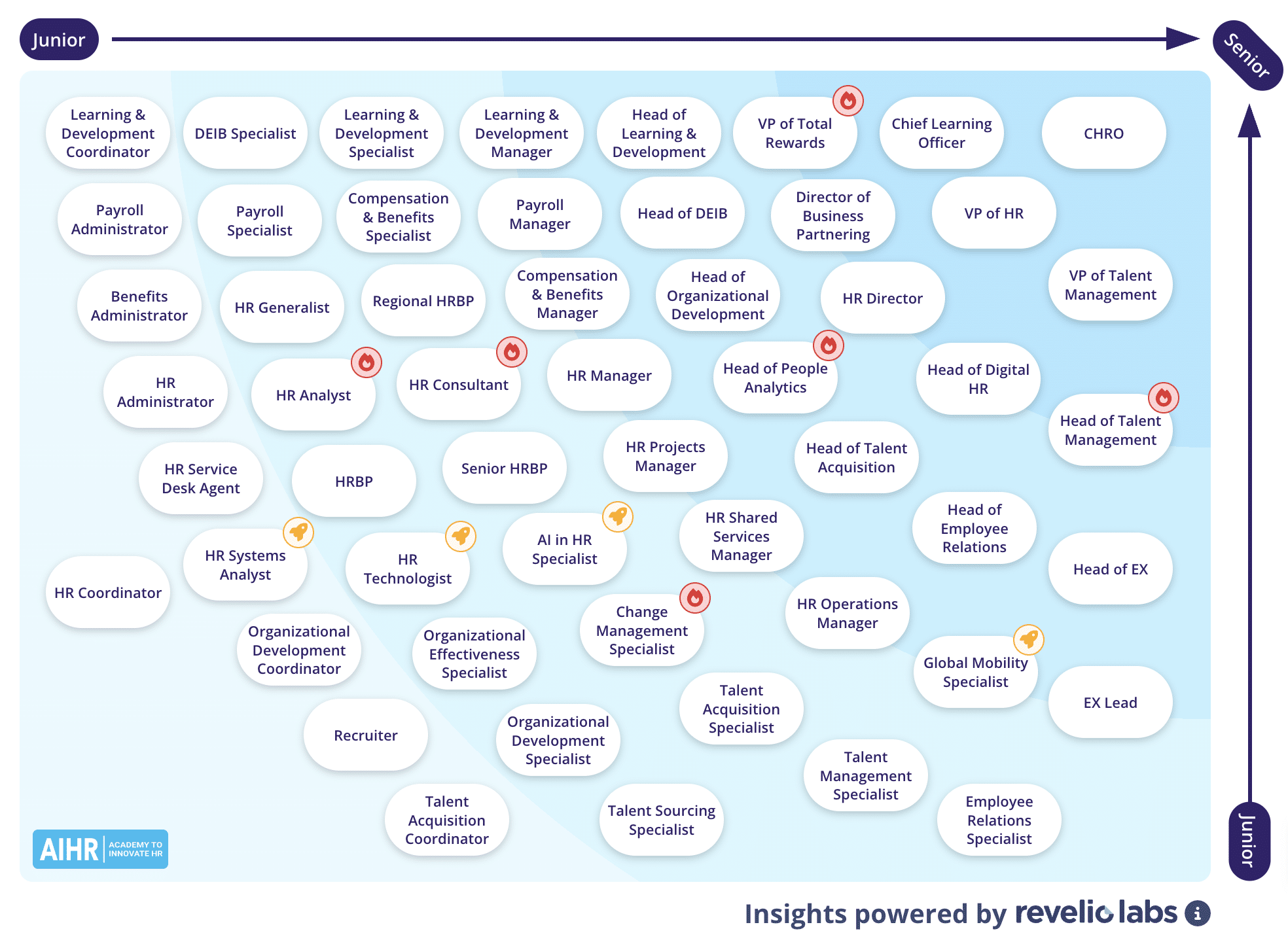
AIHR has a practical career map tool to view the various HR positions and to help you plan your career path.
Step 2: Develop recruiting skills
To be a successful recruiter, you must have the following set of skills:
1. Communication
- Write compelling job postings to attract top talent
- Explain job descriptions and company culture to candidates
- Ask insightful questions during interviews to assess candidates’ skills
- Give feedback to both candidates and hiring managers.
2. Sourcing
- Identify the best talent using job boards, professional networks, social media platforms, or employee referrals
- Understand candidate personas by determining the ideal candidate’s background, skills, and motivations to help target sourcing efforts.
3. Screening
- Review résumés and cover letters to evaluate candidates’ skills and experience quickly and whether these align with the job description
- Conduct phone interviews to discuss candidates’ qualifications and shortlist the best applicants
- Using personality and skill assessments to evaluate each candidate’s suitability for an open role
- Conduct background and reference checks.
4. Interviewing
- Ask candidates questions about their experience to determine their strengths and weaknesses
- Practice active listening and closely observe their answers and nonverbal cues
- Build rapport so candidates feel comfortable sharing their work experiences and asking questions.
5. Employer branding
- Develop a strong employer value proposition (EVP)
- Establish and maintain a strong social media image by showcasing company culture, employee stories, and career opportunities
- Create positive word-of-mouth about your company as a desirable employer.
6. Interpersonal
- Help candidates feel comfortable sharing their experiences and goals
- Understand the hiring manager’s needs and find the perfect candidate based on the role’s requirements
- Foster relationships with professionals in your network to help source potential candidates.
7. Organizational
- Manage several job openings at different stages of the hiring process
- Monitor candidate applications, résumés, and interview notes
- Meet deadlines and stay on top of hiring timelines
- Utilize project management tools to help you prioritize tasks and maximize efficiency.
8. Negotiation
- Secure a competitive salary and benefits package for the candidate
- Answer questions and concerns the candidate has about the offer
- Draft a job offer that satisfies both the employer and the candidate.
9. Technical
- Use an Applicant Tracking System (ATS) to manage applicants and schedule interviews
- Use social media to build employer branding and source candidates
- Use video conferencing tools to conduct remote interviews
- Use job boards to post job openings.
You can acquire these skills through hands-on experience, training programs, workshops, and online HR courses.
Step 3: Understand employment laws and regulations
Recruiters need to understand employment laws to ensure fair hiring practices and avoid legal risks. In the U.S., several federal laws protect job applicants from discrimination.
For example, Title VII of the Civil Rights Act of 1964 prohibits discrimination based on race, color, religion, sex, and national origin. The Age Discrimination in Employment Act of 1967 protects applicants aged 40 and older, while the Americans with Disabilities Act protects applicants with disabilities.
The Pregnancy Discrimination Act of 1978 also prohibits discrimination based on pregnancy, childbirth, or related medical conditions.
To stay informed, recruiters can consult the U.S. Equal Employment Opportunity Commission (EEOC) for guidance on federal anti-discrimination laws and fair hiring practices.
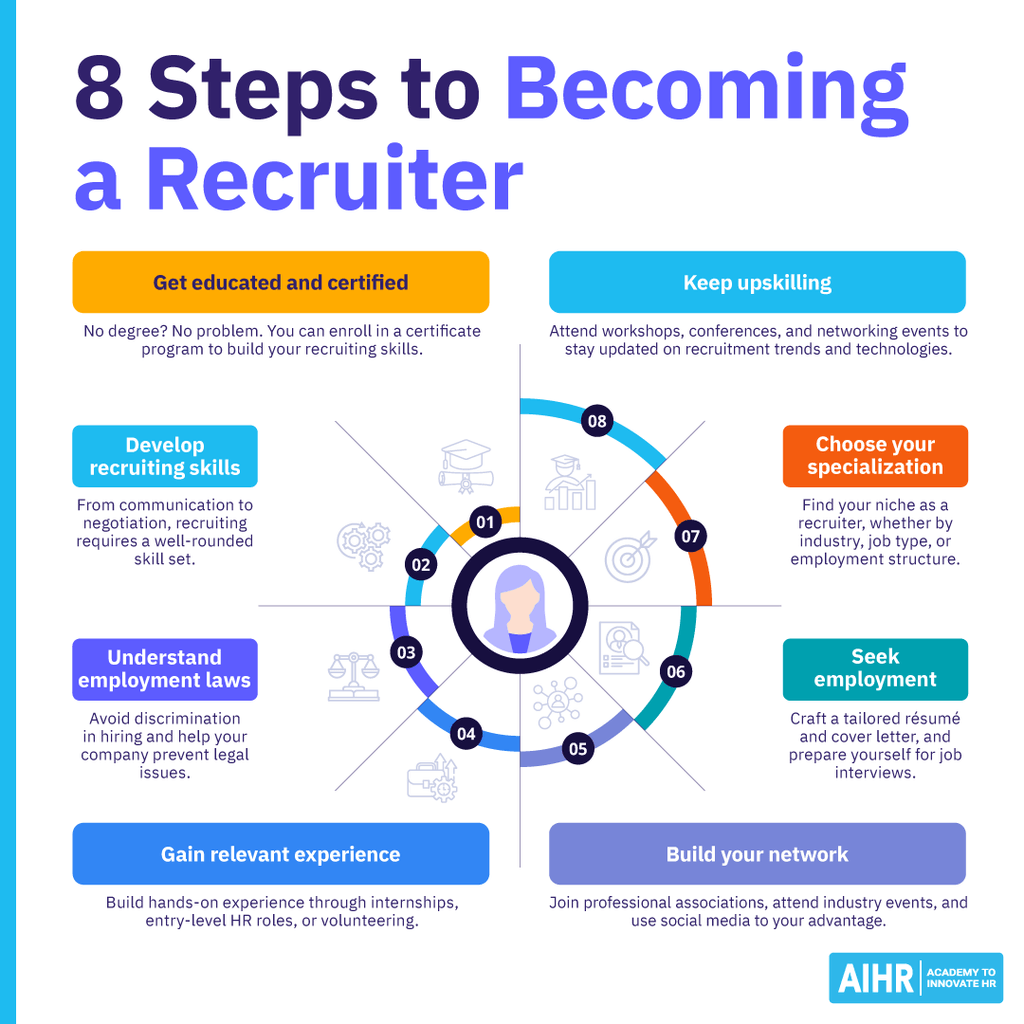
Step 4: Gain relevant experience
Any professional experience in HR, communications, customer service, or sales can help you to become a recruiter. Skills gained in these areas will assist you in developing networking, relationship-building, and interviewing skills.
Start with an HR internship to learn the basics of job posting, interviewing, and employee management. You can also volunteer to assist recruiters in your company, a non-profit, or a community organization. If you are able, work as a recruiting coordinator or in a similar position to understand the hiring process.
Step 5: Build your network
Networking is crucial in recruiting. It can help you expand your network and connect with potential candidates and clients. One way to get started is to join professional organizations and associations like the American Staffing Association (ASA), National Association of Personnel Services, and NPAworldwide.
You should also attend recruitment and staffing-related industry events and build relationships with recruitment professionals to access more job opportunities, employers, and clients. In addition, you can leverage social media platforms like LinkedIn to connect with candidates and other industry professionals.
Step 6: Seek employment
Once you have gained the relevant skills and experience, you can apply for recruiting positions with companies, staffing agencies, or executive search firms. Your résumé should include all your relevant skills, experience, certifications, and credentials. Carefully read each job description and customize your résumé and cover letter to match the employer’s requirements.
List all your recruitment-related work experience, including internships or volunteer positions. Prepare for job interviews by researching employer details and commonly asked questions in recruiter interviews.
Step 7: Choose your specialization
Some recruiters specialize in a particular vertical, role, or skill set. Specialization can help you develop expertise in a particular niche and make you more marketable to clients and candidates in that industry:
Industry specialization
- Tech recruiters specialize in filling tech roles, so knowledge of specific tech skills and trends is critical
- Healthcare recruiters understand the healthcare industry’s unique needs, from nurses and doctors to medical technicians.
Job type specialization
- Executive recruiters or headhunters cater to high-level positions, conducting confidential searches for CEOs, CFOs, and other senior executives
- Engineering recruiters specialize in technical roles, identifying qualified engineers across various disciplines.
Employment structure specialization
- Staffing agencies employ agency recruiters and work with various clients across different industries to fill their job openings
- Temporary and contract recruiters specialize in placing candidates in temporary, contract, or freelance positions
- Niche recruiters concentrate on highly specialized roles within a particular industry or that require unique skill sets.
Step 8: Always upskill
Recruiting is dynamic, so make sure you stay updated on industry trends and technologies. Research online resources, networking groups, and professional organizations for best practices. Regularly upskill, enroll in workshops, and participate in conferences and networking events to constantly improve your skills as a recruiter.
How to become a recruiter with no experience
You can become a recruiter without direct recruiting experience by leaning on transferable skills and starting in an entry-level role. Here is how to get started:
- Highlight transferable skills from sales, customer service, or administration, such as communication, persuasion, and organization
- Start in a Recruiting Coordinator or Talent Acquisition Assistant role to learn the hiring process
- Earn a recruiting or HR certificate to develop practical skills and demonstrate your interest in recruitment
- Build your network on LinkedIn and at industry events
- Volunteer to support hiring at a nonprofit or within your current company.
To sum up
Becoming a recruiter is a rewarding career path for those who enjoy connecting people with opportunities. To succeed, you’ll need strong communication, sourcing, screening, and relationship-building skills. With experience and continued learning, you can progress into specialized recruitment or talent acquisition leadership roles.
Ready to develop your recruiting skills? AIHR’s Sourcing & Recruitment Certificate Program teaches you how to source and engage candidates, conduct effective screenings, build an employer brand, and use recruitment analytics and AI tools. You’ll gain practical knowledge and tools to support the entire hiring process.
FAQ
There is no single required qualification to become a recruiter. Most employers look for strong communication and people skills, some relevant experience, and comfort with an applicant tracking system (ATS) and sourcing tools. A bachelor’s degree in HR, business, or psychology helps, though many recruiters enter the field without one. A recruiting certificate program can build job-ready skills and help your application stand out.
You can become a recruiter without direct experience by leaning on transferable skills from sales, customer service, or administration. Start in an entry-level role, such as a recruiting coordinator or talent acquisition assistant, to learn the hiring process. Earn a recruiting certificate to show commitment and build practical skills, then grow your network on LinkedIn and at industry events. Volunteering to support hiring at your company or a nonprofit also gives you real experience to point to.
Becoming a recruiter is more accessible than many HR roles, since you do not need a specific degree or license to start. The harder part is standing out, so strong communication skills, some relevant experience, and a recruiting certificate can give you an edge. Recruiting rewards persistence and relationship building, which you can develop over time.