
Hiring a recruiter is one of the most important talent decisions your organization can make. The person you choose will shape how quickly you find candidates, how well you assess them, and how consistently you fill open roles.
Recruiting pressure remains high. Nearly 70% of HR professionals still struggle to fill roles, while skills gaps and retention challenges continue to grow, according to SHRM’s Talent Trends data. A clear recruiter job description helps you set expectations, stand out to qualified applicants, and attract candidates who can keep your hiring pipeline moving.
This guide explains what recruiters do, what to include in a recruiter job description, and which qualifications, skills, and experience to prioritize. You’ll also find salary benchmarks, common career paths, and job description examples for different recruiter positions.
Contents
What is a recruiter?
What does a recruiter do?
Recruiter qualifications, experience, and skills
Recruiter salary
Recruiter job description sample
Recruiter job description template: PDF
Types of recruiter positions
Recruiter job description examples
Recruiter career path
FAQ
What is a recruiter?
A recruiter is an HR professional who finds, attracts, screens, and hires qualified candidates to fill an organization’s open roles. They own hiring targets and support the company’s talent acquisition strategy.
Recruiters are part of the HR team, and their roles depend on the organization’s size and structure. They usually report directly to the Senior Recruiter, Recruitment Manager, or HR Manager, based on their level of seniority or specialization. They also work closely with HR Business Partners to align on recruitment strategies.
People often use “recruiter” and “talent acquisition specialist” interchangeably, but their scopes differ. A recruiter is reactive and tactical, filling vacancies as they open. A talent acquisition specialist is proactive and strategic, planning for future workforce needs and harder-to-fill roles.

What does a recruiter do? Roles and responsibilities
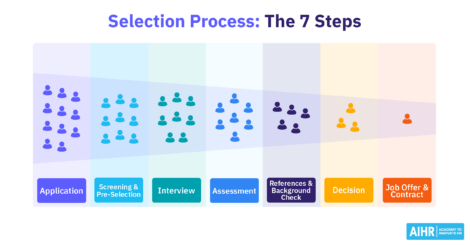
Recruiters manage the full hiring cycle, from identifying a staffing need to welcoming the new hire. Day to day, they balance sourcing, screening, and coordination while keeping candidates and hiring managers aligned.
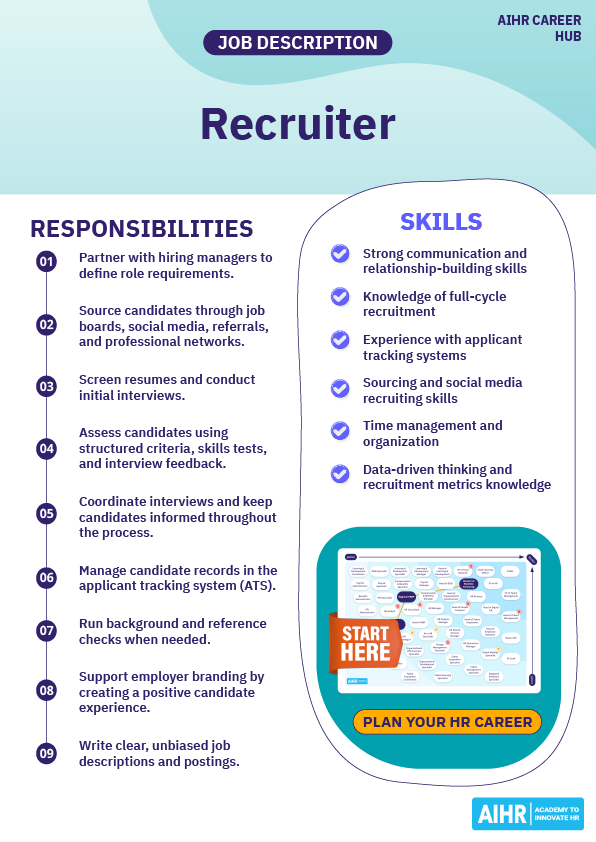
Some of their core responsibilities include:
- Sourcing candidates: Find talent through job boards, social media, referrals, networking events, and staffing agencies.
- Screening and interviewing: Review resumes, run initial interviews, and shortlist candidates for hiring managers.
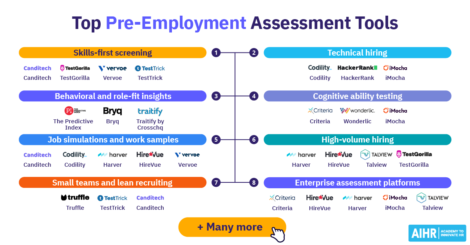
- Assessing candidates: Use skills tests, behavioral questions, and structured criteria to evaluate fit.
- Managing the hiring process: Coordinate interviews, keep candidates informed, and run background and reference checks.
- Developing job descriptions: Write clear, accurate postings that reflect the role’s requirements and day-to-day tasks.
- Posting job openings: Publish roles across the right job boards and platforms to reach qualified candidates.
- Applicant tracking: Manage candidates in the ATS and keep records organized throughout the process.
- Employer branding: Shape how candidates see the company and protect its reputation as a place to work.
- Diversity and inclusion: Write unbiased job descriptions and give every applicant a fair, consistent experience.
Recruiter qualifications, experience, and skills
Strong recruiters pair the right background with a specific set of skills. Here’s what to look for, and what to list in your job description.
Education requirements
Most recruiters hold a Bachelor’s degree in Human Resources, psychology, or business administration. A psychology background helps with reading candidates and understanding what motivates them, while business studies support a commercial view of hiring and workforce planning. A degree isn’t always required, especially for agency roles, but it’s still a common baseline employers ask for.
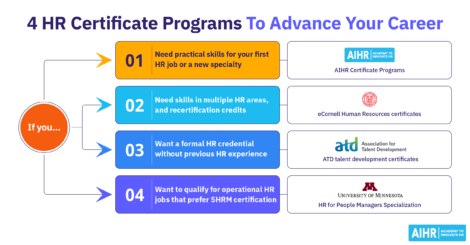
You can also earn recruiter credentials through professional certifications, such as:
- AIHR’s Sourcing & Recruitment Certificate Program: Develops practical sourcing and recruiting skills to help you compete for talent, deliver business impact, and build a strong recruiting career.
- SHRM’s Talent Acquisition Specialty Credential: Covers how to source, engage, and retain talent, with lessons on global hiring, diversity, equity, and inclusion in talent acquisition, and the virtual hiring lifecycle.
- AIHR’s Strategic Talent Acquisition Certificate Program: Builds the skills to make the right hire consistently, covering talent acquisition strategy and management, sprint recruiting, employee value proposition, candidate experience, and talent acquisition analytics.
Experience
Recruiters usually need prior experience in recruitment, HR, or a related field. Entry-level candidates can build it through internships or by supporting recruitment tasks like posting jobs, scheduling interviews, and screening resumes. Many recruiters also come from adjacent roles in sales or customer service, where relationship-building and target-driven work transfer well. When writing your job posting, set a clear experience range so you attract candidates at the right level.
Soft skills
Qualifications get a recruiter in the door, but soft skills determine how well they perform. Look for:
- Communication: Explain roles clearly to candidates and keep hiring managers updated at every stage.
- Relationship building: Engage passive candidates and stay connected with strong prospects for future roles.
- Collaboration: Work closely with hiring managers to align on needs and cut time to hire.
- Time management: Juggle several open roles and competing tasks without letting candidates go cold.
- Problem-solving: Adapt to labor shortages, scheduling conflicts, and last-minute dropouts.
Technical skills
Recruiters also rely on a set of tools and data skills to hire efficiently:
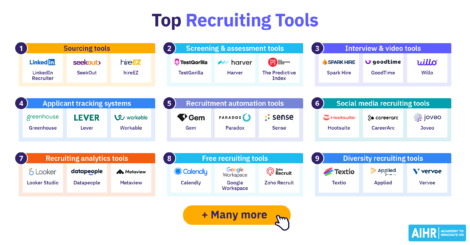
- Applicant tracking systems (ATS): Manage candidates, automate resume screening, and keep records organized.
- Sourcing and social media tools: Find and engage active and passive candidates on platforms like LinkedIn.
- HR data analysis: Read recruitment metrics like time to fill and source of hire to spot bottlenecks and improve hiring decisions.
AIHR’s Sourcing & Recruitment Certificate Program helps HR teams and recruiters learn how to:
✅ Run structured job intake conversations with hiring managers
✅ Use sourcing methods to identify and engage best-fit candidates
✅ Apply screening and candidate evaluation techniques consistently
✅ Use recruitment analytics to improve quality and efficiency
💡 Check out the lessons in AIHR’s Demo Portal for a clear idea of what you’ll get in this program.
Recruiter salary
Recruiter pay varies by experience, industry, and location, but it falls in a solid mid-range. According to Revelio Labs, the source of the salary data on AIHR’s HR Career Map, the annual salary for a recruiter typically ranges from $61,000 to $78,000. These figures are based on real-time workforce data and labor market trends.
Keep in mind that factors such as geographic location, industry, years of experience, and the size of the organization will influence where a given role falls within that range. Specialized recruiters, such as those hiring for technical or executive positions, often sit at the higher end.
Recruiter job description sample
Here’s a short recruiter job description sample you can adapt for your own posting. Swap the bracketed details for your company’s specifics.
Job title: Recruiter
Full-time | [Location] | [Remote/Hybrid/Onsite]
About [Company]
[Introduce your company in two or three sentences. Explain what you do, what makes it a good place to work, and why a recruiter would want to join your team.]
About the role
[Company] is hiring a recruiter to own full-cycle hiring across our growing team. You’ll partner with hiring managers, source and screen candidates, and guide them from first contact to signed offer. Your goal is to help us hire the right people quickly while giving every candidate a positive experience.
What you’ll do
- Partner with hiring managers to define role requirements
- Source candidates through job boards, social media, and professional networks
- Screen resumes and run initial interviews to assess fit
- Coordinate interviews and run background and reference checks
- Maintain candidate records in the applicant tracking system (ATS)
What you’ll need
- Bachelor’s degree in Human Resources, psychology, business administration, or a related field
- 3-5 years of recruitment experience, in-house or agency
- Solid understanding of full-cycle recruitment best practices
- Experience managing multiple open roles at once
- Excellent communication and relationship-building skills
Nice to have
- A recruitment or talent acquisition certification
- Experience with high-volume or specialized hiring
- Familiarity with recruitment metrics and reporting
[Company] is an equal opportunity employer and welcomes applicants of all backgrounds. To apply, [application instructions].
Recruiter job description template: PDF
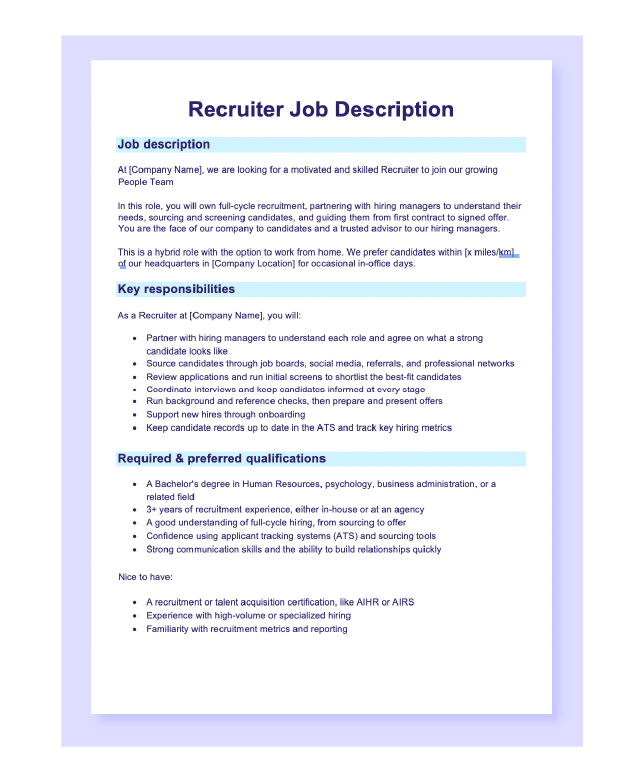
We’ve created an editable recruiter job description template you can use as inspiration or as the basis for your own postings. Download it for free via the link below.
Types of recruiter positions
Below are the most common types of recruiter positions to help you identify the best fit for your hiring needs:
HR Recruiter
Works within a company’s HR team to hire across departments. Manages full-cycle recruiting and often supports wider HR tasks like onboarding and employee records. Also called an internal or human resources recruiter.
Corporate Recruiter
Hires in-house for a single organization. Partners closely with hiring managers to understand role requirements, then sources, screens, and fills positions across departments and seniority levels.
Technical Recruiter
Specializes in technical and IT roles such as software engineers, data scientists, and IT specialists. Understands technical skills well enough to screen candidates accurately and often uses technical assessments to evaluate fit.
Healthcare Recruiter
Hires clinical and medical staff, including nurses, physicians, and allied health professionals. Familiar with licensing requirements, credentialing, and healthcare compliance standards.
Agency (Staffing) Recruiter
Works for a staffing firm serving multiple client companies. Runs end-to-end hiring across clients and industries, often specializing in a niche and working on a commission or fee basis.
Executive Recruiter
Also called a headhunter. Recruits senior leaders and executives through discreet, proactive searches, deep industry networking, and thorough reference and background checks.
Campus Recruiter
Hires students and recent graduates for entry-level roles and internships. Builds relationships with universities and career centers, and often represents the employer brand at campus events.
Diversity and Inclusion Recruiter
Focuses on attracting candidates from underrepresented groups. Partners with hiring teams to build inclusive practices and works with community organizations to widen the talent pool.
Recruiter job description examples
Below are three real recruiter job descriptions from well-known companies, with a breakdown of what each does well and what you can learn from it.
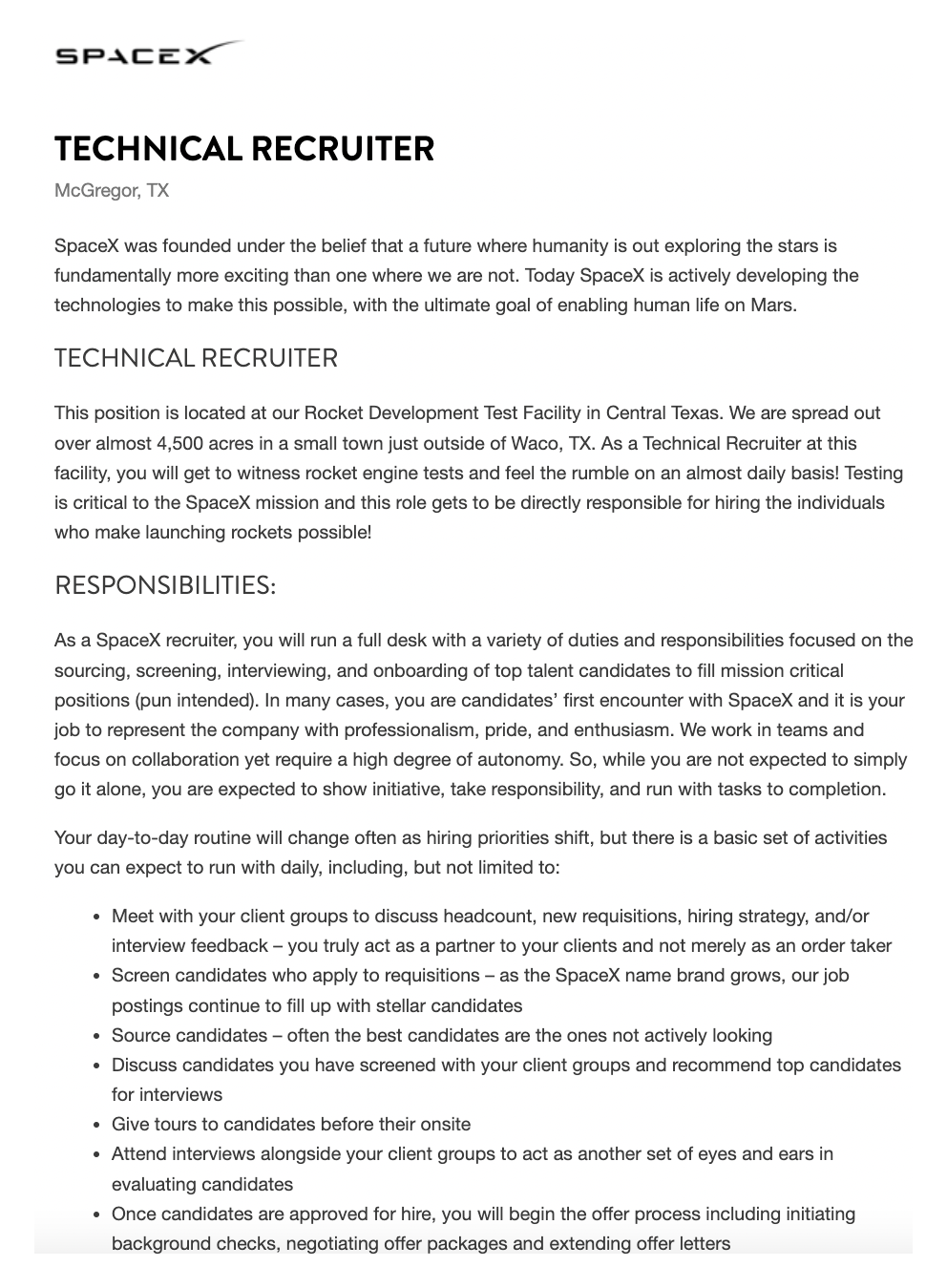
1. Technical Recruiter, SpaceX
Example takeaways
Here’s what makes this a good job description:
- Strong introduction about SpaceX and its mission sets the context and excitement about the company goals.
- Clear outline of the position and responsibilities of the Technical Recruiter
- Provides a glimpse into SpaceX’s work environment, highlighting teamwork, autonomy, and the exciting nature of the work conducted at the Rocket Development Test Facility
- Details the comprehensive benefits package offered by SpaceX, providing transparency and potential incentives for applicants
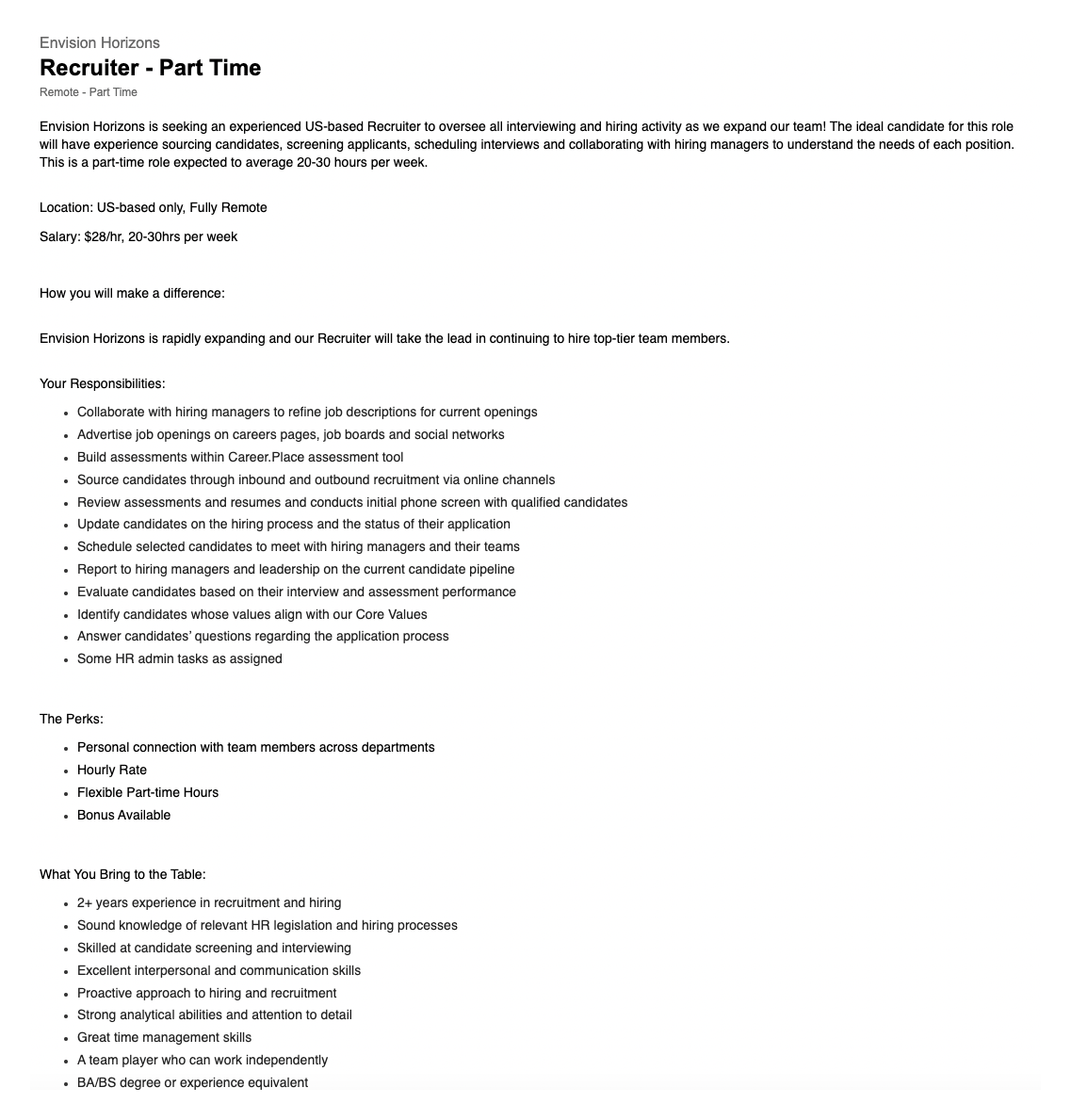
2. Part-time Recruiter, Envision Horizons
Example takeaways
While this job description example is generally informative, there are a few areas that could be improved:
- It could provide more specific details about the recruiter’s responsibilities. For example, it could include additional tasks such as conducting reference checks, coordinating background checks, and facilitating the offer process.
- Context about the company values and how they are integrated into the hiring process is missing.
- Highlight specific qualities important for success in the role, like strong problem-solving skills, adaptability to changing priorities, or experience working in a fast-paced environment.
- Lacking information about potential growth opportunities within the organization that would attract candidates interested in long-term career development
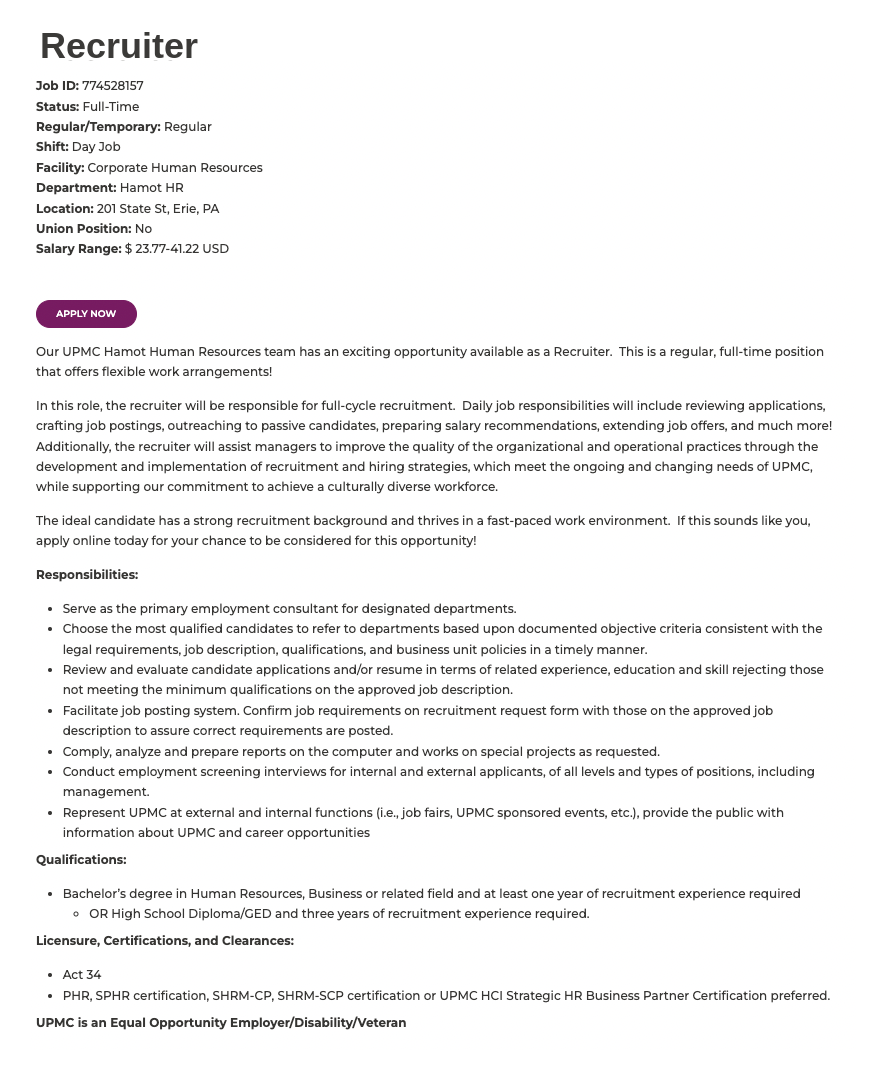
3. Recruiter, UPMC
Example takeaways
Here are the reasons why this could be considered a good job description:
- Contains important information about the nature of the role by stating that the role is a regular, full-time position with flexible work arrangements
- Provides a thorough overview of the recruiter’s responsibilities, emphasizing the recruiter’s position in supporting organizational and operational practices through the development and implementation of recruitment and hiring strategies
- Specifies the educational requirements and recruitment experience needed for the role by mentioning preferred certifications
- Includes the Equal Opportunity Employer statement, promoting inclusivity and diversity within the organization.
Recruiter career path and progression
Recruiting opens the door to a clear career path in talent acquisition. Strong performers move from filling roles to shaping how an entire organization attracts and hires talent, taking on more strategy and leadership at each step.
A traditional recruiter progression looks like this:
- Recruiter: Source, screen, and interview candidates, and manage the candidate experience through the hiring process.
- Talent Acquisition Specialist: Take on harder-to-fill roles and a more strategic, proactive approach to sourcing.
- Talent Researcher: Focus on market mapping, talent intelligence, and building pipelines for future roles.
- Talent Manager: Oversee talent processes and align hiring with wider people and business goals.
- Head of Talent Acquisition: Lead the function, own the talent strategy, and shape employer brand and hiring at scale.
Salary and responsibility grow at each stage, so recruiting is a solid entry point into a longer HR and talent career.
Next steps
A well-written recruiter job description does more than fill a role. It sets clear expectations, attracts the right candidates, and gives your new hire a solid foundation. Use the sample and template above as your starting point, then tailor them to the specific role and your organization.
Recruiting itself is a skill set that can be built and sharpened. AIHR’s Sourcing & Recruitment Certificate Program helps recruiters and HR teams learn to source, screen, and hire the right talent, enabling them to deliver real impact and build lasting careers.
FAQ
A recruiter’s day involves sourcing candidates, reviewing applications, running phone screens, scheduling interviews, and checking in with hiring managers. Much of the time goes to communication, keeping candidates informed, and moving roles forward.
Yes. Many people enter recruiting from adjacent fields like sales, customer service, or HR support, where communication and relationship skills transfer well. Internships, recruitment coordinator roles, and entry-level agency positions are common ways to break in without direct experience.
A recruiter runs the hiring process, sourcing candidates, screening applications, and coordinating interviews across multiple roles. A hiring manager owns the specific role being filled, defines what the job needs, and makes the final hiring decision. The two work in partnership throughout the hunt.