

The 5SL HR Effectiveness Model
Why the 5SL HR Effectiveness Model?
AIHR’s proprietary model for building more effective, aligned, and impactful HR functions
HR effectiveness is not determined by capability alone. Even skilled HR teams struggle when strategy, structure, leadership, stakeholder relationships, systems, and execution are disconnected. AIHR developed the 5SL HR Effectiveness Model to address exactly that. Built on research and direct work with HR functions across hundreds of organizations, it gives leaders a structured way to diagnose those conditions and act on what they find.
What is an effectiveness model?
An effectiveness model defines the conditions a function needs to deliver sustainable value and business impact.
Where competency models focus on the capabilities of individual professionals, effectiveness models look at the broader organizational factors that determine whether a function can succeed.
For HR, those factors go beyond having skilled people. They include strategic alignment, operating model design, leadership quality, stakeholder relationships, and the systems that support execution.
The 5SL HR Effectiveness Model brings these elements together into a unified diagnostic tool, giving organizations a structured way to assess, strengthen, and scale HR function effectiveness.
The structure of the 5SL HR Effectiveness Model
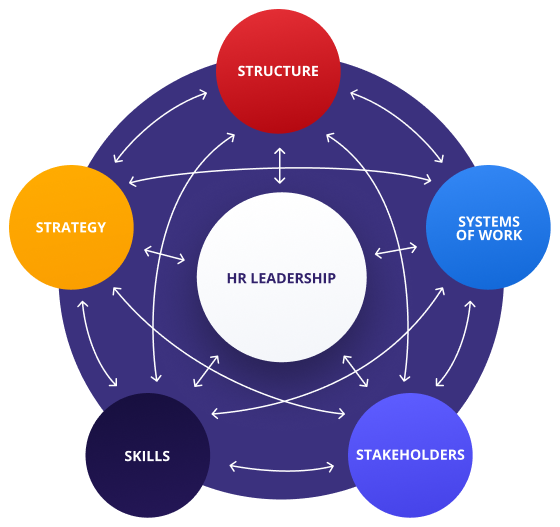
AIHR’s 5SL HR Effectiveness Model is built around six interconnected components that shape HR’s ability to deliver business value: strategy, structure, skills, stakeholder relationships, systems of work (the 5S), and HR leadership (L).
The model treats HR effectiveness as a system. Each component influences the others, and gaps in one area will often affect performance across the rest. Evaluating them together gives organizations a clearer picture of where HR is strong, where risks exist, and what to prioritize next.
How organizations use the 5SL HR Effectiveness Model
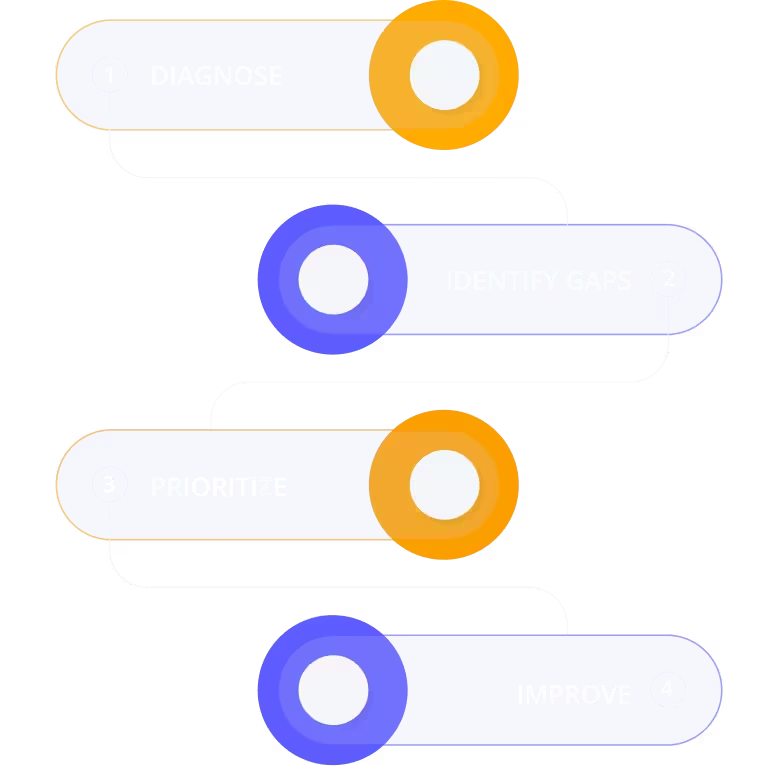
Organizations apply the 5SL HR Effectiveness Model to assess how well HR is set up to support business priorities, execute strategy, and deliver measurable value. It helps identify organizational strengths, diagnose maturity gaps, and uncover the factors limiting HR impact. The model also serves as a prioritization tool, giving organizations the focus they need to accelerate the path to effectiveness.
AIHR works with organizations to apply the model across a range of initiatives, including operating model reviews, leadership alignment, capability planning, HR transformation, and HRBP effectiveness assessments. The goal is not only to surface where gaps exist, but to translate diagnostic findings into targeted recommendations and concrete next steps for building a more effective HR function.
The Six Components of the 5SL HR Effectiveness Model
The 5SL HR Effectiveness Model covers the full range of factors that determine HR effectiveness, organized across six interconnected components. Together, they give organizations a structured way to audit where the function stands and identify where to focus improvement efforts.
Strategy
Connects HR’s priorities, initiatives, and outcomes to the organization’s broader business direction
Structure
Focuses on how the HR operating model, roles and responsibilities support strategy execution
Systems of Work
Defines the processes, technologies, data infrastructure, governance mechanisms, and ways of working that enable HR to to deliver effectively across the business
Stakeholders
Represents the relationships, influence, and partnerships that enable HR to create value across the organization
Skills
Captures the capabilities, expertise, behaviors, and leadership capacity needed for HR to succeed
HR Leadership
Provides the direction, cohesion, and decision-making required to guide HR’s impact and effectiveness

Northstar Manufacturing is a global components manufacturing company with 4,500 employees across three regions. The business is navigating rapid growth, increasing automation, and ongoing talent shortages in technical roles.
The HR function has evolved from a reactive support function into a strategic business partner by strengthening six critical areas of HR effectiveness.
 Strategy
HR priorities shifted constantly based on urgent business requests
HR priorities are aligned to business strategy and measurable workforce outcomes
 Structure
HR teams operated in silos with overlapping responsibilities
Clear operating model, decision rights, and accountability across the HR function
 Systems of Work
Reporting and workforce data were fragmented and largely manual.
Workforce decisions are supported by integrated dashboards, analytics, and governance rhythms
 Stakeholders
Business leaders involved HR late in important decisions
HR is included early in strategic workforce and operational discussions
 Skills
Critical HR expertise depended on a small number of individuals
Sustainable HR capability pipelines with stronger strategic, analytical, and advisory expertise
 HR Leadership
HR leadership messaging was inconsistent across HR teams
HR leadership operates with aligned priorities, consistent direction, & stronger business partnership
How effective is your
HR Function?
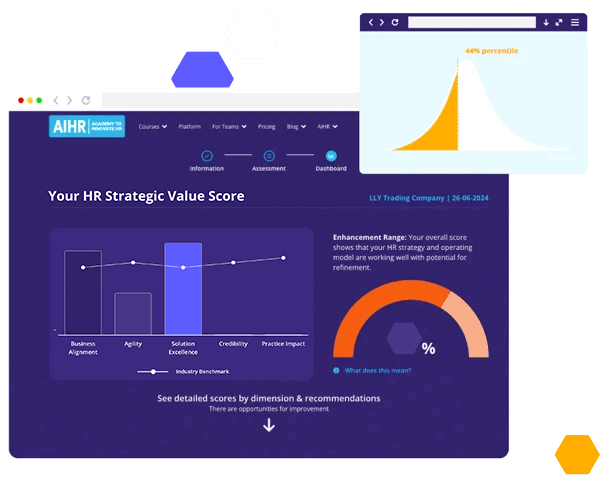
Take the HR Strategic Value Assessment and instantly get a detailed report to uncover how strategic, agile, and impactful your HR organization truly is and our recommendations to improve it.
Strategy
Strategic Alignment
Strategic Value
Strategic Focus
Clear organizational focus and prioritization across HR initiatives and teams
HR priorities are directly linked to business strategy and critical workforce priorities
HR lacks strategic direction and becomes reactive to shifting business demands
Impact
Stronger visibility of HR impact and increased credibility with business leaders
Success measures are tied to business outcomes & organizational performance goals
Business value becomes difficult to demonstrate, reducing influence and investment
Organizational Alignment
Greater consistency and alignment across HR priorities, initiatives, and decision-making
Leaders share a consistent understanding of HR’s strategic role and value
Resources become fragmented and misaligned with organizational priorities and goals
Strategic Focus
Clear organizational focus and prioritization across HR initiatives and teams
HR priorities are directly linked to business strategy and critical workforce priorities
HR lacks strategic direction and becomes reactive to shifting business demands
Impact
Stronger visibility of HR impact and increased credibility with business leaders
Success measures are tied to business outcomes & organizational performance goals
Business value becomes difficult to demonstrate, reducing influence and investment
Organizational Alignment
Greater consistency and alignment across HR priorities, initiatives, and decision-making
Leaders share a consistent understanding of HR’s strategic role and value
Resources become fragmented and misaligned with organizational priorities and goals
Structure
Operating Model Fit
Execution Capacity
Execution Speed
Faster execution and more consistent delivery across HR initiatives and operations
Roles, governance, and decision rights are clearly defined across the HR function
Role confusion and overlapping responsibilities slow execution and reduce accountability
Clear Accountability
Greater accountability and alignment across HR teams, roles, and leadership groups
The HR operating model effectively supports business priorities and scalable execution
Teams become overloaded, limiting scalability and operational effectiveness across HR
Scalable Support
Scalable HR support that adapts effectively as organizational needs evolve
Teams collaborate efficiently with strong accountability and minimal duplication of effort
Decision-making becomes fragmented, creating delays and inconsistent business support
Execution Speed
Faster execution and more consistent delivery across HR initiatives and operations
Roles, governance, and decision rights are clearly defined across the HR function
Role confusion and overlapping responsibilities slow execution and reduce accountability
Clear Accountability
Greater accountability and alignment across HR teams, roles, and leadership groups
The HR operating model effectively supports business priorities and scalable execution
Teams become overloaded, limiting scalability and operational effectiveness across HR
Scalable Support
Scalable HR support that adapts effectively as organizational needs evolve
Teams collaborate efficiently with strong accountability and minimal duplication of effort
Decision-making becomes fragmented, creating delays and inconsistent business support
Systems of Work
HR Service Delivery
Evidence-Based Practice
Technology Enabled
Ways of Work
Operational Efficiency
Greater operational scalability through streamlined processes and integrated technology
Core HR processes are streamlined, scalable, and supported by integrated technology systems
Manual processes and fragmented systems reduce efficiency and operational scalability
Data-Informed Decisions
Faster, data-informed decision-making across HR initiatives & organizational planning efforts
Workforce decisions are informed by reliable data, analytics, and measurable insights
Poor data visibility limits workforce insight and weakens organizational decision-making quality
Execution Guardrails
Clear governance and rhythms of work enable stronger coordination and collaboration across teams
Governance forums and planning rhythms create alignment across HR and business teams
Governance gaps create inconsistent execution and misalignment across teams and priorities
Operational Efficiency
Greater operational scalability through streamlined processes and integrated technology
Core HR processes are streamlined, scalable, and supported by integrated technology systems
Manual processes and fragmented systems reduce efficiency and operational scalability
Data-Informed Decisions
Faster, data-informed decision-making across HR initiatives & organizational planning efforts
Workforce decisions are informed by reliable data, analytics, and measurable insights
Poor data visibility limits workforce insight and weakens organizational decision-making quality
Execution Guardrails
Clear governance and rhythms of work enable stronger coordination and collaboration across teams
Governance forums and planning rhythms create alignment across HR and business teams
Governance gaps create inconsistent execution and misalignment across teams and priorities
Operational Efficiency
Greater operational scalability through streamlined processes and integrated technology
Core HR processes are streamlined, scalable, and supported by integrated technology systems
Manual processes and fragmented systems reduce efficiency and operational scalability
Data-Informed Decisions
Faster, data-informed decision-making across HR initiatives & organizational planning efforts
Workforce decisions are informed by reliable data, analytics, and measurable insights
Poor data visibility limits workforce insight and weakens organizational decision-making quality
Execution Guardrails
Clear governance and rhythms of work enable stronger coordination and collaboration across teams
Governance forums and planning rhythms create alignment across HR and business teams
Governance gaps create inconsistent execution and misalignment across teams and priorities
Operational Efficiency
Greater operational scalability through streamlined processes and integrated technology
Core HR processes are streamlined, scalable, and supported by integrated technology systems
Manual processes and fragmented systems reduce efficiency and operational scalability
Data-Informed Decisions
Faster, data-informed decision-making across HR initiatives & organizational planning efforts
Workforce decisions are informed by reliable data, analytics, and measurable insights
Poor data visibility limits workforce insight and weakens organizational decision-making quality
Execution Guardrails
Clear governance and rhythms of work enable stronger coordination and collaboration across teams
Governance forums and planning rhythms create alignment across HR and business teams
Governance gaps create inconsistent execution and misalignment across teams and priorities
Stakeholders
Relationship Management
Strategic Partnership
Proactive Collaboration
Strategic Partnership
Stronger business partnership and earlier involvement in strategic organizational decisions
HR maintains trusted relationships with leaders across business functions and teams
HR becomes reactive and excluded from important strategic workforce discussions
Trusted Influence
Greater trust, credibility, and influence with senior leaders and stakeholders
HR is involved early in strategic workforce and operational business discussions
Limited trust reduces HR’s influence on key organizational and workforce decisions
Cross-Functional Alignment
Faster alignment between workforce priorities and evolving business needs across functions
Teams proactively identify workforce risks and collaborate across functions before escalation
Collaboration across functions weakens, increasing delays and misalignment across initiatives
Strategic Partnership
Stronger business partnership and earlier involvement in strategic organizational decisions
HR maintains trusted relationships with leaders across business functions and teams
HR becomes reactive and excluded from important strategic workforce discussions
Trusted Influence
Greater trust, credibility, and influence with senior leaders and stakeholders
HR is involved early in strategic workforce and operational business discussions
Limited trust reduces HR’s influence on key organizational and workforce decisions
Cross-Functional Alignment
Faster alignment between workforce priorities and evolving business needs across functions
Teams proactively identify workforce risks and collaborate across functions before escalation
Collaboration across functions weakens, increasing delays and misalignment across initiatives
Strategic Partnership
Stronger business partnership and earlier involvement in strategic organizational decisions
HR maintains trusted relationships with leaders across business functions and teams
HR becomes reactive and excluded from important strategic workforce discussions
Trusted Influence
Greater trust, credibility, and influence with senior leaders and stakeholders
HR is involved early in strategic workforce and operational business discussions
Limited trust reduces HR’s influence on key organizational and workforce decisions
Cross-Functional Alignment
Faster alignment between workforce priorities and evolving business needs across functions
Teams proactively identify workforce risks and collaborate across functions before escalation
Collaboration across functions weakens, increasing delays and misalignment across initiatives
Skills
Skill Identification
Skill Development
Access to Skills
Leadership Capacity
Future-Proof Skills
Stronger workforce planning and more sustainable long-term capability development across HR
HR capabilities are clearly mapped against current and future business requirements
Capability gaps reduce HR’s ability to support strategic business priorities effectively
Adaptable Capacity
Greater adaptability as workforce needs, technology, and business priorities evolve
The function invests continuously in HR capability development and leadership readiness
Underdeveloped HR capabilities limit responsiveness to changing business and workforce needs
Distributed Expertise
Reduced dependency on key individuals and improved succession planning across HR teams
Expertise is distributed sustainably across HR teams rather than concentrated in individuals
Limited succession planning within HR creates leadership and capability continuity risks over time
Future-Proof Skills
Stronger workforce planning and more sustainable long-term capability development across HR
HR capabilities are clearly mapped against current and future business requirements
Capability gaps reduce HR’s ability to support strategic business priorities effectively
Adaptable Capacity
Greater adaptability as workforce needs, technology, and business priorities evolve
The function invests continuously in HR capability development and leadership readiness
Underdeveloped HR capabilities limit responsiveness to changing business and workforce needs
Distributed Expertise
Reduced dependency on key individuals and improved succession planning across HR teams
Expertise is distributed sustainably across HR teams rather than concentrated in individuals
Limited succession planning within HR creates leadership and capability continuity risks over time
Future-Proof Skills
Stronger workforce planning and more sustainable long-term capability development across HR
HR capabilities are clearly mapped against current and future business requirements
Capability gaps reduce HR’s ability to support strategic business priorities effectively
Adaptable Capacity
Greater adaptability as workforce needs, technology, and business priorities evolve
The function invests continuously in HR capability development and leadership readiness
Underdeveloped HR capabilities limit responsiveness to changing business and workforce needs
Distributed Expertise
Reduced dependency on key individuals and improved succession planning across HR teams
Expertise is distributed sustainably across HR teams rather than concentrated in individuals
Limited succession planning within HR creates leadership and capability continuity risks over time
Future-Proof Skills
Stronger workforce planning and more sustainable long-term capability development across HR
HR capabilities are clearly mapped against current and future business requirements
Capability gaps reduce HR’s ability to support strategic business priorities effectively
Adaptable Capacity
Greater adaptability as workforce needs, technology, and business priorities evolve
The function invests continuously in HR capability development and leadership readiness
Underdeveloped HR capabilities limit responsiveness to changing business and workforce needs
Distributed Expertise
Reduced dependency on key individuals and improved succession planning across HR teams
Expertise is distributed sustainably across HR teams rather than concentrated in individuals
Limited succession planning within HR creates leadership and capability continuity risks over time
HR Leadership
Direction Setting
Trust and Credibility
Decision-Making Effectiveness
Team Cohesion
Ethical Leadership
Aligned Priorities
Greater alignment, accountability, and consistency across the broader HR organization
HR leaders communicate shared priorities and operate with consistent strategic direction
Leadership misalignment creates confusion and inconsistent priorities across the HR function
Decisive Direction
Faster decision-making and clearer organizational direction during periods of change
Leadership decisions are timely, accountable, and aligned across the HR function
Slow decision-making reduces execution speed and organizational responsiveness to change
HR Leadership Credibility
Stronger credibility and trust with employees, leaders, and business stakeholders
HR leaders model collaboration, trust, transparency, and ethical decision-making behaviors consistently
Political tension and low trust weaken collaboration across leadership and business teams
Aligned Priorities
Greater alignment, accountability, and consistency across the broader HR organization
HR leaders communicate shared priorities and operate with consistent strategic direction
Leadership misalignment creates confusion and inconsistent priorities across the HR function
Decisive Direction
Faster decision-making and clearer organizational direction during periods of change
Leadership decisions are timely, accountable, and aligned across the HR function
Slow decision-making reduces execution speed and organizational responsiveness to change
HR Leadership Credibility
Stronger credibility and trust with employees, leaders, and business stakeholders
HR leaders model collaboration, trust, transparency, and ethical decision-making behaviors consistently
Political tension and low trust weaken collaboration across leadership and business teams
Aligned Priorities
Greater alignment, accountability, and consistency across the broader HR organization
HR leaders communicate shared priorities and operate with consistent strategic direction
Leadership misalignment creates confusion and inconsistent priorities across the HR function
Decisive Direction
Faster decision-making and clearer organizational direction during periods of change
Leadership decisions are timely, accountable, and aligned across the HR function
Slow decision-making reduces execution speed and organizational responsiveness to change
HR Leadership Credibility
Stronger credibility and trust with employees, leaders, and business stakeholders
HR leaders model collaboration, trust, transparency, and ethical decision-making behaviors consistently
Political tension and low trust weaken collaboration across leadership and business teams
Aligned Priorities
Greater alignment, accountability, and consistency across the broader HR organization
HR leaders communicate shared priorities and operate with consistent strategic direction
Leadership misalignment creates confusion and inconsistent priorities across the HR function
Decisive Direction
Faster decision-making and clearer organizational direction during periods of change
Leadership decisions are timely, accountable, and aligned across the HR function
Slow decision-making reduces execution speed and organizational responsiveness to change
HR Leadership Credibility
Stronger credibility and trust with employees, leaders, and business stakeholders
HR leaders model collaboration, trust, transparency, and ethical decision-making behaviors consistently
Political tension and low trust weaken collaboration across leadership and business teams
Aligned Priorities
Greater alignment, accountability, and consistency across the broader HR organization
HR leaders communicate shared priorities and operate with consistent strategic direction
Leadership misalignment creates confusion and inconsistent priorities across the HR function
Decisive Direction
Faster decision-making and clearer organizational direction during periods of change
Leadership decisions are timely, accountable, and aligned across the HR function
Slow decision-making reduces execution speed and organizational responsiveness to change
HR Leadership Credibility
Stronger credibility and trust with employees, leaders, and business stakeholders
HR leaders model collaboration, trust, transparency, and ethical decision-making behaviors consistently
Political tension and low trust weaken collaboration across leadership and business teams
Ready to Strengthen HR Effectiveness?

Book a call with our advisory team
Speak with AIHR’s advisory experts to discuss your HR function, current challenges, and goals for improving effectiveness.

Run an HR Effectiveness Review
Get an independent, data-driven evaluation of how your HR function performs today, measured against AIHR’s 5SL HR effectiveness model.

Receive a practical roadmap
Identify strengths, improvement areas, and prioritized recommendations to strengthen HR’s performance, alignment, and strategic impact.
What is the 5SL HR Effectiveness Model?
The 5SL HR Effectiveness Model is AIHR’s proprietary diagnostic model for assessing HR effectiveness at the organizational level. It evaluates six interconnected components (strategy, structure, skills, stakeholder relationships, systems of work, and HR leadership) to help organizations understand how well HR is positioned to deliver business value, where gaps exist, and where to focus improvement efforts.
Why did AIHR develop the 5SL HR Effectiveness Model?
Through years of working with HR functions across hundreds of organizations, AIHR identified what it actually takes for HR to deliver sustained business value. The 5SL HR Effectiveness Model translates those insights into a practical diagnostic that helps organizations understand where they stand and prioritize what needs to change.
How is the 5SL model different from other HR effectiveness models?
Most HR effectiveness models focus on a single dimension of performance, such as service delivery efficiency or HR’s strategic alignment. The 5SL HR Effectiveness Model looks at the full picture, evaluating six interconnected components that together determine whether HR can deliver sustained business value. AIHR built the model from direct experience with HR functions across hundreds of organizations, which means it reflects how HR effectiveness actually looks in practice, not just in theory.
Is the 5SL HR Effectiveness Model designed for HR functions that use the HRBP model?
No. While AIHR has applied the 5SL model within the HRBP context through the HRBP Impact Assessment, the model itself applies to any HR function regardless of how it is structured. The six components cover the conditions that determine HR effectiveness across various operating models, team sizes, and industries.
How is the 5SL Model different from a competency model?
Competency models focus on the capabilities of individual HR professionals. AIHR’s own T-Shaped HR Competency Model, for example, defines the skills and behaviors HR professionals need to be effective in their roles.
The 5SL HR Effectiveness Model operates at a different level. It looks at the broader organizational conditions that determine whether HR can succeed as a function, assessing factors like strategic alignment, operating model design, leadership quality, and stakeholder relationships, all of which affect HR effectiveness regardless of how skilled the individuals within the team are.
How can organizations use the 5SL HR Effectiveness Model?
Organizations can apply the 5SL HR Effectiveness Model at different points in the HR lifecycle, whether they are redesigning the operating model, preparing for a transformation, responding to stakeholder pressure, or simply looking to understand where the function needs to develop. The model provides a consistent diagnostic lens across all of those contexts, helping HR leaders move from a general sense that something is not working to a clear and prioritized view of what needs to change.
How does AIHR help organizations apply the 5SL HR Effectiveness Model?
The AIHR Advisory Team works with organizations directly to apply the model across diagnostics, strategy reviews, and capability planning. We combine the structured assessment with hands-on advisory support, giving HR leaders a clear and actionable picture of where to focus next. Depending on the organization’s needs, AIHR can support a targeted HR effectiveness assessment, a broader transformation effort, or anything in between.
What can organizations expect from the 5SL diagnostic process?
The diagnostic gives organizations a structured view of where HR is performing well, where gaps exist, and where to focus first. AIHR combines the assessment with hands-on advisory support, giving HR leaders both a prioritized improvement agenda and a clear understanding of what needs to change for HR to deliver greater business value.
Can organizations use the 5SL HR Effectiveness Model to track and benchmark HR effectiveness over time?
Yes. AIHR has operationalized the 5SL HR Effectiveness Model into structured diagnostics, including the HRBP Impact Assessment. Organizations can use this tool to measure maturity across each component of the model, benchmark against other organizations, and track progress over time. That makes the model useful beyond a one-time assessment, giving HR leaders a way to monitor effectiveness and spot where new risks are emerging.
How does AIHR keep the 5SL HR Effectiveness Model up to date?
AIHR’s HR experts review and refine the 5SL HR Effectiveness Model on an ongoing basis, drawing on new research, insights from diagnostic work with organizations, and developments in Human Resources practice. This includes monitoring market trends, refining the components and their underlying dimensions, and updating the diagnostics and benchmarking tools to reflect what AIHR learns from working with HR functions worldwide.
What else can AIHR help with?
Beyond the HR effectiveness diagnostic, AIHR offers a range of solutions to help organizations build HR capability at scale. These include team licenses giving every HR professional access to AIHR’s full library of courses and certificate programs, and HR Boot Camps, intensive team-based programs that build specialized capability in areas like HR business partnering and AI for HR, with measurable results in as little as one to three months. AIHR also supports broader HR transformation and capability planning efforts through its advisory work.
Speak with our Advisory Team
Understand where your HR function is strongest, where gaps may be limiting impact, and which priorities matter most.
AIHR Advisory provides expert guidance to help organizations assess HR effectiveness, identify improvement opportunities, and define a practical path toward stronger business alignment and measurable impact.
Click here to find convenient time to connect with our advisory team and explore your next steps.
