
According to Gartner, 92% of HR leaders say their function has taken steps to implement AI in HR within the past six months, indicating a sharp jump from mid-2023, when only 19% were piloting or planning to adopt generative AI. Astute organizations understand how AI’s speed and operational efficiency can give them a greater competitive edge.
Also, 77% of AI users in the U.S. say it helps them get more done faster, and 73% say it improves work quality, according to SHRM’s September 2025 Current Events Pulse survey. AI now combines human judgment with machine efficiency to boost productivity and personalization. This article looks at where AI adoption in HR stands today, the areas leading the way, the barriers holding teams back, and the best practices that can ensure early experiments have a lasting impact.
Contents
Where does AI adoption in HR stand today?
AI in HR adoption examples by function
Additional examples of AI applications in HR
Barriers to AI adoption in HR
7 best practices for the successful adoption of AI in HR
FAQ
Where does AI adoption in HR stand today?
The adoption of AI in HR has moved past the early-experiment stage, but many HR functions are still catching up to the hype.
- AIHR’s study of over 1,500 HR professionals found that 61.6% reported little to no AI involvement in their HR processes, and just 35% felt equipped to use AI technologies.
- The study found that where AI was used, its application tended to remain narrow. Most current use was individual and low-risk (e.g., automating a personal task or drafting a document), rather than integrated across HR functions. Additionally, HR professionals still struggled to articulate AI’s business impact in terms that would prompt leadership to act.
- AIHR’s research also found recruitment and sourcing to be the area with the most extensive AI adoption in HR, while other HR functions still showed limited use.
- Agentic AI (i.e., tools that can complete multi-step tasks with limited human input) is a separate trend. Gartner’s Hype Cycle for AI in HR placed agentic AI at the “innovation trigger” stage: promising, but not yet proven at scale.

AI in HR adoption examples by function
There’s a wide range of examples in AI in HR. AI use cases in HR span nearly every function, from workforce planning to onboarding. Most examples you might find online fall into two camps: vague trend pieces or AI in HR examples from a single company that may not match the size, budget, or industry of your organization.
The summary table below outlines some of the common AI in HR examples, which we unpack in more detail:
HR function | What AI does | Example use case |
Workforce planning | Forecasts attrition and skills gaps using internal and market data | Flag a team at high flight risk before an engagement survey can catch it |
Onboarding and offboarding | Personalizes journeys by role / department, automates admin | New hires get a role-specific task list, instead of a generic checklist |
People analytics, DEIB, compliance | Reveals patterns in engagement, attrition, and fairness | Spot a promotion rate gap between two departments before it becomes a pattern |
Employee self-service | Handles routine questions and requests 24/7 | A chatbot approves a standard leave request without a ticket reaching HR |
Recruitment
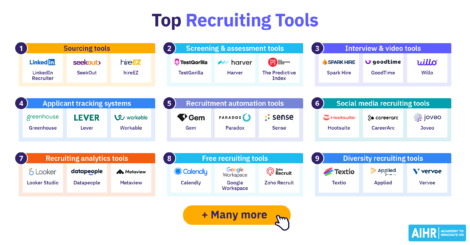
Recruitment was the first HR function to embrace AI, focusing on automating tasks like résumé-screening, writing job descriptions, and using predictive analytics to shortlist top candidates. This frees recruiters to focus on branding, interviews, and candidate evaluations.
The next phase involves agentic AI, which can manage multi-step tasks like first-round interviews, scheduling, and feedback. Additionally, voice analysis can evaluate tone and hesitation to assess communication skills. Interview bots now adjust questions in real-time, making the process feel more natural.
Unilever’s AI-powered graduate hiring process is a well-known example of this shift. The company used game-based assessments and AI-scored video interviews from vendors like Pymetrics and HireVue to cut its time to hire, and reduce the recruiter hours needed per hiring cycle.
However, the specific hours saved and cost-saving figures vary by source, and most trace back to vendor reporting rather than independently audited numbers, so treat them as directionally credible rather than exact.
Employee self-service
AI is changing employee support from ticket-based systems to 24/7 self-service. Chatbots handle common questions, leave requests, and admin tasks like updating personal info. They work right inside tools like Slack or Teams.
Next-gen AI will go further. It will anticipate needs (e.g., reminding staff of training deadlines based on their roles) using agentic systems that can handle entire workflows. This results in employees getting instant support, and HR teams gaining time to focus on strategic work like engagement and conflict resolution.
Learning & development (L&D)
AI can now analyze an employee’s performance data, career aspirations, and current skill set to recommend relevant training resources. It can then curate content from various sources to create hyper-personalized and goal-oriented learning paths, and ‘nudge’ employees with reminders and encouragement to stay on track.
More advanced tools can even simulate real-life scenarios to help employees practice difficult skills. Some examples include tough customer calls or sales negotiations. AI can also analyze your entire workforce to identify where you have existing skills and potential gaps, and match employees with suitable mentors.
Build the mindset, culture, and capabilities across your HR team first to drive and scale AI adoption
AIHR’s AI for HR Boot Camp helps your HR team to:
✅ Build a clear understanding of emerging AI tools and how they work in HR contexts
✅ Learn how to lead AI adoption responsibly, and align AI initiatives with HR strategy
✅ Work on practical projects, using generative AI to improve HR workflows
🎯 Turn early adoption into long-term impact with a team fluent in AI.
Additional examples of AI applications in HR
Other impactful use cases for AI in HR include:
Workforce planning
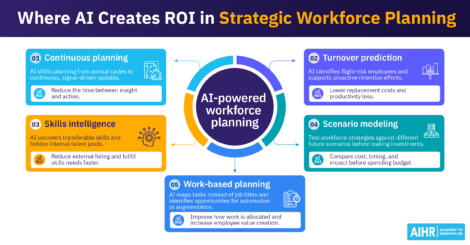
AI can pull from internal HR data and external market signals (e.g., local salary trends or how tight the labor market is for a given role) to flag where you’re likely to see attrition or a skills gap before it becomes a hiring emergency. This input is useful for building talent pipelines and deciding where to focus retention efforts first.
However, it’s important to treat the output as a starting point, and not as a forecast. A model can tell you a team has a high chance of losing two people in the next six months, but it can’t tell you why, or write a retention conversation for you. Use it to prioritize which teams need attention, not to skip the manager conversation that actually explains what’s contributing to the risk.
Onboarding and offboarding
Onboarding is one of the easiest places to see a quick return, mostly because the same questions come up for every new hire, regardless of role. A role-specific task list, an AI-guided introduction to the tools and people they’ll actually work with, and automated admin (e.g., provisioning access or scheduling first-week check-ins), beat a generic PDF new hires may not finish reading.
Offboarding deserves the same attention. AI can run the exit interview, summarize themes across departures, and flag when the same reason keeps coming up, without waiting for a quarterly review to notice the pattern. You can then act on this information by flagging recurring themes to the manager or leader who can make meaningful changes.
Analytics for talent, DEIB, and compliance
AI is good at surfacing a pattern a person might take months to notice, such as a promotion-rate gap between two departments, or an attrition spike linked to a specific manager. Essentially, it can turn scattered HR data into something you can easily understand and act on.
At the same time, it’s also where the stakes are highest. It’s important to avoid treating a flawed or biased pattern as fact. Before you act on any DEIB or compliance finding, check the model’s inputs for the same bias you’re trying to spot and prevent or eliminate, and always have a human review any output that could affect a real hiring, pay, or promotion decision.
Barriers to AI adoption in HR
Despite many clear benefits, the adoption of AI in HR is not without its hurdles. These barriers extend beyond technical complexities and can slow implementation and strategic impact:
Competence and confidence gaps
There’s a significant gap between the application of AI in HR and the skills needed to use it effectively. AIHR’s research found that only 35% of HR professionals feel they have the skills, exposure, and development opportunities to use AI effectively and responsibly.
Just 30% say their organization has a clear, shared purpose and prioritized use cases for AI in the first place. Adoption of the tools has outpaced the skill-building needed to use them well. Without that foundation, hesitation is the natural result, especially with advanced tools that handle complex tasks, since fear of mistakes can slow progress.
Overfocus on efficiency
HR often starts with quick wins—like automating job postings—without moving on to strategic uses like predictive workforce planning or tailored learning paths. An over-reliance on simple task automation can prevent HR from realizing AI’s full potential to drive significant business value and further improve the HR function.
Lack of clear success metrics
Another significant barrier to AI adoption in HR is the difficulty in proving its business value. Unlike other metrics-driven departments, like sales or finance, HR metrics are often less tangible. If results aren’t tied to clear goals like better retention or engagement, leaders may hesitate to justify further investment, delaying the adoption of more advanced AI solutions.
AIHR’s research found that HR teams hold a strong belief in AI, but limited progress has been made in translating that belief into a defined strategy, clear metrics, and practical skills.
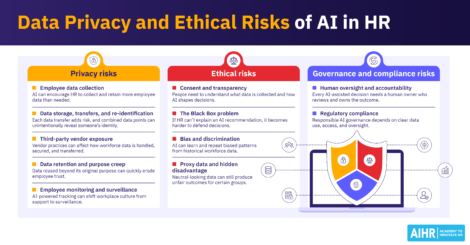
Even HR teams that are ready to use AI may not have a clear policy on what data an AI tool can use, who reviews its output before it affects an employee, and how long that data is retained. Without that groundwork, legal and compliance concerns can stall adoption long after the technology itself is ready. Set baseline rules before you scale. These should include:
– Which data sources are off-limits
– Who signs off on AI-assisted decisions that affect pay, performance, or termination
– How you’ll audit for bias.
LEARN MORE Data Privacy and Ethics in AI for HR: Risks & 10 Best Practices
7 best practices for the successful adoption of AI in HR
Follow these guidelines to overcome AI adoption barriers and ensure successful and ethical implementation in your HR function:
1. Build AI readiness in your HR team
To ensure successful AI use across HR, your team must define the purpose, prioritize use cases, and build practical, role-based skills. AIHR’s Readiness framework helps you benchmark your own team, and we offer workshops and courses geared toward real HR use cases rather than just tool basics. See AIHR’s full AI Readiness research for the five must-win focus areas.
2. Foster a culture of continuous innovation and learning
AI is evolving at a pace, which means your HR team must evolve along with it to keep up. Encourage experimentation in safe environments, and foster a culture where testing new tools — and failing — is okay. Recognize and reward team members who learn from failure and improve, and share AI insights to boost adoption.
3. Implement AI in low-risk areas first
Start with simple, low-stakes applications that provide quick wins and build confidence. Automating administrative tasks with a chatbot is a good starting point for entry-level users. This will give your team the practical experience needed to use AI to tackle more complex, strategic projects later on.
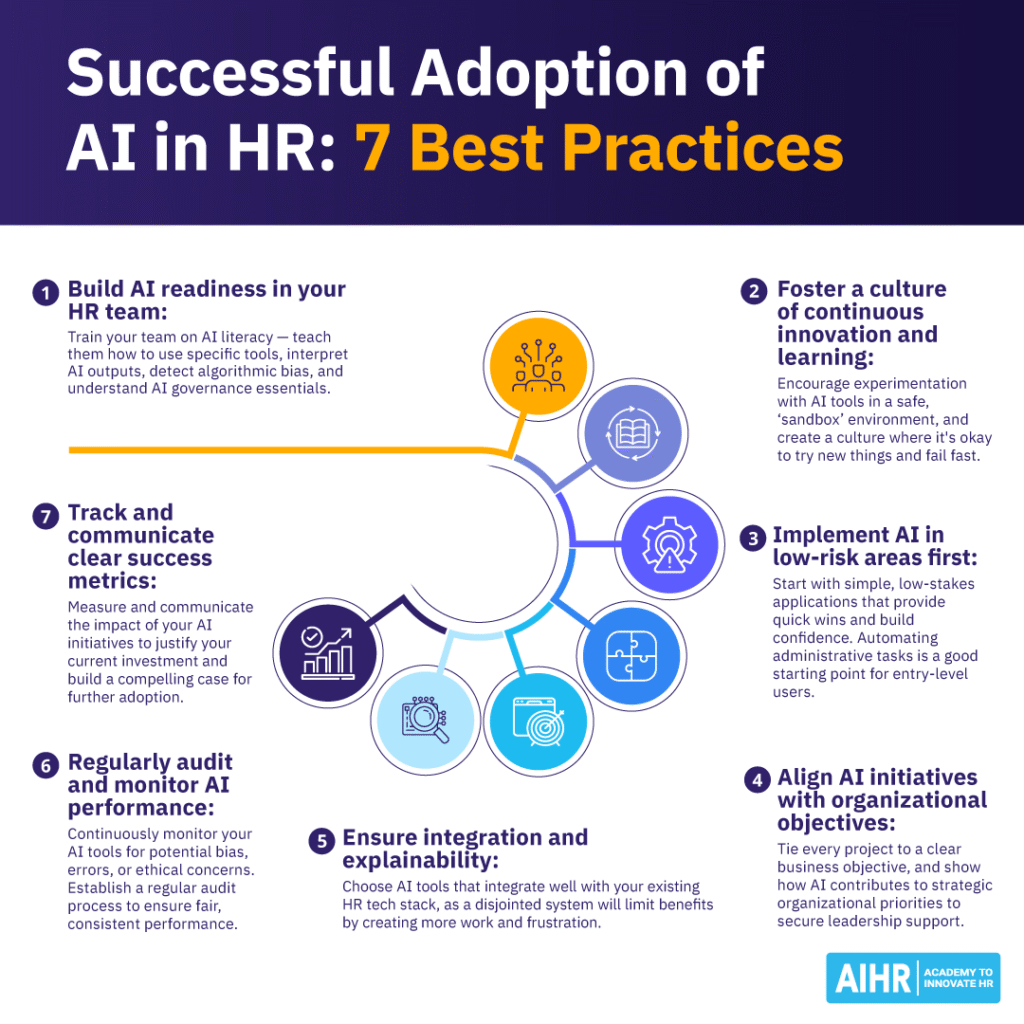
4. Align AI initiatives with organizational objectives
Never implement AI just for the sake of implementing AI. Instead, tie each AI project to a business goal. Set HR SMART goals — instead of “use AI for recruiting”, aim for something specific like “cut time to hire by 25% using AI résumé-screening by Q3”. At the same time, link projects to KPIs and involve leadership early.
5. Ensure integration and explainability
Choose AI tools that integrate well with your existing HR tech stack. A disjointed system will limit benefits by creating more work and frustration. Additionally, make sure the AI’s decisions are transparent, and keep humans in the loop — especially for major people decisions. This is key to building and maintaining trust.
6. Regularly audit and monitor AI performance and fairness
Ongoing vigilance is necessary for responsible AI use, so continuously monitor your AI tools for potential bias, errors, or ethical concerns. Establish a regular audit process to ensure consistent AI performance aligned with organizational values, and make sure results are fair across all demographics.
7. Track and communicate clear success metrics
Measure and communicate AI’s impact at your company to justify current investment and encourage further adoption. Track and report on efficiency gains, quality of hire, engagement, and retention. Then, share clear outcomes with senior leadership to build their confidence in AI and highlight HR’s strategic value.
Next steps
Start small, beginning with one workflow. Pick a single low-risk process (such as generative AI for job descriptions, or a chatbot for routine leave questions), and run it for a full quarter before you expand. Track two or three numbers tied to that specific use case, so you can show key stakeholders in your organization the measurable impact of AI in HR.
Scaling the same process across your whole HR team is the next step, and if you don’t feel equipped to do so yet, consider AIHR’s AI for HR Boot Camp. It provides structured, hands-on practice for the whole team, and imparts fundamental AI skills that can help the business stay competitive.
FAQ
• Collaboration: Work with IT and Legal to ensure smooth, ethical AI use.
• Change management: Communicate benefits, reduce fear, and provide training.
• Talent strategy: Create and hire for AI-related roles.
• HR transformation: Use AI in recruitment, planning, and DEIB to boost impact.
• Ethics: Maintain fairness and trust through transparency and oversight.
• Growing use of generative AI for job descriptions and outreach
• Personalized learning paths and development plans at scale
• Predictive analytics for managing attrition, compensation, and talent
• DEIB tracking to ensure fair hiring and promotions
• Rise of agentic AI for complex workflows like recruitment and onboarding.
AI is used across the employee life cycle: screening résumés and shortlisting candidates in recruitment, powering 24/7 chatbots for employee self-service, personalizing learning paths in L&D, predicting attrition and skills gaps in workforce planning, and automating onboarding and offboarding admin.
AI is changing which HR tasks need humans to complete, but it isn’t replacing HR’s judgment-driven work. It’s shifting HR’s time toward strategy, culture, and complex people decisions AI can’t own. The bigger near-term risk is readiness, not displacement: AIHR’s research found only 35% of HR teams feel they have the skills to use AI effectively and responsibly, which is why building AI fluency, not avoiding AI, is the safer long-term move for HR careers.