

HR Business Partner (HRBP) vs. HR Generalist is one of the most common career comparisons for HR professionals planning their next move. The two roles support employees, managers, and the business, but they differ in scope and seniority. The choice usually comes down to what energizes you: hands-on support or strategic business partnering.
In this article, we’ll compare the two roles, where they overlap, how they differ, and the steps you can take to grow into each path.
Contents
HR Business Partner vs. HR Generalist: A side-by-side comparison
Why become an HR Business Partner?
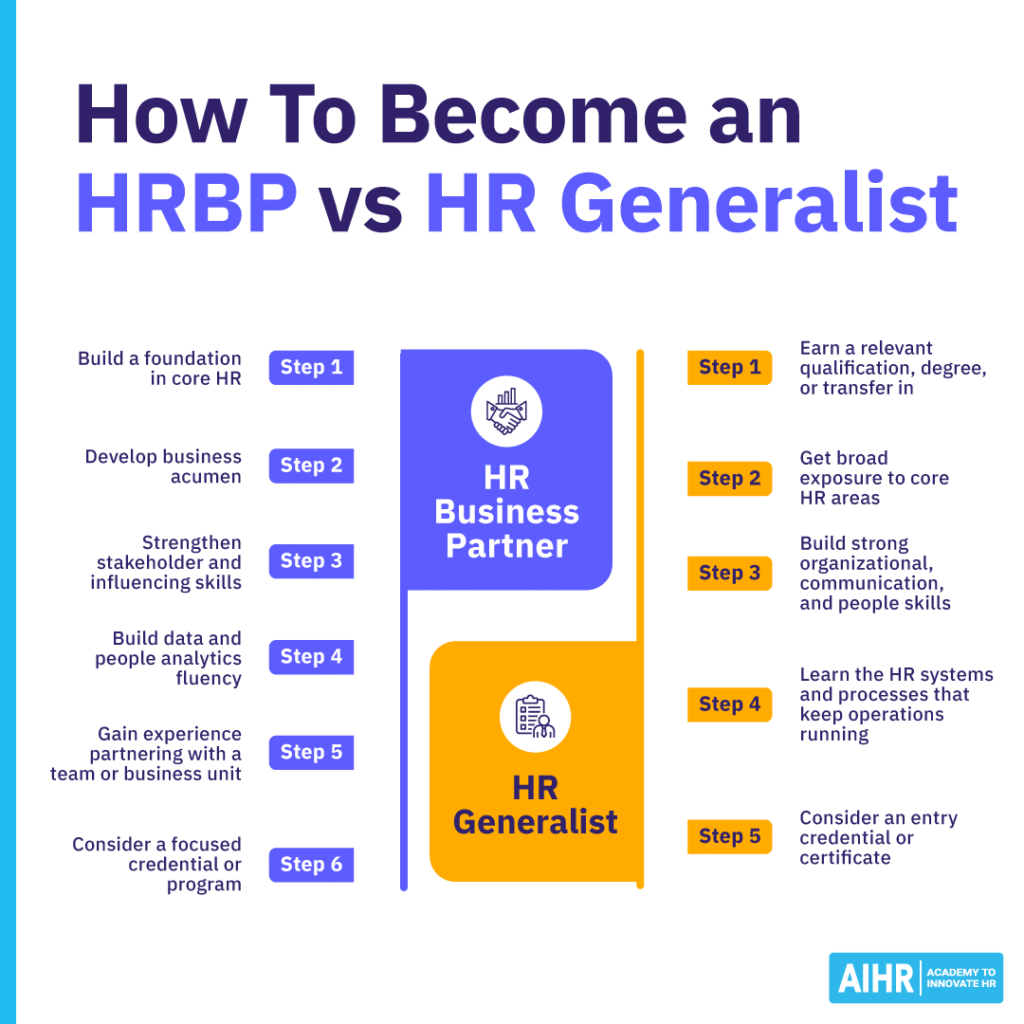
How to become an HR Business Partner: 6 steps
Why become an HR Generalist?
How to become an HR Generalist: 5 steps
Which role is right for you?
HR Business Partner vs. HR Generalist: A side-by-side comparison
An HR Generalist is a broad HR role that supports day-to-day people operations. This often includes recruitment, onboarding, performance, employee relations, compensation and benefits, culture, and compliance. In a small company, the HR Generalist may be the first HR hire and likely owns most HR processes.
An HR Business Partner (HRBP) connects HR strategy to business priorities. They usually partner with a specific department, region, or leadership group. This helps them understand the team’s goals, challenges, and workforce needs. HRBPs play an especially important role during growth, restructuring, leadership changes, and other business shifts.
Here’s a breakdown of both roles:
Core focus
Operational breadth
Strategic alignment
Typical scope
Whole employee life cycle
A business unit/leadership group
Day-to-day work
Hands-on HR delivery
Advising, planning, influencing
Whom they work with most
Employees and managers
Senior leaders and managers
Most important skills to have
Organization, communication, HR process knowledge
Business acumen, stakeholder influence, data literacy
Typical career stage and next steps
Entry-level to early-career, often toward HR Manager or specialist HR roles
Mid- to senior-level, often toward HR Director, VP of People, or CHRO roles
Why become an HR Business Partner?
An HRBP role can be a strong fit when you enjoy strategy, leadership influence, and work that connects people decisions to business goals.
Benefits of the role
The HRBP role gives you a stronger voice in business decisions. You’ll advise leaders on workforce plans, team design, performance, and change. Instead of only reacting to people issues, you’ll help shape the conditions that prevent them. You’ll also gain regular exposure to senior stakeholders, which can sharpen your judgment and influence.
Who would thrive in it?
You’ll likely enjoy HR business partnering if strategy, relationships, and business impact energize you. This role suits people who can balance leadership priorities with employee wellbeing. You’ll need curiosity about how the business works, the confidence to challenge leaders, and the communication skills to turn HR advice into practical action.
How it furthers your HR career
An HRBP role can move you closer to senior HR leadership. It builds the skills leaders need at the director level and above: consulting, stakeholder management, business acumen, and data-informed decision-making. Over time, this path can lead to senior HRBP, HR Director, VP of People, and Chief Human Resources Officer (CHRO) roles.
Which career goals it meets
Choose this path when your goal is to shape how a business grows, organizes teams, and handles change. You’ll enjoy it when connecting HR work to business outcomes motivates you. It’s also a strong fit when you want to influence leaders, solve complex people problems, and move toward senior HR roles.

How to become an HR Business Partner: 6 steps
Once the HRBP path feels like a fit, focus on building business confidence, strategic judgment, and practical HR experience. These six steps can help you move toward the role:
Step 1: Build a foundation in core HR
Start by building a broad base across core HR areas, including recruitment, onboarding, performance, employee relations, rewards, and compliance. You don’t need to master every topic at once. Aim to understand how each function supports employees and business goals, so you can connect daily HR decisions to the wider people strategy.
Step 2: Develop business acumen
Business acumen means understanding how your organization makes money, serves customers, manages risk, and measures success. For an HRBP, that knowledge needs to be specific. Learn your industry, business model, goals, and pain points. Then practice linking HR work, such as retention or workforce planning, to those priorities in plain language.
Step 3: Strengthen stakeholder and influencing skills
Influence starts with trust. Learn how decisions get made, who shapes them, and what each stakeholder cares about. You’ll need to manage expectations, handle disagreement, and build support without forcing consensus. Strong HRBPs listen first, ask clear questions, and translate people risks into choices leaders can act on with confidence.
Step 4: Build data and people analytics fluency
People analytics is the use of workforce data to guide HR decisions. Start with common measures such as turnover, absenteeism, engagement, performance, and hiring quality. Then learn how to turn the numbers into a clear story. Your goal is to help leaders see what’s happening, why, and what to do next.
Step 5: Gain experience partnering with a team or business unit
Look for chances to support one team, function, or business unit more closely. You could join workforce planning meetings, help a manager solve retention issues, or support a change project. This gives you practice balancing business needs with employee impact, which is central to HR business partnering work in real settings.
Step 6: Consider a focused credential or program
Many HRBP roles prefer several years of HR experience, so a focused credential works best after you have a foundation. AIHR’s HR Business Partner 2.0 Certificate Program covers strategic HRBP competencies, including business acumen, data literacy, employee experience, and influence. Use it to structure your learning and practice skills you can apply at work.
AIHR’s Demo Portal helps you explore your options by allowing you to:
✅ Preview lessons connected to HR Generalist and HR Business Partner skills development
✅ Explore practical guides, templates, and resources you can apply in day-to-day HR work
✅ See how AIHR learning supports both operational HR execution and strategic business partnering
✅ Identify which HR learning path best matches your current role and future ambitions
🎓 Start exploring AIHR’s Demo Portal and find the learning path that helps you become a more well-rounded HR professional.
Why become an HR Generalist?
The HR Generalist role is ideal when you enjoy variety, direct employee support, and learning how the full HR function works. It can also give you a strong base for several future HR career paths.
Benefits of the role
The HR Generalist role gives you variety and frequent employee contact. You’ll work across the employee life cycle, from hiring and onboarding to performance, benefits, and compliance. This breadth helps you see how HR operates as a whole. It can be especially rewarding if you like solving practical issues quickly.
Who would thrive in it?
You’ll likely thrive as an HR Generalist if you enjoy variety, direct problem-solving, and regular employee interaction. Most days will look different. You may answer policy questions in the morning, support a manager at noon, and update HR records later. The role suits organized people who stay calm when priorities shift.
How it furthers your HR career
An HR Generalist role gives you a strong base for many HR career paths. Because you’re involved in several functions, you can spot which areas interest you most. You might grow into an HR Manager role, specialize in areas like talent acquisition or rewards, or later move into HR business partnering.
Which career goals it meets
Choose this role when broad HR experience and daily employee support appeal to you. It can also prepare you to be the first HR hire in a small company. In that setting, you’ll need to set up processes, answer questions, support managers, and keep records organized.
How to become an HR Generalist: 5 steps
The HR Generalist path is well-suited if you want to build broad HR skills. These five steps can help you move toward the role:
Step 1: Earn a relevant qualification, degree, or transfer in
Many HR Generalist roles ask for a degree in Human Resources, business administration, organizational psychology, or a related field. Relevant work experience can also help you transfer in. Administration, recruitment, operations, customer support, and people management roles can build useful skills if you’re moving into HR from another career path.
Step 2: Get broad exposure to core HR areas
HR Generalists need breadth, so look for experience across recruitment, onboarding, employee relations, performance, benefits, payroll inputs, and compliance. You can build this through internships, coordinator roles, project work, or shadowing. As you learn, note how each process affects the employee experience, the organization’s risk, and overall service quality.
Step 3: Build strong organizational, communication, and people skills
You’ll spend much of your time answering questions, explaining policies, and helping managers handle employee issues. Strong communication keeps those conversations clear and fair. Build habits like documenting decisions, asking follow-up questions, and checking that people understand next steps. Good organization helps you balance urgent requests with routine HR work.
Step 4: Learn the HR systems and processes that keep operations running
Learn the tools that keep HR operations accurate. This includes a human resource information system (HRIS), applicant tracking system (ATS), payroll inputs, benefits platforms, document management, and reporting tools. Clean data helps HR answer questions faster, meet compliance needs, and give managers reliable information when they need it the most.
Step 5: Consider an entry credential or certificate
Entry-level roles such as HR Assistant, HR Coordinator, and HR Administrator often lead to HR Generalist work. A practical credential can help you build the missing pieces. AIHR’s HR Generalist Certificate Program covers core HR processes, policy frameworks, payroll, difficult conversations, business value, and AI skills for everyday HR work.
Which role is right for you?
Now that you understand the HR Business Partner vs HR Generalist comparison, which path feels like a better fit?
You may have strengths that work well in each role. That’s normal. Use these questions to narrow your choice:
- Which kind of work gives you more energy: solving an employee’s issue today, or shaping a plan that pays off next year?
- Do you prefer being the person employees approach for day-to-day questions, or the person leaders involve before business decisions?
- Do you enjoy variety across HR areas, or do you prefer strategy, business impact, and long-term planning?
An HR Generalist role may fit you if:
- You get satisfaction from solving employee problems in the moment
- You like being the person employees and managers come to first
- You enjoy variety across recruitment, onboarding, employee relations, benefits, and compliance.
An HR Business Partner role may fit you if:
- You get satisfaction from shaping plans that create long-term value
- You like advising leaders before major people decisions
- You enjoy strategy, business impact, influence, and organizational change.
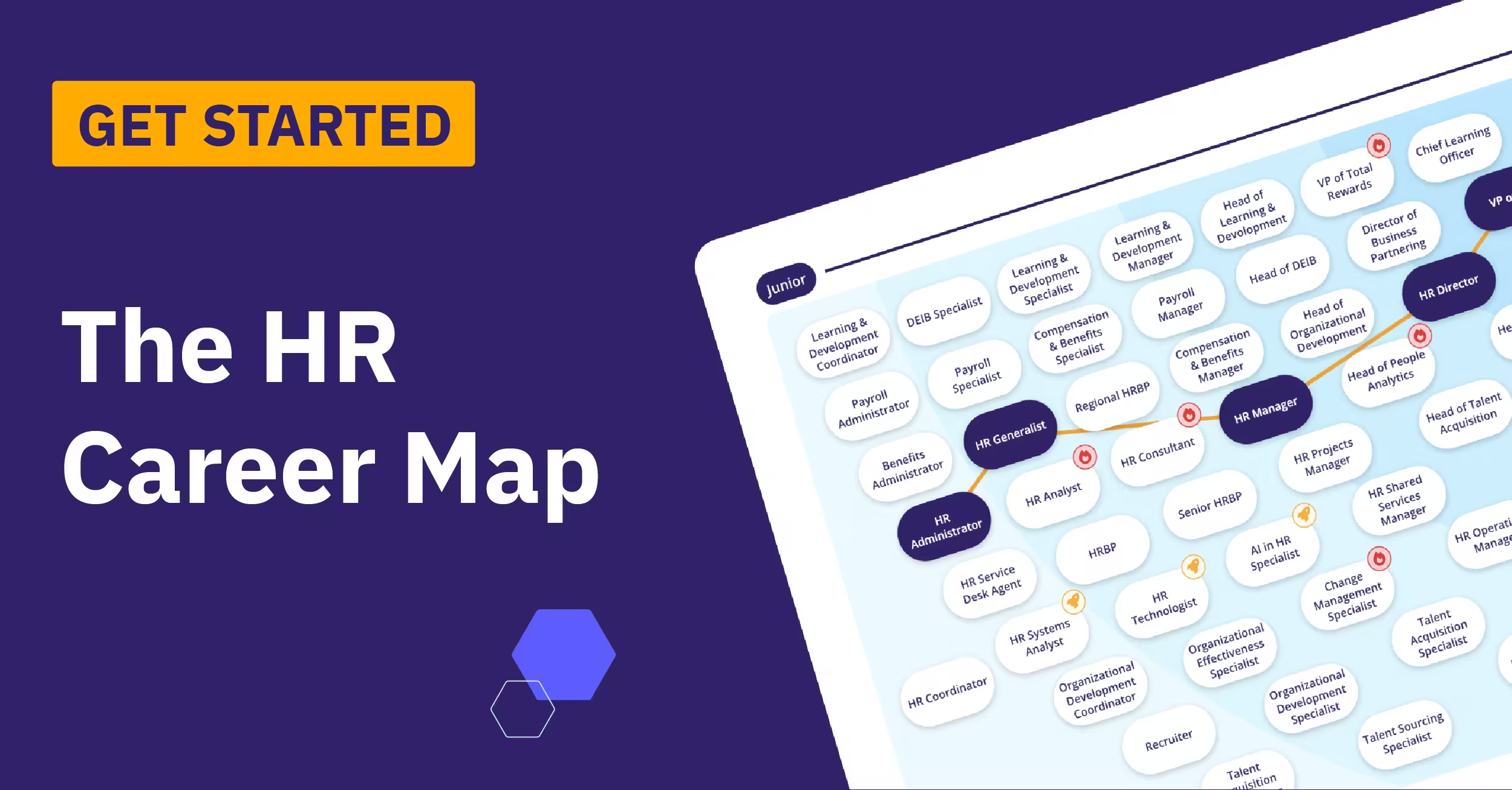
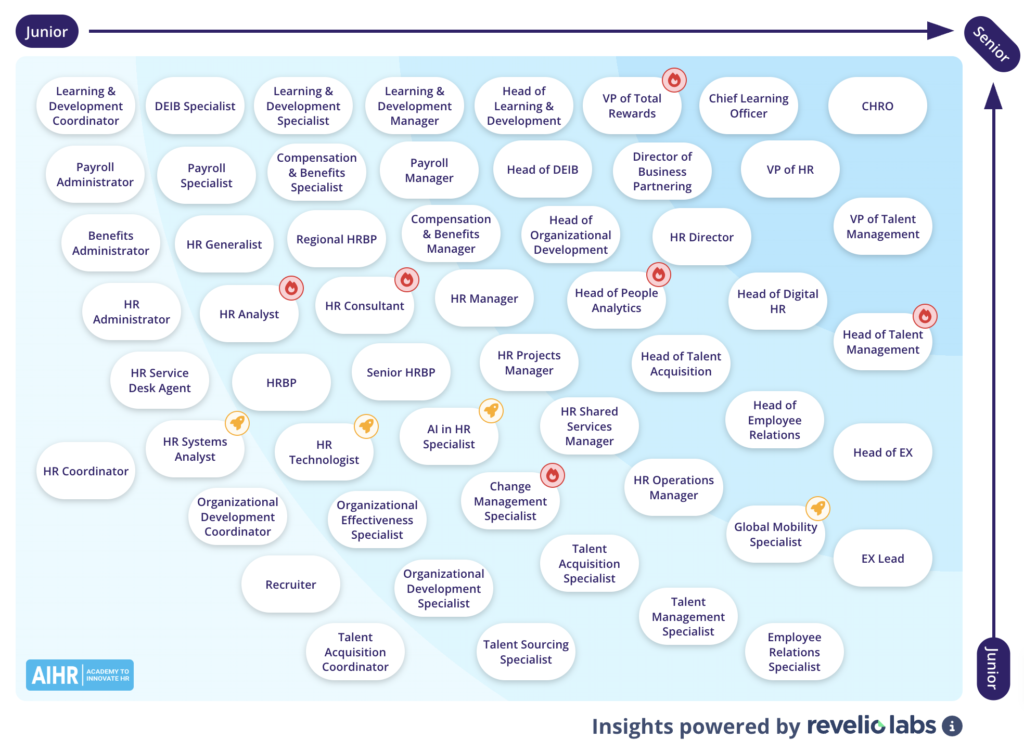
Use AIHR’s HR Career Map to see how HR Generalist and HRBP roles fit into the wider HR career landscape. You can also explore role requirements, salary insights, and possible next steps.
Remember: There’s no right or wrong career path. The best choice depends on your strengths, motivations, and goals. You’ll likely feel more engaged in a role that matches how you like to work.
Next steps
The difference between an HR Generalist and HRBP comes down to fit, not rank. Choose the path that matches how you like to work and where you want to grow. Next, build the skills that support it. For an HR Generalist role, focus on breadth, execution, systems, and employee support. For an HRBP role, focus on business acumen, influence, people analytics, and strategic thinking.
AIHR’s Demo Portal and HR Career Hub can help you explore the skills behind each path. From there, choose one small next step: take a skills assessment, map your target role, or start a focused learning plan.