



A well-designed 30-60-90 day plan, also called a 3-month plan, guides new employees and managers in navigating their new workplace and roles. It provides structure and direction around expectations, processes, and company culture and is integral to a successful onboarding process.
This article provides you with a comprehensive guide on how to create a 30-60-90 day plan for the onboarding of new employees, as well as for internally promoted employees. We also provide you with a free 30-60-90 day plan template in Word, Excel, and PowerPoint, a check-in template for each milestone, and six examples you can adapt.
Contents
What is a 30-60-90 day plan?
Free 30-60-90 day plan templates
30-60-90 day plan examples
How to write a 30-60-90 day plan for new employees
FAQ
What is a 30-60-90 day plan?
A 30-60-90 day plan (also written as a 30/60/90 plan) is a document that outlines the goals and milestones an employee aims to achieve during the first 30, 60, and 90 days in a new role. It sets clear expectations, aligns the employee’s work with the company’s goals, and empowers employees to maximize their productivity.
The plan splits the first three months into three phases, and each phase builds on the one before it.
- Days 1 to 30 (learn): The employee gets to know the company, the team, the tools, and how the role works. Goals are mostly internal and focused on learning.
- Days 31 to 60 (contribute): The employee starts applying what they’ve learned. They take on role-specific tasks and add value to the team.
- Days 61 to 90 (own): The employee works with more independence. They deliver results, lead small initiatives, and set goals for the months ahead.

This plan also serves as a strategic tool for both the employee and their manager to track progress, identify potential challenges early on, and make adjustments as needed to ensure the employee’s successful integration and long-term contribution to the organization.
Although 30-60-90 day plans are most often used for new hires, they can also be extremely beneficial for employees who have been promoted to a new (managerial) role or even for teams when a new project is launched. Some candidates also present one during a job interview to show how they would approach the role.
For the organization, a 30-60-90 day plan shortens the time it takes a new hire to become productive and helps managers spot skill gaps early. For the employee, it removes uncertainty about what’s expected and gives them visible wins to work toward.
HR’s role in the 30-60-90 day plan
Around the world and across industries, HR professionals are tasked with onboarding new hires as efficiently as possible. How well an employee is onboarded impacts how quickly they become a valuable member of the team. To achieve this, HR focuses on three activities.
- Helping employees visualize how they align their work and goals to the business and connect day-to-day tasks to the larger purpose of work
- Working with managers and employees to create a clearly defined plan based on specific and measurable goals
- Regularly checking that the plan is being followed and key metrics are being achieved.
Free 30-60-90 day plan templates
30-60-90 day plan templates are invaluable tools for new hires, from juniors to managers and leaders, as well as for those transitioning into new roles within an organization.
They provide a clear and structured framework that helps individuals set measurable goals and track their progress in a transparent way. By using a template, employees can efficiently navigate the critical first few months, quickly become productive, and make a positive impact, while managers can maintain consistency in onboarding and development processes.
Use the framework below to map out each phase with the new hire and their manager, or download the full collection in Word, Excel, and PowerPoint.
SMART goals
What should the employee know or understand by day 30?
Which tasks or projects should they contribute to by day 60?
What should they deliver independently by day 90?
Action steps
Training, introductions, system setup, and reading
First assignments, shadowing, and collaboration tasks
Projects to lead, process improvements, and planning for the next quarter
Deliverables
A summary of what they’ve learned or a first draft of a work task
A completed task, report, or project milestone
A finished project or a 90-day progress presentation
Key metrics
Training completed and meetings held
Tasks completed, quality, and feedback scores
Results against role targets and manager evaluation
Support needed
Tools, access, buddy, and manager time
Coaching, feedback, and stakeholder input
Development opportunities and longer-term goals
Check-in date
[Date]
[Date]
[Date]
30-60-90 day plan template for PowerPoint
A PowerPoint template for a 30-60-90 day plan offers a visually organized and easy-to-use format for presenting role details, strategic goals, actions, and milestones.

30-60-90 day plan template for Excel
A 30-60-90 day plan Excel template provides a customizable and detailed structure for tracking goals, actions, and progress, ensuring that both employees and managers can monitor performance and make adjustments as needed to stay on track.

30-60-90 day plan template for Word
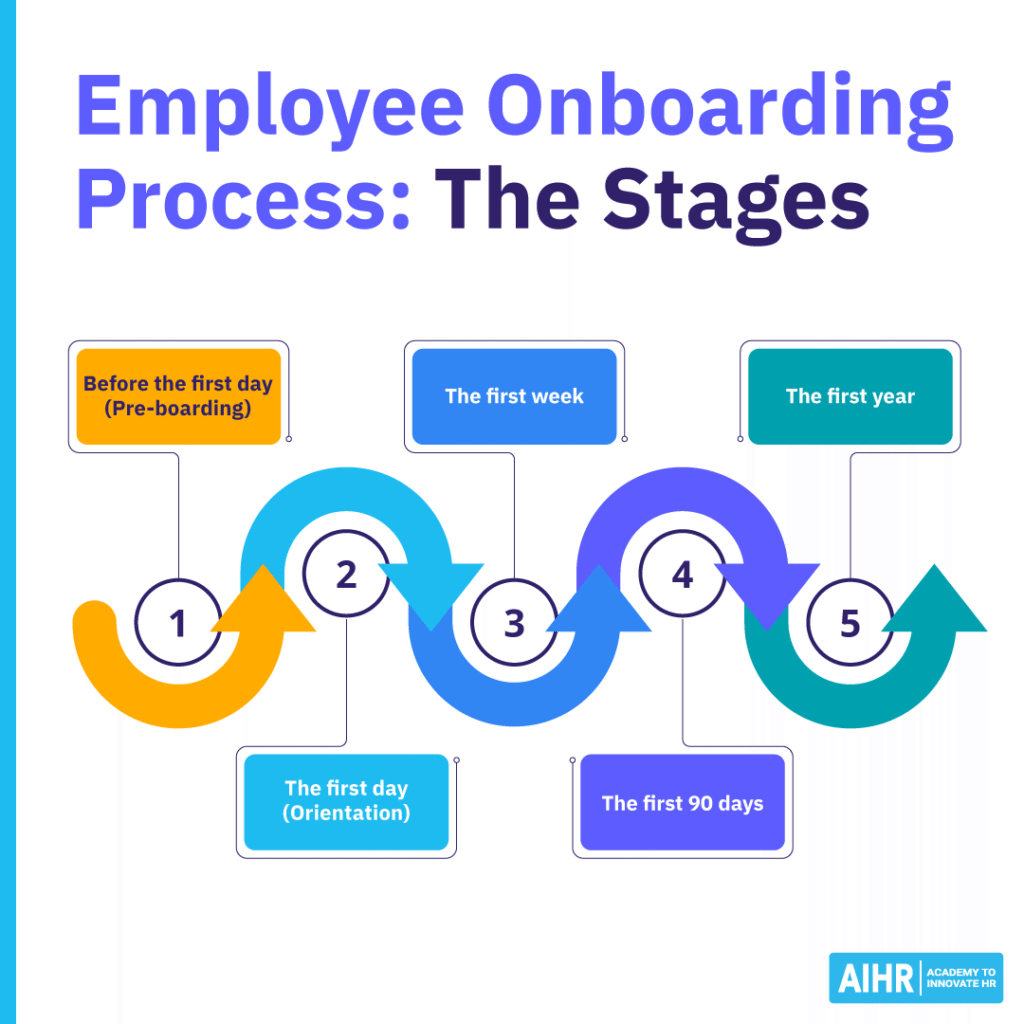
The Word template is a fillable document covering the role summary, get-to-know meetings, and goals for each phase. Click any field to add details, track status with dropdowns, and capture notes at every check-in.
30-60-90 day check-in template
A 30/60-90 day check-in template helps managers review progress at the end of each phase and adjust the plan. Ask these questions at each milestone.
Day 30 check-in
- What have you learned about your role, the team, and how work gets done?
- Which goals have you completed, and which need more time?
- What tools, information, or support do you still need?
- Who else should you meet?
Day 60 check-in
- Which tasks or projects have you contributed to, and what were the results?
- Where do you feel confident, and where do you need more coaching?
- Do any goals for days 61 to 90 need to change?
Day 90 check-in
- Which 90-day goals did you achieve, and how did you measure them?
- What are your priorities for the next three to six months?
- How can we improve onboarding for the next new hire?
At the 90-day mark, you can follow this check-in with a formal 90-day review that rates performance and confirms the outcome of the probation period.
30/60-90-day check-in email template
30-60-90 day plan examples
An effective 30-60-90 day plan is built on clear, measurable goals. These let new hires and their managers track progress, show results, and stay aligned with wider organizational goals. The best examples include specific metrics, timelines, and benchmarks that show what success looks like at each stage.
Below are six 30-60-90 day plan examples for different roles and situations. Use them as a starting point and adjust the goals and metrics to fit your organization.
Example 1: 30-60-90 day onboarding plan for new employees
Great onboarding depends heavily on the manager. When managers take an active role in onboarding, employees are 3.4 times as likely to feel their onboarding was successful. A 30-60-90 day plan is an excellent way to introduce the new employee to the role and industry they’ll be working in, and it gives managers a clear structure to guide them.
This example works for most individual contributor roles. Adjust the goals to fit the job.
| Goals/Actions | Key metrics | 30 days | 60 days | 90 days |
|---|---|---|---|---|
| Company and role orientation | Onboarding tasks completed | Complete orientation, review the company’s mission and values, and read the role description with the manager | Explain how the role supports team and company goals | Present a summary of how their work contributes to team targets |
| Relationship building | Number of key contacts met | Meet the team, a buddy, and three to five key stakeholders | Hold follow-up meetings with the stakeholders they work with most | Work with at least one other team on a shared task |
| Systems and tools | System proficiency | Get access to all tools and complete required system training | Use core systems independently for daily tasks | Suggest one improvement to how the team uses a tool |
| Role-specific tasks | Tasks completed to standard | Shadow colleagues and complete first supervised tasks | Complete regular tasks with limited support | Own a set of tasks or a small project from start to finish |
| Performance goals | Goal achievement rate | Agree on three to five SMART goals with the manager | Reach at least half of the 60-day goals | Achieve the agreed 90-day goals and set goals for the next quarter |
| Feedback and development | Check-ins held and feedback actioned | Attend the 30-day check-in and share first impressions | Act on feedback from the 30-day check-in | Complete the 90-day review and agree on a development plan |
Example 2: 30-60-90 day sales plan
A 30-60-90 day sales plan helps a new sales rep build product knowledge and a pipeline before they’re expected to close deals. Swap in your own sales targets and deal sizes.
| Goals/Actions | Key metrics | 30 days | 60 days | 90 days |
|---|---|---|---|---|
| Market research | Number of market research reports completed | Research the target market, main competitors, and customer segments | Synthesize findings to identify top 3 market opportunities | Develop actionable insights and present to sales leadership |
| Prospect identification | Size of qualified leads database | Build a database of 50 potential prospects | Qualify at least 25 prospects through initial outreach | Develop a target list of 10 high-potential leads |
| Customer outreach | Number of initial contacts made | Initiate contact with 50% of qualified prospects (at least 12 contacts) | Secure 5 introductory meetings or calls | Convert 2 prospects into active opportunities with follow-up meetings |
| Product knowledge | Product knowledge assessment score | Complete product training and pass a knowledge test with a score of 80% or higher | Participate in a product demo with a senior rep | Conduct an independent product demo, scoring 90% or higher in a peer review |
| Sales training | Number of new techniques implemented | Attend two sales training sessions on advanced techniques | Implement 2 new sales techniques in prospect interactions | Mentor a junior sales rep on 3 key techniques and share success stories with the team |
| Sales targets | Sales revenue achieved | Set up the sales pipeline and forecast potential revenue from qualified leads | Close the first sale, achieving 10% of the quarterly sales target (e.g., $10,000 if the target is $100,000) | Achieve 30-50% of the quarterly sales target (e.g., $30,000 – $50,000) by closing additional deals |
| Sales strategies | Strategy effectiveness rating | Develop an initial outreach strategy based on market research insights | Test and refine the strategy through A/B testing with 10% of prospects | Fully implement the optimized strategy, targeting the remaining 90% of prospects |
| Reporting and analysis | Performance improvement rate | Track key metrics (e.g., contact rates, conversion rates) weekly | Analyze performance data and identify 3 key areas for improvement | Create a detailed report with actionable recommendations for optimizing sales processes |
| Collaboration | Team collaboration rating | Schedule and attend weekly team meetings, actively participating in discussions | Collaborate on at least one cross-functional project with marketing or product teams | Lead a team initiative to improve a sales process or tool, presenting results to management |
| Personal development | Skill improvement assessment score | Identify 2-3 key areas for personal growth with manager feedback | Attend a relevant workshop or training to develop these skills | Demonstrate improved skills through a presentation or project, receiving positive feedback from peers or manager |
Example 3: 30-60-90 day plan for managers
New managers need to understand their team before they can lead it. This plan for managers starts with one-on-ones and team assessments, then moves into goal setting, coaching, and process improvement. It works for first-time managers and for experienced managers joining from outside the organization.
| Goals/Actions | Key metrics | 30 days | 60 days | 90 days |
|---|---|---|---|---|
| Team assessment | Employee satisfaction survey results | Conduct individual meetings with each team member to assess dynamics and performance | Identify top 3 areas for improvement and create development plans for team members | Implement initiatives to improve satisfaction, targeting a 10% increase in survey scores |
| Goal setting | Goal achievement rate | Meet with each team member to understand their personal and professional goals | Align individual goals with broader organizational objectives, setting SMART goals for each team member | Track progress on goals and adjust strategies to ensure at least 70% of goals are on track for completion |
| Communication plan | Employee feedback and clarity of messages | Establish regular team meetings and one-on-ones, and create a communication schedule | Ensure consistent messaging by reviewing team feedback and adjusting communication as needed | Implement feedback mechanisms to enhance clarity and increase communication satisfaction scores by 15% |
| Performance evaluation | Performance improvement plan effectiveness | Review recent performance data and identify at least 3 key skills gaps within the team | Provide targeted feedback and initiate coaching sessions for improvement in identified areas | Measure performance improvement with a goal of 20% enhancement in key performance areas |
| Process improvement | Efficiency improvement percentage | Conduct a process audit to identify inefficiencies in current workflows | Develop and roll out a process improvement plan targeting at least 2 major inefficiencies | Measure and monitor process efficiency, aiming for a 15% improvement in overall workflow efficiency |
| Team development | Employee development plan completion rate | Assess the development needs of each team member and create individual development plans | Implement at least 2 training and development initiatives tailored to team needs | Evaluate employee growth, aiming for at least 50% completion of development plans and tangible skill improvements |
| Relationship building | Stakeholder satisfaction and feedback | Identify key internal and external stakeholders and their expectations | Build and strengthen relationships through regular check-ins and updates | Achieve a 20% improvement in stakeholder satisfaction and engagement based on feedback |
| Problem solving | Time to resolution for key issues | Identify the top 3 challenges or problem areas affecting the team | Develop and implement targeted solutions for each identified problem | Monitor and refine problem-solving approaches, aiming for a 30% reduction in time to resolution |
Learn how to create memorable onboarding experiences to help your organization retain new hires for the long term.
AIHR’s HR Generalist Certificate Program allows you to:
✅ Create an end-to-end HR process, from recruitment to employee engagement
✅ Engage with people across the employee life cycle, starting with hiring and onboarding
✅ Design and implement successful HR policies to benefit employees and the business
✅ Learn strategies you can use to become an effective communicator
🎓 Use the AIHR Demo Portal to explore learning resources that can support your next step in HR.
Example 4: 30-60-90 day plan for executives
Executives are expected to shape strategy quickly, but they still need time to learn the business. This plan balances listening and analysis in the first month with strategic planning and stakeholder engagement in the second, and moves into execution in the third.
| Goals/Actions | Key metrics | 30 days | 60 days | 90 days |
|---|---|---|---|---|
| Strategic planning | Number of strategic initiatives identified | Conduct a comprehensive assessment of current business landscape and gather data from all departments | Define 3-5 strategic goals and objectives based on initial analysis | Develop a detailed strategic plan with clear timelines, resources, and responsible parties |
| Team assessment | Employee engagement survey results | Conduct individual and team assessments through surveys and one-on-one meetings | Address identified areas for improvement by creating tailored development plans | Implement initiatives to build a high-performing team culture, aiming to improve engagement scores by 15% |
| Stakeholder engagement | Number of key stakeholder meetings | Identify and map out key stakeholders, both internal and external, and understand their needs | Hold at least 5 initial meetings to establish rapport and open communication channels | Foster strong partnerships by organizing regular updates and collaboration sessions, targeting a 20% increase in stakeholder satisfaction |
| Financial analysis | Profitability and revenue growth | Review and analyze the latest financial statements and key performance indicators (KPIs) | Identify two or three opportunities to reduce costs or grow revenue based on the financial review | Develop and begin implementing financial strategies aimed at achieving a 10% improvement in profitability and revenue growth |
| Process optimization | Efficiency improvement percentage | Identify key bottlenecks and inefficiencies within current processes through analysis and team feedback | Implement process improvements, including automation of at least one major task, to enhance efficiency | Monitor and measure process efficiency, targeting a 20% improvement in overall workflow efficiency |
| Change management | Employee satisfaction and adoption rate | Assess the organization’s readiness for upcoming changes through surveys and readiness assessments | Develop a comprehensive change management plan, including communication strategies and training sessions | Execute change initiatives, measure adoption rates, and aim for a 25% increase in employee satisfaction regarding the changes |
| Performance evaluation | Key performance indicators (KPIs) | Review existing performance metrics and identify gaps in current KPI tracking | Set clear, measurable performance targets and align them with the overall strategic objectives | Evaluate team and individual performance, providing feedback and adjustments to ensure at least 70% of targets are on track |
| Leadership development | Employee retention rate and leadership feedback | Identify key leadership development needs and opportunities within the team | Implement leadership training programs and establish mentoring relationships | Evaluate leadership effectiveness and growth through feedback, aiming to increase retention rates by 10% and improve leadership competency scores |
Example 5: 30-60-90 day plan for an internal promotion
When employees take on a new role within the organization, a 30-60-90 day plan helps them get familiar with their new responsibilities and become effective as quickly as possible. Below is an example of an internal promotion from an HR Generalist role to an HR Manager role.
| Goals/Actions | Key metrics | 30 days | 60 days | 90 days |
|---|---|---|---|---|
| Transition and learning | Adaptation and knowledge acquisition rate | Meet with current HR Manager and key leaders to fully understand new responsibilities | Shadow current HR Manager and complete role-specific training to grasp complexities of the HR Manager role | Demonstrate proficiency by independently managing key HR functions and decision-making processes |
| Stakeholder management | Stakeholder satisfaction and feedback | Identify and map key internal stakeholders and their expectations | Hold one-on-one meetings with stakeholders to establish relationships and gather feedback | Implement strategies to enhance stakeholder satisfaction, aiming for a 15% increase in engagement scores |
| Team leadership | Employee engagement and productivity | Conduct a team assessment to understand dynamics, strengths, and areas for improvement | Provide tailored support and guidance to team members, setting clear expectations | Implement initiatives to improve team collaboration and productivity, targeting a 10% increase in engagement scores |
| Strategic planning | Alignment of HR initiatives with organizational goals | Review and align with the company’s strategic goals, identifying where HR can contribute | Develop HR strategies and initiatives that align with the company’s objectives, gaining leadership approval | Begin implementing strategic HR initiatives, monitoring alignment and impact on organizational goals |
| Performance management | Employee performance improvement rate | Review existing performance management processes and identify areas for enhancement | Implement at least one performance improvement initiative, such as a new feedback system | Evaluate the effectiveness of performance management initiatives, aiming for a 20% improvement in employee performance |
| Talent acquisition | Time-to-fill key positions | Review and assess the current recruitment process to identify bottlenecks | Streamline the recruitment and selection process, reducing time-to-fill by 10% | Improve recruitment efficiency by filling key positions with higher-quality candidates, achieving a 15% reduction in time-to-fill |
| Employee development | Employee satisfaction and career development plans | Identify development needs through discussions with employees and performance reviews | Implement targeted training and development programs, focusing on key skill gaps | Evaluate the impact of these programs on employee growth, aiming for a 20% improvement in satisfaction and professional development outcomes |
| HR policy and compliance | Compliance with HR regulations and policies | Conduct a thorough assessment of the existing HR policy and compliance framework | Update HR policies to reflect current regulations and best practices, ensuring clear communication to all employees | Measure and monitor compliance adherence, aiming for a 100% compliance rate and resolving any identified gaps |
HR tip
Adjusting the 30-60-90 day plan for internal promotions is an excellent way to highlight and encourage the behavior that earned the employee their promotion. Work with them to outline their skills and the value they bring to their team, department, and the business. Then align these with their short- and long-term goals.
Example 6: 30-60-90 day training plan
A 30-60-90 day training plan maps out the learning a new hire needs to complete in each phase. It works well alongside the onboarding plan and helps L&D teams and managers keep training on schedule.
| Training area | Key metrics | 30 days | 60 days | 90 days |
|---|---|---|---|---|
| Compliance training | Required modules completed | Complete all mandatory compliance and safety training | Pass any required compliance assessments | Confirm all certifications are recorded in the HRIS or LMS |
| Product or service knowledge | Knowledge check score | Complete product or service training sessions | Pass a knowledge check with the agreed passing score | Explain the main products or services to a customer or colleague without support |
| Systems training | Systems used independently | Complete training on the core tools for the role | Complete advanced training on the tools used most | Use all core systems without assistance |
| Role-specific skills | Skills assessed by manager | Identify two or three priority skills with the manager | Complete a course or job shadowing for each priority skill | Show the skills in a live task or project |
| Communication and collaboration | Feedback from peers and manager | Learn team communication norms and meeting rhythms | Lead one team update or presentation | Collect feedback on collaboration and act on it |
| Development planning | Development plan agreed | Discuss career interests with the manager | Draft a development plan with learning goals | Agree on a development plan for the next six months |
How to write a 30-60-90 day plan
Whatever the job level, building an employee’s skills takes concrete performance goals. Vague goals, objectives, and metrics make a 30-60-90 day plan hard to follow and harder to measure.
For example, “increase productivity” or “become a better strategic planner” are good ambitions. But they don’t say how to get there or how progress will be measured. The goals in a 30-60-90 day plan should be realistic, quantifiable, and focused.
Here’s how to create a 30-60-90 day plan that gives new hires clear goals from day one, starting with a checklist.
30-60-90 day plan checklist for new employees
The 30-60-90 day plan and onboarding pack should include these elements.
- New employee welcome
- Planning get-to-know meetings
- Outlining high-level goals
- Clarifying short- and long-term priorities
- Creating SMART goals
- 30-day goals
- 60-day goals
- 90-day goals
- Defining metrics of success
- Feedback and review checkpoints

Let’s break this down.
1. New employee welcome
This is HR’s opportunity to lay the foundation for setting a new employee up for success. A great welcome helps new employees understand where they fit into the larger organizational structure, what is expected of them, and which activities will help them get up and running as quickly as possible. It is not a complete list of their responsibilities but rather a summary that helps them focus on the key goals and metrics they need to achieve in their first 90 days.
The welcome should include:
- Role details
- How the role supports the broader organization’s objectives
- A summary of expectations and the support the employee should expect from their manager
- The tools, system access, and equipment the employee needs are set up before their first day.
HR tip
Personalize the welcome to the employee, their role, and how they will add value to the business, clients and colleagues. This will set the stage for a memorable onboarding experience.
2. ‘Get to know’ meetings
There is a specific list of people that every new hire should connect with to help them understand their role.
The ‘get to know’ section should include:
- Who the employee is meeting, including their name, role, and responsibilities
- The key objective of the meeting
- Why this meeting will help the employee in their new role
- Topics to discuss and suggested questions the employee can ask to get the most out of the meeting.
3. Outlining high-level goals
A high-level view tells new employees what’s expected of them by the end of their first 90 days. It should be outcomes-based and linked to specific goals. For example, high-level goals could include contributing 15% of all new sales after 90 days, building a sales plan, or optimizing a new client onboarding process.
The long-term goals section should include:
- A list of outcomes-based goals to achieve in 30, 60, and 90 days
- Context on how each goal relates to their position. For example, “As a sales executive in this organization, one of your responsibilities is onboarding new clients.”
- A clear understanding that the employee should be aiming for fluency in their role by the 90-day mark, and that this plan will help them achieve this goal.
HR tip
Align long-term priorities with the organization’s key strategic goals. Then work backward to decide where the employee should be at the end of their first 90 days to support those priorities, and which 30- and 60-day goals will get them there.
SMART goals
As an HR professional, you can support new hires by helping them to set SMART goals that they can achieve.
SMART goals are:
- Specific
- Measurable
- Achievable
- Relevant
- Time-bound.
For example, instead of setting a goal to increase the company’s website traffic, a digital marketer’s SMART goal could be to increase traffic by 2% in the first 30 days.
Here are some examples of goals for the first 30, 60, and 90 days.
30 days
The first month is about getting to know the organization and helping the new employee find their feet. Goals here should be internally oriented towards getting to know “how to do the job.” If there are external goals, they should be small and reachable.
- Work with the new employee and their manager to define between three and five goals.
- Encourage the employee to learn as much as they can and to suggest which goals they believe they need to reach.
- Highlight that the employee is not working in a vacuum. They should be encouraged to ask questions and learn.
60 days
Month two should focus on helping the employee step into more role-specific activities. At the end of month two, the employee must have a more solid understanding of the basics of the organization and its pain points and be a contributing member of the team
- It is important not to overwhelm the employee as this plan is formulated as the new hire arrives.
- Work with the employee and their manager to extend their roadmap, but make it clear that they are not expected to be able to meet these goals as they start their role.
90 days
The aim of the 90 day plan is to ensure an employee is effectively onboarded and adding value to the business within three months. To achieve this objective, the 90 day goals should be closely aligned to the longer term performance expectations of the role. This is very much an execution phase that leverages the learnings of the previous 60 days. Its success depends on how well the 30 day and 60 day goals were achieved.
- Ensure the employee understands this is the last month before they are expected to fully transition into their role.
- Set goals and expectations that can be used as the basis for the first performance contracting conversation.
- Allow the employee to also state what support they need during this last month to be able to fully transition into their role.
HR tip
The third month is when the strategy mapped out during days 31 to 60 is put into action. By this phase, the employee must be actively contributing to projects and working with their team to achieve results. Key metrics must reflect this.
4. Defining metrics of success
Each phase needs metrics. The measurable part of a SMART goal often covers this, but success lies in the detail. Make the deliverables for each goal quantifiable and capture them in the 30-60-90 day plan.
The right metrics help a new employee picture their role and what success looks like. They also give the employee and their manager a clear basis to measure how well onboarding is working and where the employee needs more support, tools, or insight. Metrics are also how you track progress in regular feedback sessions.
5. Feedback and review checkpoints
In this section, outline when the new employee’s manager and a member of the HR team will check in with them during the first 90 days. Schedule these check-ins in advance.
HR should make sure each feedback session leaves time for these four things:
- The employee to give feedback
- The manager or leadership team to give feedback
- Reviewing metrics against goals
- Planning additional support if metrics have been missed
HR tip
To support managers and new employees, use the 30-60-90 day check-in template above. It helps them document what was covered in each meeting, including a recap of goals, metrics, achievements, and key outcomes or learnings.

FAQ
A 30-60-90 day plan is an essential tool that helps HR professionals to support a successful onboarding process by helping new hires and their managers to outline the new employee’s goals and objectives for the first 90 days of their employment across three 30-day phases.
The 30-60-90 day rule is a common way to structure a new employee’s first three months. It splits onboarding into three 30-day phases for learning, contributing, and owning the role. Managers set goals and hold a check-in at the end of each phase so the employee knows what’s expected and gets regular feedback.
If you’re starting a new job, you can write your own 30-60-90 day plan and share it with your manager. Use the job description and your first conversations to understand your priorities. Then set two or three goals for each phase. Focus on learning in the first month, contributing in the second, and delivering results in the third. Agree on the plan with your manager and review it at each check-in.




 POPULAR: 3,687 DOWNLOADS