
Becoming HR certified requires a clear roadmap, and for many HR professionals, the payoff justifies the effort. Certification is linked to real gains in pay and promotion, especially early in your career. In fact, SHRM reports that professionals who earn its certification report salaries 14% to 15% higher than peers without one, and that 88% of certified professionals say the credential improved their chances of promotion.
But with so many options available, how should you go about getting an HR certification? This article details the steps you can take to do so, along with any requirements, and a list of the best certifications to consider to help you achieve your career goals.
Contents
What does it mean to be HR certified?
Types of HR certifications (and which one is best for you?)
Is an HR certification worth it?
Can you become HR certified without a degree or experience?
What HR certification should I get first?
How to become HR certified: A 7-step roadmap
How AIHR helps you become and stay HR certified
FAQ
What does it mean to be HR certified?
To be HR certified, you must pass a formal exam administered by a recognized HR body, such as SHRM or HRCI. These certifications validate not only your HR knowledge but also your ability to apply it in real workplace situations. The SHRM-CP, SHRM-SCP, and a PHR from HRCI are rigorous, exam-based credentials.
These are different from HR courses or certificate programs. Certificate programs, such as those offered by AIHR, build practical, applied skills various areas of HR, and award a digital certificate of completion when you finish them.
Completing an AIHR certificate program can also earn you credits toward renewing credentials like the SHRM-CP or the PHR. AIHR is recognized by SHRM to offer Professional Development Credits (PDCs), and the programs also come with pre-approved HRCI recertification credits.
Outside the U.S., CIPD (UK), CPHR, and HRPA (Canada) are some of the standard HR certification programs. Many options now include online HR certifications, with remote exams and fully online certificate programs. Some professionals certify first; others build skills first. Both paths are valid, and the right choice depends on your goals, experience, and timeline.

Types of HR certifications (and which one is best for you?)
Here are the different types of HR certifications you can consider, as well as which HR career stage or role they suit the most:
U.S.-focused generalist certifications (SHRM and HRCI)
These are the most widely recognized HR certifications in the U.S. They are often listed as “preferred” on HR Generalist, HRBP, and HR Manager job postings.
- SHRM certification (SHRM-CP, SHRM-SCP): Competency-based exams aligned to SHRM’s BASK, with early- to mid-career practitioners typically taking the SHRM-CP and those in senior, strategic HR roles preferring the SHRM-SCP.
- PHR certification and SPHR (HRCI): Knowledge- and experience-based exams that focus on U.S. employment practices and HR operations/strategy.
Below is a simple comparison of which certifications suit which stage or level of your HR career:
Career level | SHRM-CP | SHRM-SCP | PHR | SPHR |
Early to mid (HR Generalist) | Best if you want a competency-based exam and a modern HR framework | Best if you prefer a law- and operations-heavy exam | ||
Mid-career (HRBP) | Strong choice; aligns with behavioral competencies | Good option if your work focuses on compliance and U.S. labor law | ||
Senior (HR Manager / HR Leader) | Best for strategic, high-level HR roles | Best for senior leaders who focus on policy, compliance, and strategy |
International and regional HR certifications
If you plan to work outside the U.S., these credentials carry the most weight:
- CIPD (U.K. and global): Highly respected in Europe, the Middle East, and parts of Asia, levels range from Foundation to Chartered.
- CPHR (Canada): Recognized across Canadian provinces; requires both coursework and experience.
- HRPA (Ontario): Offers CHRP, CHRL, and CHRE levels.
- Other regional bodies: Several countries maintain their own HR designations, often tied to local employment regulations.
Select the certification that aligns with your desired work environment. HR credentials are most valuable when they match the legal and cultural context of the job market.
HR certificate programs
HR certificate programs are meant to build HR knowledge and skills, and you can also use them to upskill in specific areas of HR. Common areas of specialization include people analytics, learning and development, compensation and benefits, DEIB, talent acquisition, and strategic HR management.
Instead of exams, AIHR offers online human resources certifications through skills-focused certificate programs that are 100% online and self-paced. Currently, there are over 16 certificate programs and dozens of online HR courses. HR professionals who complete AIHR’s certificate programs are also eligible for SHRM, HRCI, HRPA, and CPHR recertification credits (PDCs).
These programs help you build practical, job-ready skills, even before you pursue an SHRM or a PHR certification. They are ideal for career changers or HR professionals who want to specialize. Below are the most common specializations, the kind of work each one suits, and where to start with AIHR:
- HR Generalist: This path is best if you run or want to run a broad range of HR processes. A generalist credential or certificate program, like AIHR’s HR Generalist Certificate Program, signals you can cover the full employee life cycle, from hiring to offboarding.
- HR/people analytics: Consider this specialty if you want to work with people data and influence decisions with evidence. It’s also worth checking out AIHR’s People Analytics Certificate Program to build practical skills in this area.
- AI for HR: Explore this path if you want to apply AI expertise or tools to your HR work. Employers increasingly expect AI skills in prospective employees, so AIHR’s Artificial Intelligence for HR Certificate Program could help advance your HR career.
- HR business partnering: This specialty is suitable for you if you advise the business and want to move from operational HR into a strategic partnering role. AIHR’s HR Business Partner 2.0 Certificate Program can strengthen your skills and expertise in this area.
- HR Manager: This path is best if you lead or want to lead an HR function and need broader strategic and leadership skills, such as those taught in AIHR’s HR Manager Certificate Program.
- HR consulting: If you advise organizations as an external or internal consultant and want a repeatable framework, look into AIHR’s HR Consulting Certificate Program to further your career prospects in this field.
Free and low-cost HR certifications
Free and low-cost options exist, but it’s important to know that most truly free options are courses, not certifications. A free course teaches you a skill and may give you a certificate of completion, while a certification is a credential you earn by passing an exam from a recognized body like SHRM or HRCI, and those exams carry a fee.
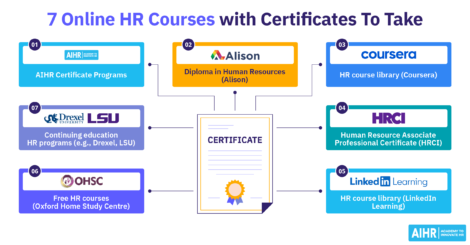
If your goal is to build knowledge on a budget, free and low-cost courses are a sensible first step. Platforms such as Coursera offer HR-related courses you can take for free or at a low cost, and some providers may offer free trials. These are useful for learning the fundamentals and deciding whether HR is right for you before you invest in a paid credential.
If your goal is a recognized credential, budget for the exam fee and any prep materials, and look for ways to reduce the cost. Early-bird registration, membership discounts, and employer learning budgets can all lower what you pay. However, be cautious with any provider that advertises a “free HR certification”, since a genuine, employer-recognized credential typically involves a paid, proctored exam.
Is an HR certification worth it?
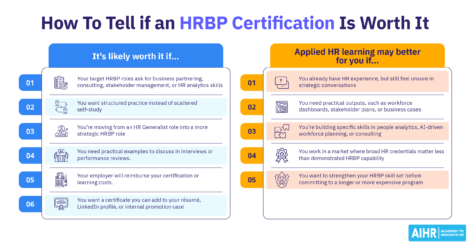
If paired with real, usable HR skills, HR certification can certainly be worth the money. A credible credential can boost your career, though it can’t replace hands-on experience or guarantee a job. In fact, certified HR professionals can earn up to 10% to 15% more than their uncertified counterparts.
Learning through HR certificate programs can equip you with those skills, so the credential rests on real capability rather than exam recall alone. AIHR’s certificate programs are online and self-paced, and focus on applied, job-ready skills you can use at work while you study. They also complement the formal credentialing route, since AIHR offers PDCs for SHRM-CP and SHRM-SCP recertification activities.
Certification also works as an early screening filter. If an HR job description lists the SHRM-CP or PHR as “preferred”, for instance, a certified HR professional is far more likely to pass those initial screening filters.
The value of an HR certification also depends on the market you operate in. In some regions, a certification can be a strong differentiator. In others, it’s typically optional, unless you’re aiming for senior roles like HRBP or HR Manager.
In short, certification can open more doors (or open them more easily), but your skills will determine what happens once you walk through them. To get the most out of this career investment, make certification part of your broader career development plan.
Can you become HR certified without a degree or experience?
Before attempting to answer this question, it is helpful to distinguish between two things: working in HR and obtaining certification in HR. Many entry-level HR roles don’t require HR-specific qualifications, and several well-known certification bodies also offer routes for those new to the field. What matters most is the path you choose, your industry requirements, and how you build practical HR knowledge.
Building that practical knowledge is where a structured program helps most when you don’t have a relevant degree or formal experience. AIHR’s certificate programs help you develop practical HR skills that can aid your entry or transition into HR by giving you something concrete to show prospective employers.
Can you work in HR without a degree?
The short answer is ‘yes’ — but there are a few caveats. You can work in HR and pursue HR certification without holding a degree in HR, as HR teams often hire professionals from a wide range of educational backgrounds. At the same time, people with operations, admin, or customer support experience sometimes transition into HR, as they bring valuable skills to the field.
Certifying bodies also offer flexible pathways. For instance, HRCI’s aPHR is open to candidates with no experience required, and some PHR tracks allow non-degree holders to qualify with additional work experience. Additionally, CIPD Foundation Level certificates are accessible to early-career entrants in the UK and other regions.
So, while an HR degree can boost job prospects, lacking one doesn’t mean an HR career is impossible. What matters is how well you understand and can apply HR fundamentals. A certificate program is one way to build those fundamentals: AIHR’s HR Generalist Certificate Program, for example, walks you through core areas like recruitment, onboarding, and HR operations, so you can apply those skills on the job even without a degree.
How to get HR certified if you lack experience or a degree
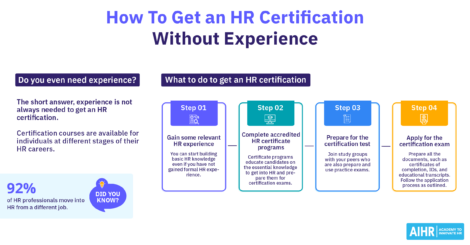
If you’re starting from scratch, your first goal isn’t to pass the exam but to gain enough HR knowledge and practical skills to meet eligibility requirements and build your confidence.
Once you’re ready, you can consider HR certification. You can, for instance, check out AIHR’s certificate programs and pick one that will help you build the necessary skills to land the HR role you want. Here’s how to get certified in Human Resources early in your career:
Build foundational HR knowledge through online HR courses
Begin with structured learning to gain a comprehensive understanding of topics such as recruitment, onboarding, HR operations, labor laws, and analytics. Online HR certificate programs, such as AIHR’s, can help you build real projects and case studies you can show to prospective employers. This becomes your “evidence” when you don’t have formal HR experience yet.
Get practical exposure to HR work
Target roles most likely to give you relevant hands-on experience, even if they’re junior or entry-level. Examples include:
- HR Coordinator
- HR Administrator
- Recruiter
- Internship or part-time HR projects.
This experience counts toward certification requirements and helps you learn the realities of HR work (e.g., managing calendars and employee requests, drafting job descriptions, or supporting onboarding).
Choose an early-career certification you’re eligible for
Once you’ve built some foundational skills and can meet the criteria, target certifications designed for beginners, such as:
- aPHR (HRCI) for candidates with no experience
- CIPD Foundation Qualifications (Level 3)
- National or regional associate-level HR credentials.
These certifications give you a strong starting point and signal to employers that you’re serious about developing in the field. To build the foundational skills that help you qualify and prepare, you can pair them with a beginner-friendly certificate program.
For instance, AIHR’s HR Generalist Certificate Program covers the full range of core HR processes, while the HR Coordinator Certificate Program focuses on the day-to-day operational skills that early-career roles depend on. Either one gives you practical, job-ready experience to apply alongside an entry-level credential.
Mini roadmap for candidates with no degree/experience
Use the mini roadmap below to help move your HR journey forward:
- Use HR courses and free resources to learn the basics (HR operations, recruiting, employee relations).
- Complete an online HR certificate program to build basic skills.
- Gain experience through HR support roles, internships, or people-ops tasks.
- Apply for an entry-level certification (aPHR, CIPD Foundation Qualifications) once you meet the requirements.
If you follow this path, you’ll build both the practical capabilities and the credentials you need to start a long-term career in HR, with or without a degree.
Boost your HR career by upskilling yourself with AIHR’s 16HR certificate programs, which cover a wide range of HR specialties. These include people analytics, AI for HR, L&D, C&B, and more.
AIHR’s Demo Portal lets you browse certificate programs, courses, and resource library available to its members, such as:
✅ All HR resources, templates, and essential guides (available upon sign-up)
✅ Access to playbooks and tools available in the AIHR Resource Library
✅ Previews of AIHR’s courses and certificate programs to help you decide which one to take
Check out AIHR’s Demo Portal and Resource Library today to learn more.
What HR certification should I get first?
When deciding which HR certification to pursue first, consider your current career stage. The following tips will guide you through selecting the right certification:
Early career/career changer with limited HR experience
Start with an entry-level certification, such as aPHR or CIPD Foundation. Pair it with a broad, practical certificate program like AIHR’s HR Generalist or HR Coordinator pathway to build real-world skills. Doing so will help build a solid foundation for either entering the field of HR or advancing further in it, and will open up more career opportunities later on.
Mid-career HR Generalist/HRBP
If you have five to 10 years of professional HR experience, the SHRM-CP or PHR might be the best first formal certification for you. It’s also worth considering AIHR’s HR Business Partner 2.0 Certificate Program to help you further develop vital skills to prepare you for the HRBP role.
Choose which one to take based on your preferred exam style (i.e., competency-based versus knowledge-based). If you’re unsure, review each body’s eligibility rules and sample questions, then pick the one that best matches your day-to-day work.
HR Manager/senior leader
Once you’ve gained more than 10 years of experience in your HR career, you can aim for the SHRM-SCP or SPHR. You can also consider strategic HR training, like AIHR’s HR Manager Certificate Program. These can help improve your readiness for even more senior roles, such as VP of HR or Chief HR Officer (CHRO).
If you’re an individual contributor who doesn’t manage a team, check out AIHR’s HR Consulting Certificate Program, which builds the advisory and problem-solving skills you need to influence stakeholders and drive change.
How to become HR certified: A 7-step roadmap
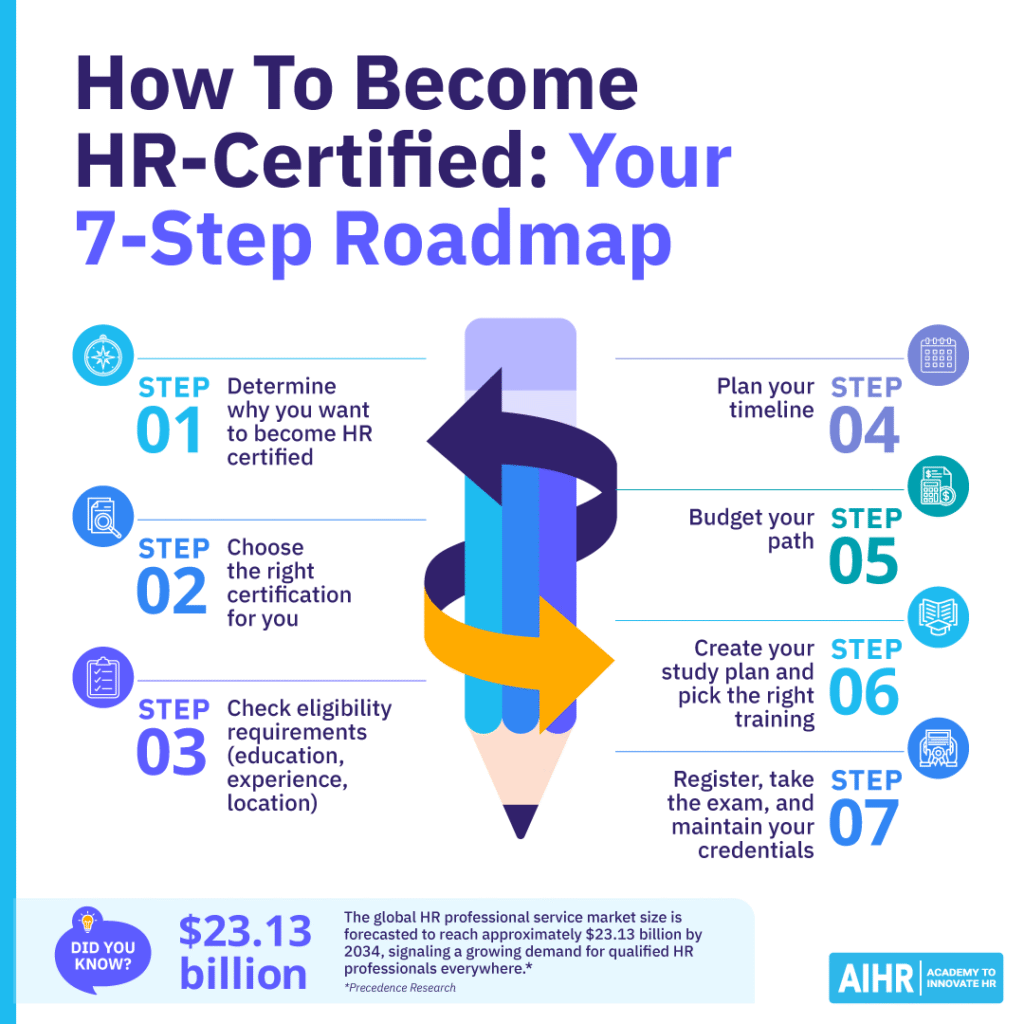
Below is a seven-step roadmap you can follow to become HR certified:
Step 1: Determine why you want to become HR certified
Start with the reason, not the credential. Are you aiming for better job prospects and higher pay, planning a career transition into the field of HR, or validating experience you already have because more employers prefer certification?
Your reason will shape your route. If you need specific skills you don’t yet have, a certificate program is often the better first move than an exam. A skills-focused program, like one of AIHR’s certificate programs, builds applied HR capability you can use at work right away, while an exam-based credential mainly validates knowledge you’re expected to already have.
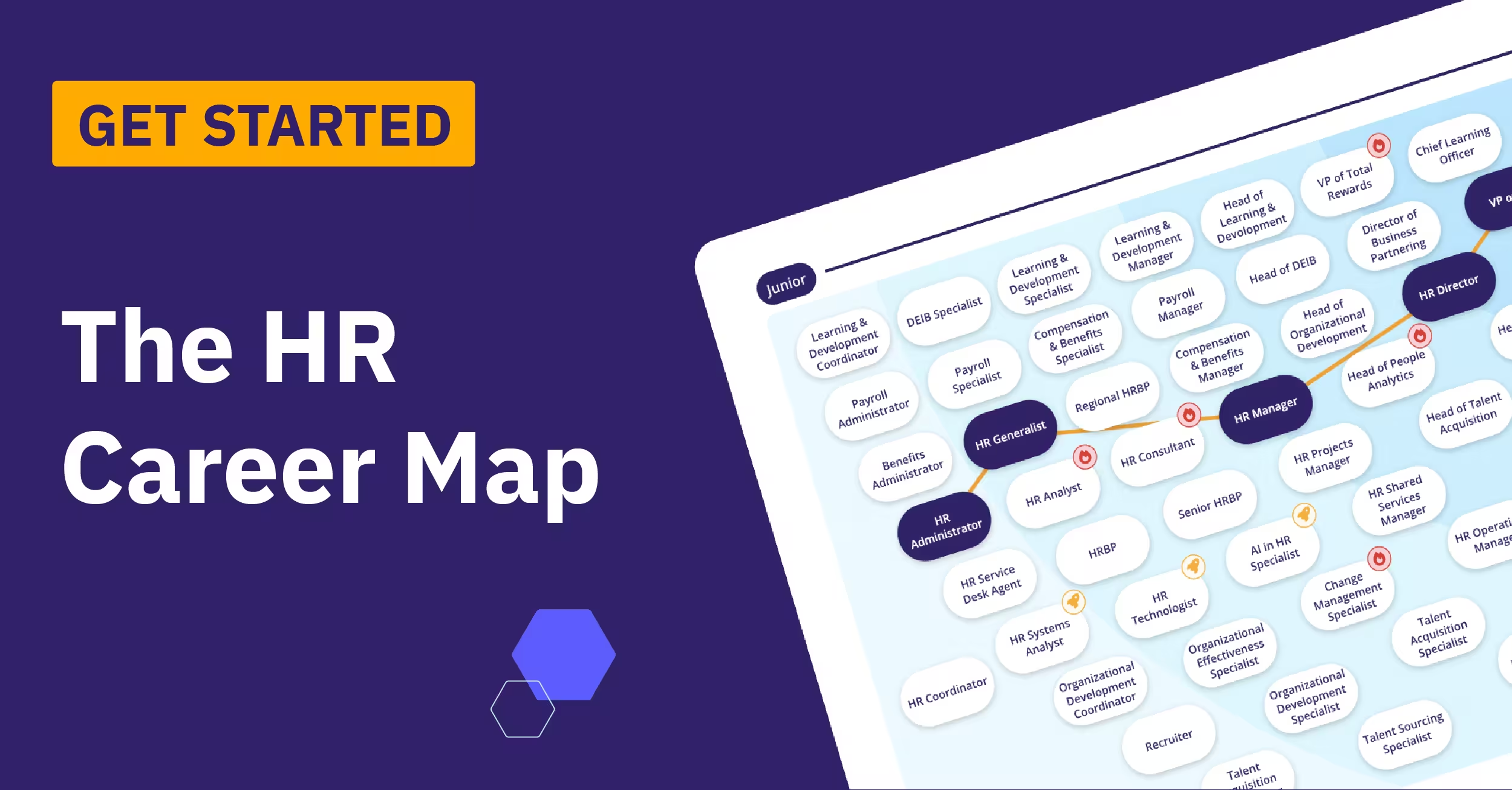
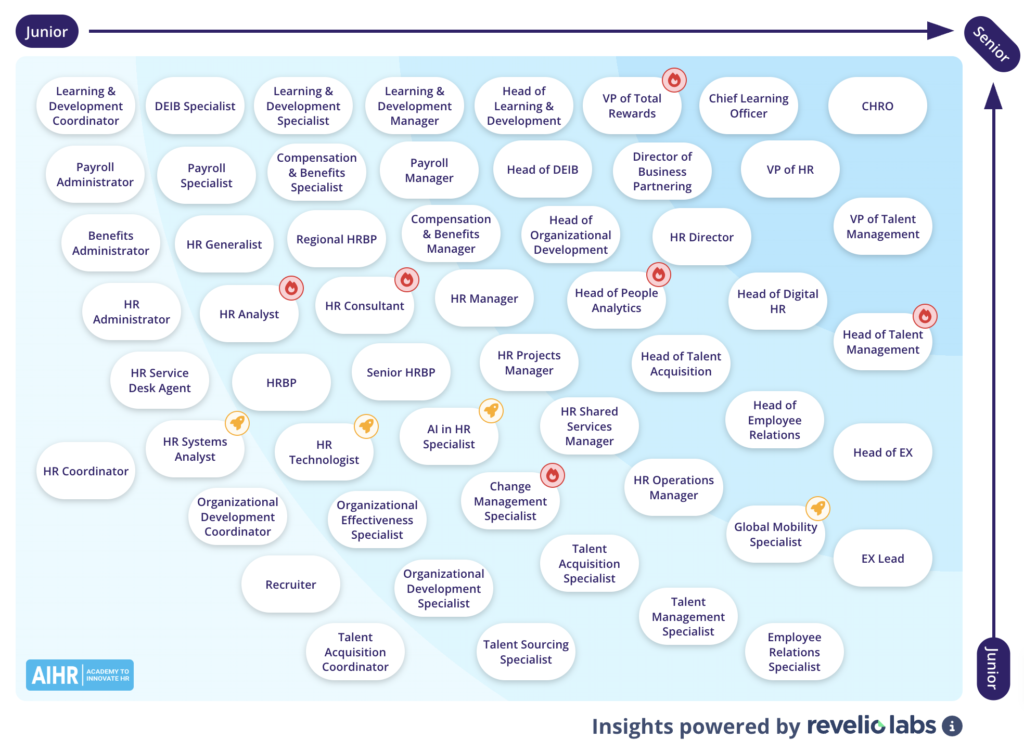
Consider two key details: your target role (e.g., HR Generalist, HRBP, or HR Manager), and your location or market (i.e., the country/region in which you work or wish to work). If you’re unsure how your current skills align with HR roles, AIHR’s HR Career Map, templates, and resources can help you determine which skills you should develop before you commit to a course or exam.
Step 2: Choose the right certification for you
Match your career stage and region with the most suitable certification, such as SHRM certification or PHR certification for U.S.-based HR Generalists, CIPD for those based in the UK, or regional credentials in other locations. An important detail to remember is that the ‘best’ option for you is usually one that employers recognize in the market you currently work in or want to work in.
This is also where you decide whether you need a credential, a certificate program, or both. If a job you’re targeting lists a specific credential as preferred, prioritize that exam. If it lists skills such as people analytics or talent acquisition, a specialized certificate program is often the more direct route. AIHR’s certificate programs map to specific HR specializations, so you can pick one that matches the role you want rather than a general credential, and many professionals do both: build the skills first, then sit the exam.
This is also where you decide whether you need a credential, a certificate program, or both. If a job you’re targeting lists a specific credential as preferred, prioritize that exam. If it lists skills such as people analytics or talent acquisition, a specialized certificate program is often the more direct route. AIHR’s certificate programs map to specific HR specializations, so you can pick one that matches the role you want rather than a general credential, and many professionals do both: build the skills first, then sit the exam.
This is also where you decide whether you need a credential, a certificate program, or both. If a job you’re targeting lists a specific credential as preferred, prioritize that exam. If it lists skills such as people analytics or talent acquisition, a specialized certificate program is often the more direct route. AIHR’s certificate programs map to specific HR specializations, so you can pick one that matches the role you want rather than a general credential, and many professionals do both: build the skills first, then sit the exam.
This is also where you decide whether you need a credential, certificate program, or both. If a job you’re targeting lists a specific credential as preferred, prioritize that exam. If it lists skills such as people analytics or talent acquisition, a specialized certificate program is the more direct route. AIHR’s certificate programs focus on specific HR specializations, so you can pick one that matches the role you want .
Step 3: Check eligibility requirements (education, experience, location)
Review education, experience, and location requirements carefully, as they vary by certifying body. For example, HRCI’s aPHR has no experience requirement, while the PHR generally requires one to four years of professional HR experience (depending on your education level). The SHRM-CP does not set a fixed experience minimum, but SHRM expects candidates to be in an HR role or have relevant exposure.
Always confirm the current criteria on the certifying body’s site before you apply, since requirements change. Check if your experience must be ‘HR-specific’ (and how that term is defined), and if an employer must verify your work. If applying from outside the certifying body’s main region, confirm test availability, ID requirements, and whether your market recognizes the credential.
If you don’t yet meet the experience criteria, a certificate program can help you build (and demonstrate) relevant HR skills while you work toward eligibility.
Step 4: Plan your timeline
Depending on how experienced you are, most HR certifications take three to nine months — career changers usually need more time than experienced HR professionals. Work backwards from your target exam window and block time for not just study but also practice tests. If you have a full-time job, a realistic plan usually involves three to five focused study hours per week.
If part of that time is going toward building foundational skills rather than pure exam prep, factor in the program length separately. AIHR’s certificate programs, for instance, typically require around 30 to 40 hours of self-paced study each, which you can complete on your own schedule alongside exam preparation.
Step 5: Budget your path
Budget planning helps you avoid surprises and decide whether to spread costs over time. These typically include exam fees, prep materials, and retakes (if needed). Include any additional expenses, such as membership fees, proctoring or test center charges, and travel costs if necessary. If your employer offers learning support, find out the relevant details to confirm whether it applies to you.
Factor in certificate programs too, if they’re part of your plan. A program like one of AIHR’s carries its own cost, but it benefits you in two ways: it builds the skills you need up front, and offers recertification credits for several profesional HR bodies (e.g., HRCI and SHRM).
As such, the same learning can later count toward keeping your existing credentials active, turning a one-off spend into something that supports both certification and recertification.
Step 6: Create your study plan and pick the right HR training courses
Use both exam prep and practical HR courses to build confidence and real-world skills. Start by mapping exam topics to your current strengths and weaknesses, then focus on improving the latter. A simple plan would involve learning the concept, applying it to workplace scenarios, and then testing yourself with questions until you can easily answer them in detail.
Step 7: Register, take the exam, and maintain your credentials
Register early to confirm your preferred exam date and location (if not online), and review the exam day rules to avoid last-minute issues with ID or system checks. After you pass the exam, set recurring reminders for recertification deadlines and renewal fees, so your certification doesn’t lapse, and you can avoid costly late fees.
How AIHR helps you become and stay HR certified
AIHR is an online learning platform for HR professionals and teams, focused on practical training that helps you build in-demand skills through hands-on learning. Its HR certificate programs and courses are self-paced, globally accessible, and designed to support both certification prep and long-term career growth.
What this looks like in practice:
- 16 certificate programs and 85+ courses, with access to new releases as they launch
- Templates, tools, and a deep HR resource library you can use immediately at work
- Personal coaching, career guidance, and a global HR community, including live events and expert sessions
- Programs are eligible for recertification credits (PDCs) with SHRM, HRCI, HRPA, and CPHR.
On completion, AIHR awards a digital certificate you can showcase to highlight your new expertise, share on your professional profiles, and use to strengthen your professional standing as you take on more senior HR work. To see how this supports certification goals, consider these two paths:
If you’re preparing for a SHRM-CP, AIHR’s HR Generalist or HR Coordinator certificate programs can help you build a broad skills base you can apply immediately at work, even while studying for the exam. After certification, AIHR’s PDC-eligible training makes it easier to maintain your credential without last-minute pressure.
If you’re targeting strategic HR leadership roles, AIHR’s HR Manager Certificate Program, combined with Artificial Intelligence for HR, can help build the strategic and data-driven skills needed for SHRM-SCP or SPHR. These capabilities will continue to deliver value well beyond certification as you step into higher-impact roles.
Next steps
Start by getting clear on your goal and career stage, pick a certification employers in your target market recognize, and check the eligibility rules before you commit. From there, plan your timeline and budget, build a study routine you can sustain alongside work, and treat the credential as proof of skills you can actually apply to help you progress faster.
If you want to build practical HR skills before committing to an exam, check out AIHR’s Demo Portal. It lets you preview lessons from AIHR certificate programs, courses, so you can see how to develop the practical, job-ready skills that support your certification path and your daily work.
FAQ
Most people take three to nine months from choosing a certification to sitting for the exam. If you already work in HR, you may be ready faster because you’re familiar with day-to-day HR topics and terms. If you’re new to HR or changing careers, expect to take closer to nine months, because you’ll need extra time to learn the basics and do practice questions.
Pick a credential that matches your level (entry, mid, or senior) and region, then check the eligibility rules (education, experience, location). Next, build a study plan, use prep materials and practice exams, and register for a test date once you’re consistently scoring well on mock questions. After passing, keep your credential active by meeting renewal requirements.
The “best” certification depends on your experience, location, and goals. Entry-level candidates often start with beginner credentials, while experienced individuals choose widely recognized mid-level options that match their preferred exam style and the markets they work in. The right choice is one that employers in your target region recognize and that fits the type of HR work you do.
Yes. Many people work in HR without an HR degree (especially in entry-level roles) or by moving into HR from operations, admin, customer support, or people-facing roles. You must prove you can handle core HR work (e.g., hiring support, HR admin, employee relations). Certifications, courses, and hands-on experience can build credibility if you don’t have a degree.
Yes, if it’s from a credible provider and is well-known to employers in your region. Employers usually care more about the certifying body and the skills you can apply than whether you studied online or in person. To be on the safe side, choose programs with clear learning outcomes, strong industry recognition, and (if relevant) formal exam-based assessments.