
Today’s workforce spans several generations, each shaped by different economic conditions, workplace norms, and career experiences. These differences may influence how employees view HR, what they expect from it, and the support they find most useful.
But age alone doesn’t determine someone’s expectations. A Baby boomer may want greater flexibility, while a gen Z employee may prioritize job security. For HR, the challenge is to understand how generational experiences may shape expectations without making assumptions about individuals. This can help HR provide fair, relevant support that meets employees’ needs throughout their working lives.
Contents
How each generation sees HR
4 generational HR myths and how to bust them
How HR can meet different needs without creating different employee experiences
Look beyond generational labels
How each generation sees HR
Employees turn to HR for many reasons, from questions about workplace policies and benefits to concerns about fair treatment. What they expect from HR may depend on their experiences, circumstances, and the workplace norms they’re familiar with.
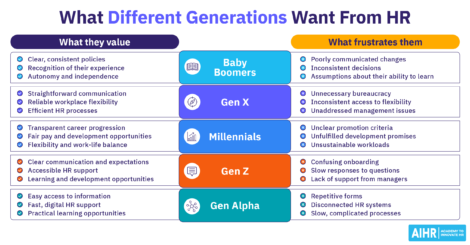
Looking at the experiences that have shaped different generations can offer useful context. Here’s how each generation may view HR and what they might expect from it.
Baby boomers
Baby boomers entered a workforce where traditional career paths, long-term employment, and employer-provided benefits were often emphasized. These experiences may help explain why some value stability, clear policies, and recognition of their experience.
- How they may see HR: A guardian of organizational stability, fairness, and established processes, responsible for ensuring employees receive consistent, respectful treatment.
- What they value: Clear policies, reliable communication, and recognition of their experience, alongside autonomy over how they organize their work.
- What may frustrate them: Poorly explained changes, inconsistent decisions, and assumptions that their development needs diminish with age. Only 29% of baby boomers feel their employer invests in their professional growth, highlighting an opportunity for HR to support continued learning.
- What they expect: Fair application of workplace policies, accessible advice on benefits and retirement, and meaningful opportunities to contribute through development programs, mentoring, or sharing specialist knowledge.

Gen X
Gen X witnessed major changes in the workplace, from the rise of personal computers and the internet to the dot-com boom and crash. Having worked through periods of technological change and economic uncertainty, some may place particular value on independence, practical support, and flexibility.
- How they may see HR: A practical partner that helps employees navigate workplace requirements, resolve problems, and balance work with personal responsibilities.
- What they value: Efficient processes, straightforward answers, and flexibility they can rely on. EY’s research found that gen X respondents particularly associate workplace flexibility with scheduling time for personal or family needs.
- What may frustrate them: Unnecessary approval steps, inconsistent access to flexible working arrangements, and limited action when management problems arise. McKinsey’s research identifies uncaring leadership as a reason gen X employees may consider leaving an employer.
- What they expect: Clear policies, responsive support, and fair access to development opportunities, including programs that help them build leadership skills or explore different career paths as their ambitions and circumstances change.
Millennials
Many millennials entered the workforce during or around the 2008 financial crisis and built their careers as digital technology changed how people communicate and work. These experiences may have shaped their expectations around financial security, career opportunities, transparency, and flexibility.
- How they may see HR: A career and employee experience partner that should help connect professional growth, fair reward, wellbeing and the organization’s stated values.
- What they value: Transparent progression, useful feedback and flexible working arrangements that accommodate responsibilities outside work. Opportunities to build skills and move between roles can support their longer-term ambitions.
- What may frustrate them: Vague promotion criteria, development promises that receive little follow-through and leadership roles with unsustainable demands. Among millennials who are deprioritizing leadership, 49% cite stress and burnout as a barrier.
- What they expect: Clear career pathways, regular development conversations, fair pay decisions and practical support for managing workloads, parenting, caring responsibilities and mental health.
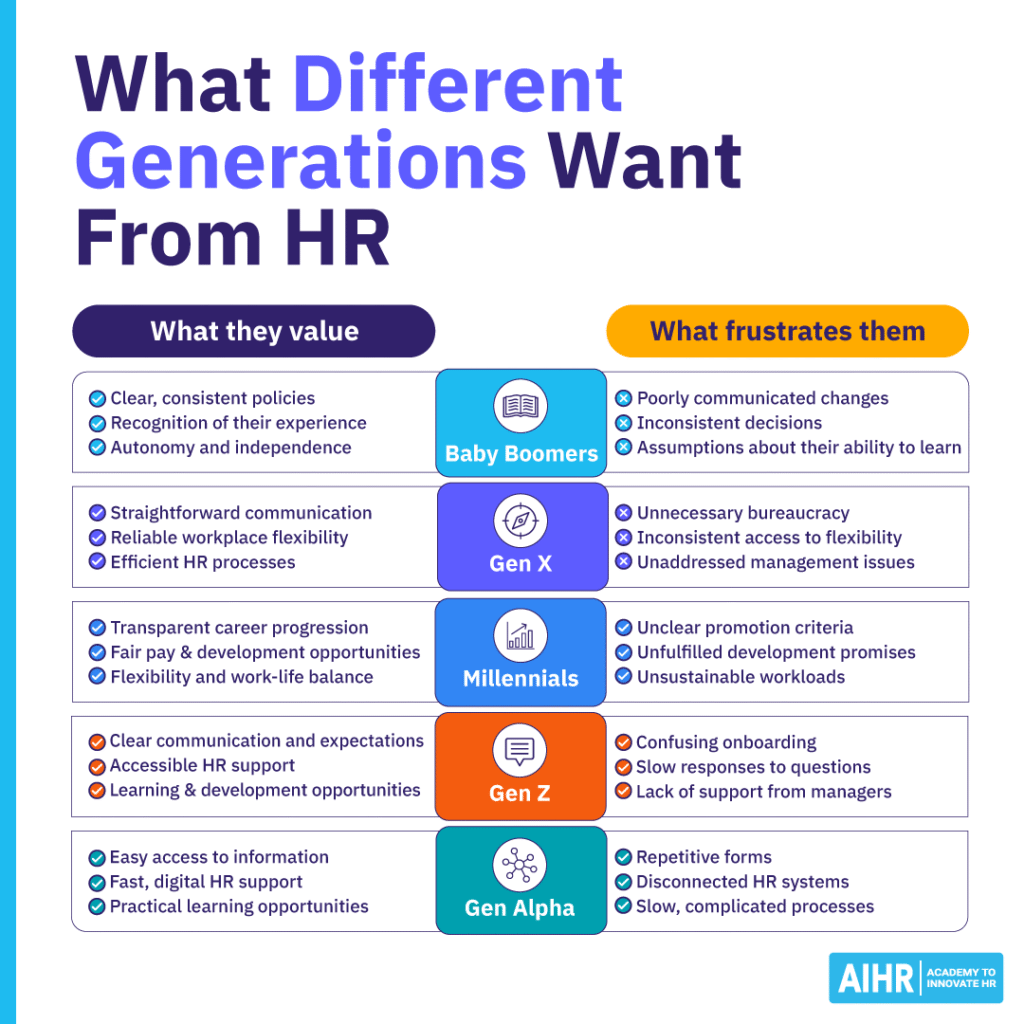
Gen Z
Many gen Z employees entered the workforce during or after the COVID-19 pandemic, when remote work and conversations about mental health became more prominent. Research suggests that many value financial security, meaningful work, and work-life balance, rather than measuring career success solely through promotions.
- How they may see HR: An accessible source of information and support when they need clarity about workplace expectations, opportunities, or fair treatment.
- What they value: Clear communication, regular feedback from managers, and visible investment in their development, along with confidence that someone will take their concerns seriously.
- What may frustrate them: Confusing onboarding, slow responses, and limited support from managers. Last year, only 41% of gen Z and younger millennial employees strongly agreed that someone at work cared about them as a person, down from 54% in 2020.
- What they expect: Straightforward access to HR, transparent information about pay and progression, supportive managers and practical training that helps them build confidence, including guidance on using AI responsibly.
Gen Alpha
Most of gen Alpha’s working lives lie ahead, so their expectations of HR remain forward-looking. Their arrival will increase the need for entry-level roles that develop judgement, communication and collaboration alongside technical skills.
- How they may see HR: A digitally accessible service that helps them enter the workplace, understand company policies, and find reliable information and support.
- What they may value: Easy access to information, responsive support, and opportunities to learn through practical experience, reflecting their familiarity with interactive digital environments.
- What may frustrate them: Repetitive forms, disconnected systems, and long waits for straightforward answers, particularly when workplace processes feel cumbersome compared with other digital services.
- What they may expect: Intuitive recruitment and onboarding, clear explanations of workplace expectations, and access to mentoring programs that help them develop professional judgment and confidence.
Supporting a multigenerational workforce means understanding different employee needs, challenging assumptions, and adapting your HR approach as expectations evolve. Invest in continuous learning that helps you provide fair, relevant support throughout the employee life cycle.
With AIHR’s Full Academy Access lets you explore practical HR learning by:
✅ Create inclusive employee experiences that recognize individual needs and reduce generational bias
✅ Design meaningful development opportunities that support different career goals and life stages
✅ Build fair and consistent HR policies while accommodating diverse employee needs and preferences
✅ Use people data to make informed decisions about engagement, retention, and workforce development.
🚀 Visit the Demo Portal to preview lessons, discover practical resources, and find your next learning opportunity.
4 generational HR myths and how to bust them
Generational assumptions can influence who gets hired, offered training, or considered for promotion before anyone assesses their abilities or ambitions. HR can help prevent these biases by focusing on employees’ skills, circumstances, and career goals. Here are four common generational myths and what HR professionals can do to challenge them.
Myth #1: Older employees resist technology
Reality: Older workers are actively developing digital skills. Between 2022 and 2025, the share of LinkedIn Learning sessions focused on technology among workers aged 50 and older rose from 19.5% to 26.6%, according to AARP and LinkedIn’s research on the multigenerational workforce.
Do this: Assess employees’ existing skills, interests, and training needs when allocating development opportunities. Assuming older employees resist technology can lead managers to overlook experienced colleagues for technology projects, limiting their opportunities to develop and demonstrate new skills.
Myth #2: Gen Z doesn’t want to work hard
Reality: Enthusiasm for work can coexist with expectations of sustainable working conditions. In the UK findings from PwC’s Global Workforce Hopes and Fears Survey, 71% of gen Z respondents said they looked forward to going to work, while 45% reported feeling overwhelmed at least once a week.
Do this: Help managers assess performance based on work quality, reliability, and agreed outcomes rather than assumptions about age. Treating requests for support as a lack of commitment can discourage employees from raising workload concerns. It may also unfairly influence decisions about who receives additional responsibilities or opportunities for advancement.
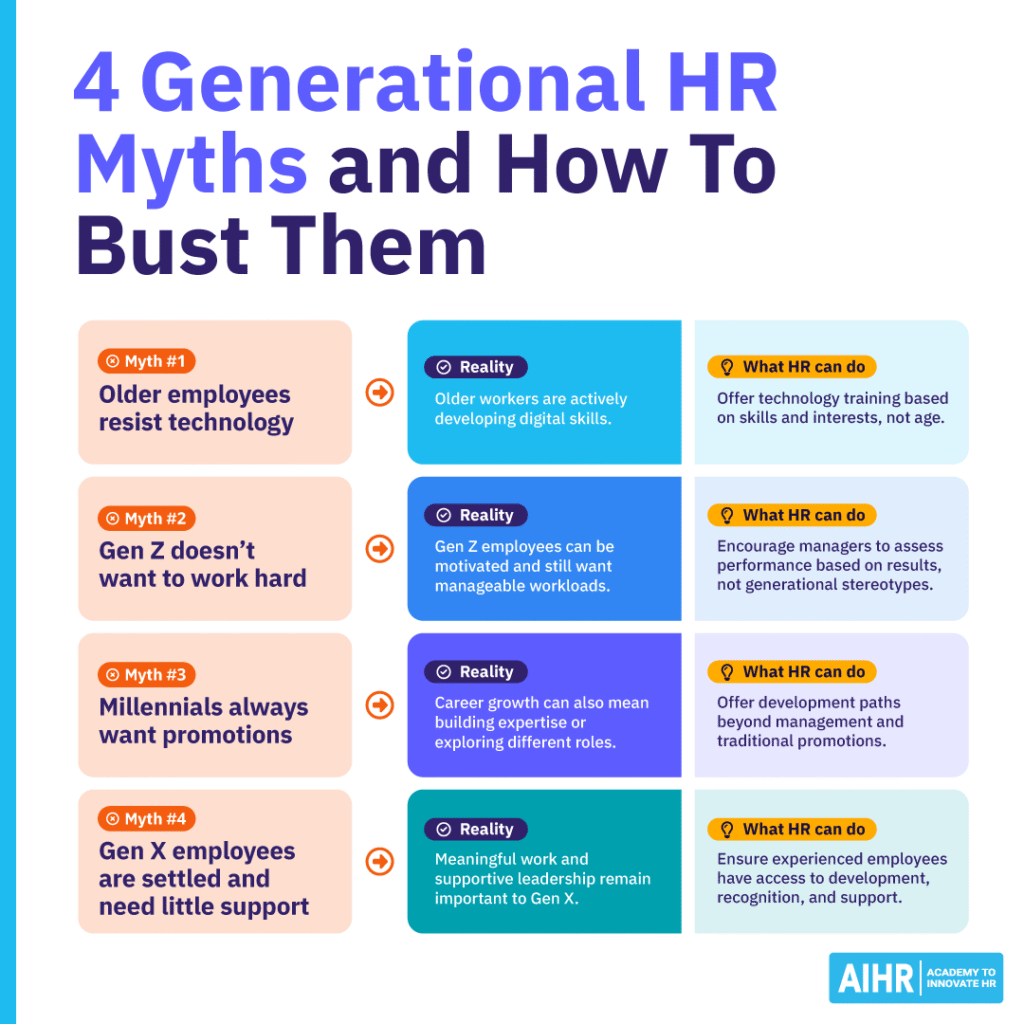
Myth #3: Millennials always want promotions
Reality: Career growth doesn’t always mean moving up the corporate ladder. In Deloitte’s Global Gen Z and Millennial Survey, 45% of millennials preferred steady career progression, compared with 21% who preferred rapid promotions. Another 20% were willing to move laterally or take a step back to gain experience that supports long-term success.
Do this: Create career development frameworks that offer different ways to progress, including specialist roles, lateral moves, and leadership opportunities. Give managers the tools to understand employees’ development goals and discuss suitable options. Focusing solely on management positions can leave employees with limited opportunities to develop expertise or explore other areas of the business.
Myth #4: Gen X employees are settled and need little support
Reality: Meaningful work and supportive leadership remain important to gen X employees. McKinsey’s research into age-based workplace preferences identified meaningful work as a leading reason gen X employees stay with an employer, while uncaring leadership can contribute to their decision to leave.
Do this: Encourage managers to check in regularly with experienced employees about their workloads, development needs, and concerns. Ensure they have fair access to training, recognition, and support. Assuming established employees can manage independently may leave concerns unaddressed and cause managers to overlook their development needs.
How HR can meet different needs without creating different employee experiences
Two employees might want more flexibility for very different reasons, or have completely different ideas about their next career step. Here’s how HR professionals can support these individual journeys:w
- Help employees find answers without a treasure hunt: In Gallup’s research on employee engagement, 35% of respondents identified better communication as the most helpful way to clarify what was expected of them at work. Keep current policies, benefits, and updates in one reliable place, then offer different ways to access that information and ask questions. An email summary, intranet update, or manager conversation can communicate the same information, with consistent deadlines and next steps.
- Open up more routes to career growth: Around one in five gen Z and millennial respondents were willing to move laterally or take a step back to gain experience that supports long-term success, according to Deloitte’s 2026 research. Create development opportunities that allow employees to build specialist skills, explore different roles, or learn from mentors. Give managers clear information about these options so they can help employees identify suitable opportunities.
- Make flexibility a conversation with clear ground rules. Create a straightforward process for requesting flexible working arrangements that accounts for individual needs, role requirements, and team responsibilities. Explore options such as adjusted hours, predictable shifts, or remote work. Give managers clear criteria to help them assess requests fairly and consistently.
- Show employees where their feedback goes. Combine surveys with individual conversations, team discussions, and check-ins during onboarding or role changes. Ask specific questions, such as what makes employees’ workloads difficult or which types of support they struggle to access. Share the actions taken in response to their feedback so employees know their concerns have been heard.
- Make it easy to reach a helpful human. Organize HR resources around everyday questions, such as how to request training or apply for parental leave. Provide plain-language instructions and clear next steps. Alongside self-service tools, make sure employees can easily contact someone who can explain a policy or help with a sensitive workplace concern.
Look beyond generational labels
The next time a generational label comes up in a talent discussion, use it as a cue to ask another question. What does this employee want to learn? Which working arrangement would help them thrive? Where would they like their career to go?
Look at who actually receives training, flexibility, and opportunities to progress. This can help HR identify overlooked talent, make fairer decisions, and create a workplace where employees of every generation have opportunities to grow.