

Strong employee evaluation examples can help you turn vague performance review comments into clear, useful feedback. These detail what an employee has done, the impact it’s had on their team and department, and what should happen next. But this may not be the norm right now. In fact, according to Gallup, only 16% of employees found their last conversation with their managers meaningful.
If you’re an HR Manager, it’s vital to be able to write specific and fair evaluations. This article details how an employee evaluation can be effective, and what to do and not do when conducting one. It also provides 150 employee evaluation examples you can use, and explains how you can adapt them to suit your teams.
Contents
What makes an employee evaluation effective?
150 employee evaluation examples HR managers can use
How to adapt these examples for your team
Dos and don’ts for employee evaluations
What makes an employee evaluation effective?
An effective and useful employee evaluation answers three simple questions:
- What was the specific performance?
- What impact did it have?
- What should happen next?
Strong employee evaluations focus on observable behavior or measurable outcomes. For instance, compare “has a good attitude” with “kept stakeholders informed when project priorities changed”. Unlike the first comment, the second one actually tells the employee exactly what they did and why it helped.
Growth feedback needs the same level of clarity. “Needs to improve communication” gives an employee little to work with, but “would benefit from sharing project risks earlier, before deadlines are affected” points to a specific change to work toward.
Your evaluation should also balance strengths with areas for growth. Even when performance falls short, the goal isn’t to list faults but to create a clear, evidence-based picture of performance and a practical path forward. For more in-depth coverage of evaluation methods and structures, check out AIHR’s employee evaluation template.

150 employee evaluation examples HR managers can use
You can adapt these employee evaluation examples across eight common evaluation areas. Remember to to treat the examples as a starting point rather than scripts, and replace generic details with the employee’s actual work, results, and context.
Communication
Exceeds/meets expectations
- Communicates project priorities clearly across cross-functional teams.
- Shares concise updates that keep stakeholders aligned.
- Explains complex issues in language that clients can easily understand.
- Flags risks before they affect project timelines.
- Tailors communication style to different audiences.
- Keeps meetings focused on decisions, actions, and owners.
- Responds promptly to important stakeholder questions and concerns.
- Documents key decisions so teams can move forward.
- Gives colleagues clear context when handing off work.
Needs improvement
- Would benefit from sharing project updates earlier with stakeholders.
- Could make written updates more concise and action-oriented.
- Often leaves important questions unanswered beyond agreed response times.
- Has improved clarity but still misses key details.
- Needs to confirm understanding before moving forward on complex requests.
- Needs to communicate potential risks before deadlines become difficult.
- Would benefit from organizing presentations around clearer takeaways.
- Sometimes provides too much detail without identifying priorities.
- Should adapt communication style more consistently for senior stakeholders.
- Needs to document important decisions more consistently after meetings.
Teamwork and collaboration
Exceeds/meets expectations
- Builds productive relationships across teams and functions.
- Shares knowledge freely when colleagues need support.
- Invites different perspectives before making collaborative decisions.
- Helps teammates resolve blockers without taking over ownership.
- Contributes constructively during challenging team discussions.
- Recognizes colleagues’ contributions and supports positive collaboration.
- Keeps shared projects moving when responsibilities overlap.
- Creates space for quieter colleagues to contribute ideas.
- Follows through reliably on commitments to teammates.
Needs improvement
- Could involve teammates earlier when decisions affect shared work.
- Would benefit from asking for input before finalizing solutions.
- Sometimes prioritizes individual tasks over agreed team commitments.
- Needs to communicate handoffs more clearly across functions.
- Has opportunities to build stronger relationships with key partners.
- Could respond more constructively when colleagues challenge an approach.
- Would benefit from sharing knowledge instead of working independently.
- Needs to clarify ownership when responsibilities overlap.
- Sometimes misses opportunities to recognize teammates’ contributions.
- Should address collaboration concerns directly instead of letting tension build.
Quality of work
Exceeds/meets expectations
- Delivers accurate work that rarely requires correction.
- Consistently meets quality standards across major deliverables.
- Catches errors before they reach internal stakeholders.
- Produces thorough documentation that supports future teamwork.
- Applies feedback quickly and improves later deliverables.
- Maintains strong attention to detail under tight deadlines.
- Delivers work that meets technical requirements and business needs.
- Reviews important outputs carefully before sharing them.
- Produces reliable results with minimal manager input.
Needs improvement
- Needs to review deliverables more carefully before submission.
- Would benefit from using a consistent quality-control checklist.
- Missed important details in several recent deliverables.
- Could verify source data before drawing conclusions.
- Sometimes prioritizes speed at the expense of accuracy.
- Needs to incorporate feedback more consistently into future work.
- Would benefit from allowing more time for final reviews.
- Has opportunities to strengthen documentation and version control.
- Should confirm requirements before starting complex assignments.
- Needs to reduce avoidable rework on recurring tasks.
Problem-solving
Exceeds/meets expectations
- Identifies root causes before recommending practical solutions.
- Uses available data to guide problem-solving decisions.
- Resolves routine issues independently and escalates when needed.
- Anticipates potential obstacles and develops backup plans.
- Breaks complex problems into manageable, actionable steps.
- Considers stakeholder needs when evaluating possible solutions.
- Tests assumptions before committing resources to new approaches.
- Turns recurring issues into opportunities for process improvement.
- Remains focused on solutions during unexpected challenges.
Needs improvement
- Could investigate root causes before escalating recurring issues.
- Would benefit from proposing solutions alongside identified problems.
- Sometimes escalates issues before exploring available options.
- Needs to use relevant data more consistently.
- Could break complex challenges into smaller decision points.
- Would benefit from testing assumptions before recommending changes.
- Has opportunities to anticipate downstream effects of proposed solutions.
- Sometimes focuses on immediate fixes instead of underlying causes.
- Needs to document lessons learned from recurring problems.
- Could involve relevant stakeholders earlier when solving complex issues.
Company culture influences employees’ daily experience at work, which in turn, influences retention rates. Develop the skills to assess and shape that experience, so you can address retention risks earlier and more effectively.
AIHR’s Talent Management & Succession Planning Certificate Program teaches you how to:
✅ Create talent practices that support an engaging employee experience across the lifecycle
✅ Identify flight risks and use career development and internal mobility to retain critical talent
✅ Assess your current organizational culture and design a desired culture aligned with business goals
✅ Lead culture change initiatives that support employee experience and long-term retention
💡 Explore the AIHR Demo Portal to preview lessons and download practical resources to support your learning.
Leadership
Exceeds/meets expectations
- Sets clear expectations and follows up consistently.
- Gives team members timely, actionable, and continuous feedback.
- Delegates responsibilities while maintaining appropriate accountability.
- Creates development opportunities aligned with individual strengths.
- Handles difficult conversations directly and respectfully.
- Keeps team priorities aligned with broader business goals.
- Recognizes strong performance consistently across the team.
- Builds trust by following through on commitments.
- Encourages team members to take meaningful ownership.
Needs improvement
- Could delegate more effectively to build team capability.
- Would benefit from more consistent one-on-one conversations.
- Needs to clarify expectations before assigning major projects.
- Sometimes delays difficult conversations until issues become larger.
- Could provide more specific feedback after completed work.
- Would benefit from involving employees in goal-setting discussions.
- Needs to recognize strong contributions more consistently.
- Sometimes takes ownership of tasks employees could manage independently.
- Could connect team priorities more clearly to business goals.
- Needs to follow through more consistently on development commitments.
Reliability and attendance
Exceeds/meets expectations
- Meets agreed deadlines consistently across assigned projects.
- Keeps commitments even when priorities change unexpectedly.
- Communicates schedule changes early enough for teams to adjust.
- Maintains dependable attendance during critical business periods.
- Follows established processes without repeated reminders.
- Completes assigned tasks within agreed timelines.
- Can be relied on during high-priority team initiatives.
- Communicates blockers promptly when deadlines are at risk.
- Maintains steady performance during demanding periods.
Needs improvement
- Needs to communicate potential missed deadlines earlier.
- Has missed several agreed deadlines during the review period.
- Would benefit from tracking competing priorities more consistently.
- Sometimes requires reminders to complete recurring responsibilities.
- Needs to provide earlier notice about schedule changes.
- Could improve follow-through on commitments made during team meetings.
- Has opportunities to manage workload against agreed deadlines.
- Sometimes allows blockers to remain unresolved too long.
- Would benefit from clearer prioritization when workload increases.
Adaptability
Exceeds/meets expectations
- Adjusts priorities quickly when business needs change.
- Learns new processes with minimal disruption to delivery.
- Remains productive when project requirements shift unexpectedly.
- Adopts new tools and processes with a positive approach.
- Helps colleagues adjust when organizational changes affect workflows.
- Applies lessons from setbacks to future projects.
- Handles ambiguity while maintaining progress toward key outcomes.
- Responds constructively to changes in direction.
- Builds new skills when role requirements evolve.
Needs improvement
- Could respond sooner when priorities change unexpectedly.
- Would benefit from seeking clarification instead of delaying decisions.
- Needs to become more comfortable working with ambiguity.
- Sometimes resists new processes before understanding their purpose.
- Could apply lessons learned more consistently after setbacks.
- Has opportunities to build confidence with unfamiliar tools.
- Would benefit from adjusting plans sooner when circumstances change.
- Sometimes stays focused on outdated priorities after directional changes.
- Needs to communicate concerns constructively during periods of change.
Initiative
Exceeds/meets expectations
- Identifies process improvements without waiting for direction.
- Volunteers for projects that build relevant skills.
- Takes ownership of issues from identification through resolution.
- Finds practical ways to reduce recurring administrative work.
- Anticipates team needs and acts before being asked.
- Seeks additional context to improve decision-making.
- Turns identified opportunities into measurable process improvements.
- Takes responsibility for resolving issues within their scope.
- Looks for ways to increase efficiency across routine tasks.
Needs improvement
- Could take greater ownership before escalating routine issues.
- Would benefit from identifying opportunities beyond assigned tasks.
- Sometimes waits for direction when next steps are clear.
- Needs to follow promising ideas through to completion.
- Could raise improvement opportunities more proactively.
- Would benefit from testing solutions on a small scale.
- Sometimes identifies problems without suggesting practical next steps.
- Needs to take greater ownership of recurring process issues.
- Could seek additional responsibilities aligned with development goals.
- Would benefit from acting sooner when priorities are clear.
How to adapt these examples for your team
If you simply copy the examples word-for-word, it won’t create a strong employee evaluation. The real value comes from using the structure and replacing generic language with evidence.
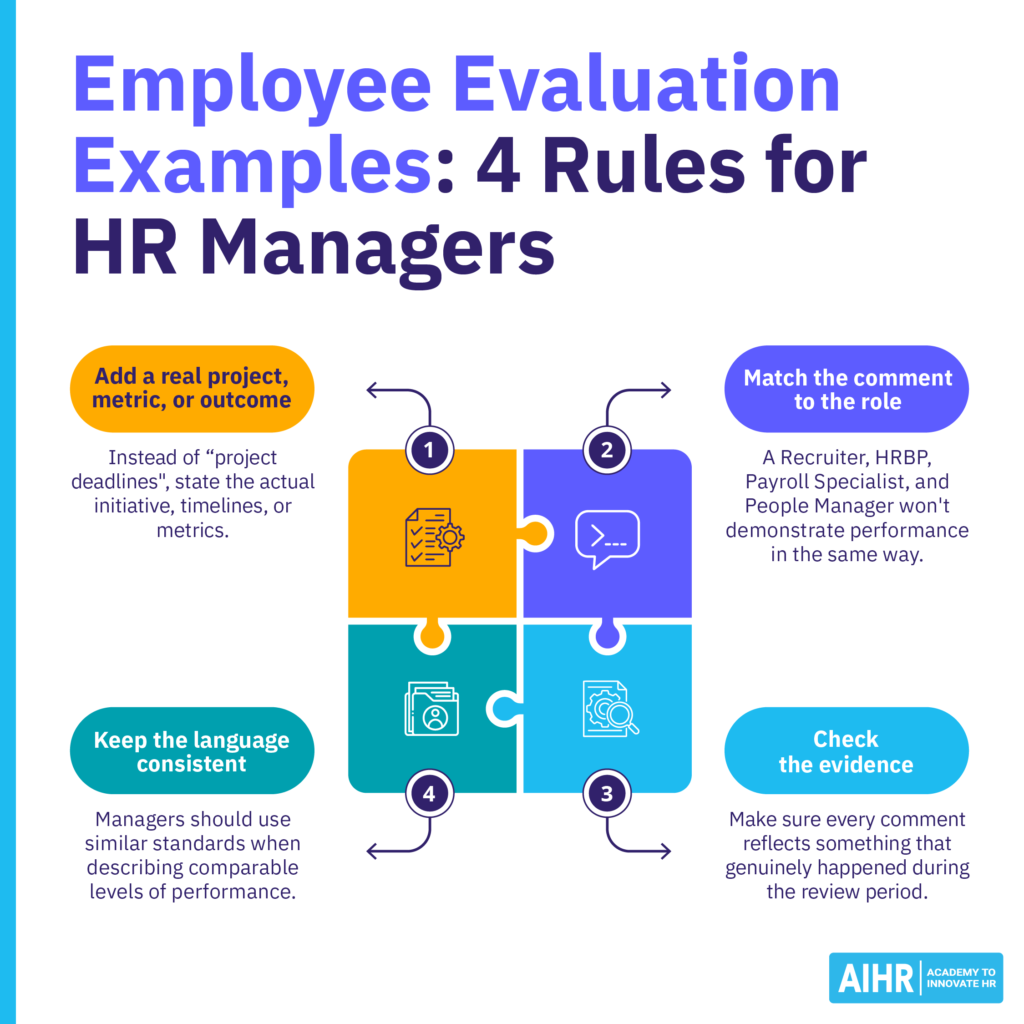
Use these four HR rules to help guide you:
- Add a real project, metric, or outcome. Replace “project deadlines” with the actual initiative, timeline, or metric. If the employee reduced processing time by 15%, say so.
- Match the comment to the role. A Recruiter, HR Business Partner, Payroll Specialist, and People Manager won’t show performance in the same way.
- Check the evidence. Make sure every comment reflects something that happened during the review period.
- Keep the language consistent. Managers should use similar standards when describing comparable performance levels.
Consistency is especially important. Inconsistent performance review language can quickly create perceptions of favoritism. Calling one employee’s missed deadline a “development opportunity” but labeling another employee “unreliable” for the same mistake may create distrust and resentment among team members, and in doing so, hurt team morale.
A consistent framework doesn’t mean every employee receives identical comments. It means you evaluate comparable behaviors against clear expectations and support their judgments with evidence. For a broader view of process design, see CIPD’s guide to effective performance management.
HR’s dos and don’ts for employee evaluations
Here are some key dos and don’ts to help you provide better employee evaluations:
Dos | Dont’s |
Back every rating with a specific example or metric from the review period. | Let recency bias drive the appraisal; review evidence from the full period. |
Ask for the employee’s self-evaluation before finalizing comments. | Compare the employee’s performance with a named colleague. |
Pair every growth area with a genuine strength. | Use “good job” or “needs improvement” without supporting evidence. |
Describe behavior, impact, and the expected next step. | Label personality traits such as “lazy”, “difficult”, or “unmotivated”. |
Use role-specific metrics where they genuinely measure performance. | Treat every metric as meaningful without considering role context. |
Review evidence across the entire appraisal period. | Let one recent success or mistake dominate the evaluation. |
Invite employees to challenge or clarify the evidence respectfully. | Treat the manager’s perspective as the only valid account. |
Connect development feedback to a concrete action or goal. | Identify a weakness without explaining how the employee can improve. |
Input from an employee’s self-evaluation makes the process more reciprocal by giving them space to share their perspective and feel heard. It can also reveal achievements you may have missed, explain the obstacles behind a result, and give the employee more ownership of their development.
It’s also important not to make a yearly, bi-annual, or quarterly performance appraisal the only time employees receive feedback. Instead, you should provide it throughout the performance year, formally and informally. Employees shouldn’t be hearing crucial feedback for the first time during their evaluations.
Next steps
Effective employee evaluations require more than the right words. HR managers also need skills in feedback, coaching, goal-setting, and evidence-based decision-making. Establish clear standards, practical tools, and regular opportunities to practice those skills. You can then connect evaluation insights to employee growth.
This will help you spot development needs, identify high-potential employees, and build stronger talent pipelines. To help you make better people decisions beyond the review cycle, consider AIHR’s Talent Management & Succession Planning Certificate Program, which covers strategic talent management, succession planning, leadership talent pools, and talent reviews and data.