
HR operational excellence means running HR operations with efficiency, quality, and consistency, and improving them over time. It positively impacts the employee experience, allows the organization to pivot when needed, and ensures the company stays on track to reach its business goals. But how do you achieve this level of operational maturity?
In this article, we discuss operational excellence in HR; what it is, how it supports the business strategy, and different ways to achieve it. We also present an HR operational excellence framework you can use as a basis to work with.
Contents
What is HR operational excellence?
How does HR operational excellence support business strategy?
HR operational excellence framework
Strategies to achieve HR operational excellence
What is HR operational excellence?
HR operational excellence is about delivering HR services consistently, efficiently, and in alignment with the organization’s business goals. It applies to the operational side of HR, the systems and day-to-day work that keep the people side of the business running, like payroll, onboarding, compliance, and employee data. Done well, it moves HR from a reactive administrative function to a proactive, process-driven one.
This operational side of Human Resources goes by different names. Some companies call it HR Operations (or HR Ops), others People Operations, and others HR service delivery. Whatever the label, operational excellence is the standard you hold that work to. It’s less about which team owns it and more about how well it runs.
HR achieves operational excellence through continuous improvement, often drawing on established process improvement frameworks like Lean and Six Sigma. These give HR teams a structured way to find inefficiencies, reduce errors, and standardize how work gets done.
The focus is the whole system, not isolated tasks. Instead of speeding up a single step, operational excellence looks across the entire employee life cycle, from hiring through offboarding, and improves how the parts work together.
The growing role of technology and AI in HR is helping organizations to reshape their Human Resources operations and achieve operational excellence. HR teams are increasingly incorporating these tools for greater effectiveness and efficiency while enhancing the employee experience at the same time.
HR operational excellence example
Onboarding is a good example of why the system matters more than any single task. Once a new hire’s start date is set, several teams have to deliver before day one: recruiting closes the paperwork, IT sets up accounts and equipment, payroll adds the new hire to the system, and their manager prepares a first-week plan. Operational excellence makes those handoffs line up, so the new hire walks in to a working laptop, correct pay, and a clear plan, instead of chasing fixes in week one.

How does HR operational excellence support business strategy?
Operational excellence in HR supports and positively impacts the organization’s business strategy. Examples of how operationally mature HR functions can create competitive advantage beyond the HR department itself include:
More time to focus on strategy
Efficient HR operations free up business leaders to focus on strategy rather than people administration.
A simple example of this is when an organization decides to implement an HRIS (a Human Resources Information System) to unify its HR data across its (global) operations. One source of accurate data means HR and business leaders pull the same numbers, run reliable reports, and spend less time reconciling spreadsheets. That frees them to act on what the data shows and plan further ahead.
Improved employee experience, satisfaction, and retention
Smooth HR operations remove friction from the moments employees feel most: a clean onboarding, accurate pay, and quick answers to requests. That experience shapes how engaged people are, and engagement is closely related to whether they stay.
In Gallup’s study of more than 183,000 teams, the most engaged teams saw 21% to 51% lower turnover than the least engaged, with the size of the gap depending on the organization’s baseline turnover.
Smooth operations show up directly in the new-hire experience. At loanDepot, new hires used to lose time chasing approvals and hunting for help across scattered systems. After the company added an AI assistant to Microsoft Teams, approvals that once took days dropped to under 5 minutes, and 90% of employees rated it helpful in their first week.
Gaining credibility with the business
Leaders invest in what they trust, and trust in HR grows when HR delivers reliably. If HR answers employee and manager requests quickly and runs processes like recruitment and payroll reliably, leaders start to see it as a dependable part of the business rather than a cost to manage.
HR that runs well gets brought into decisions earlier. When leaders trust HR to deliver, they bring the function into workforce planning, restructuring, and expansion plans while those are still being shaped, not after the decision is made.
That early involvement is where HR shapes outcomes instead of just executing them. An HR team known for missed deadlines and messy data gets the opposite: looped in late, handed a plan to implement, with no say in it.
HR operational excellence framework
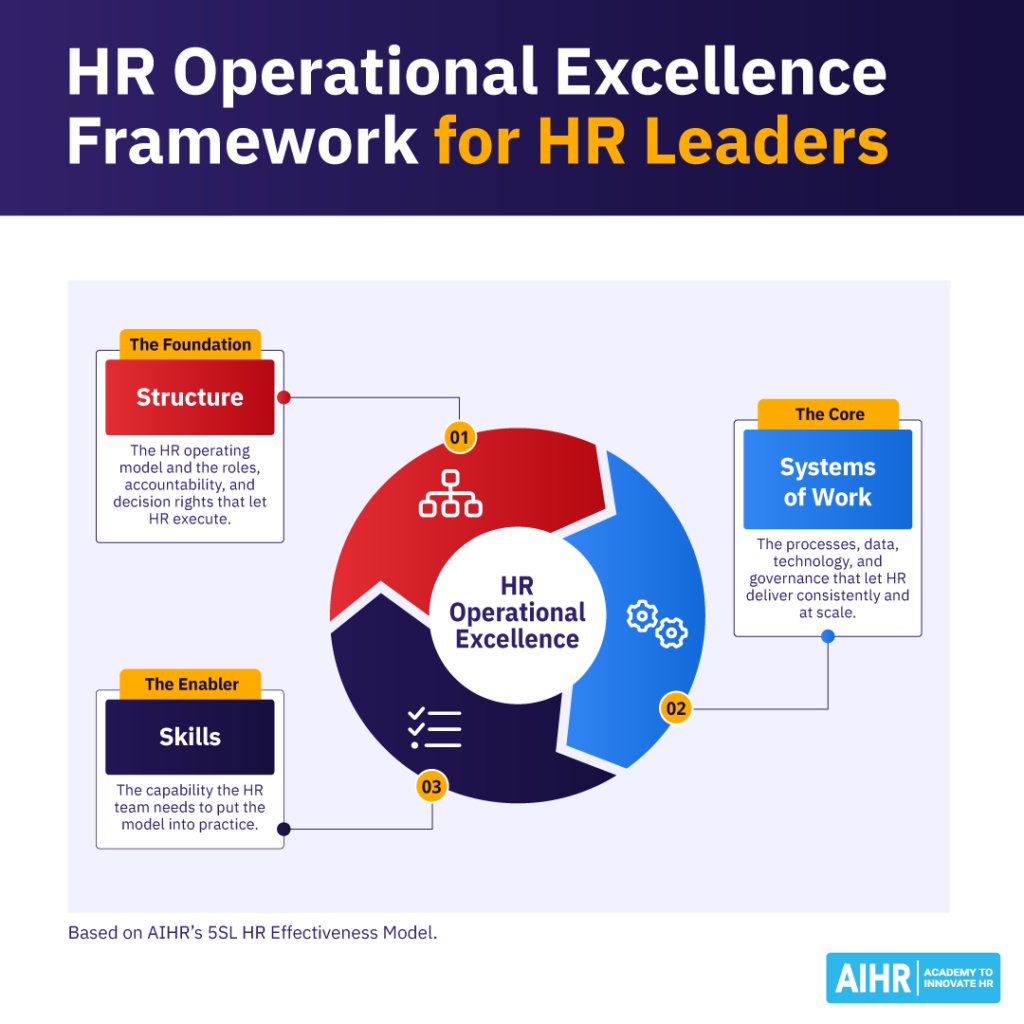
To help you achieve operational excellence in your own HR team, we at AIHR have developed an HR operational excellence framework. It rests on three elements:
- Structure: The HR operating model, roles, and decision rights that determine who does what and how work flows.
- Systems of Work: The processes, data, technology, and governance that carry HR’s daily work.
- Skills: The capabilities the HR team needs to run the model and keep improving it.
These elements come from AIHR’s 5SL HR Effectiveness Model, which maps the conditions HR needs to deliver sustainable value and business impact. The full model has six components: Strategy, Structure, Systems of Work, Stakeholders, Skills (the 5S), and HR Leadership (the L).
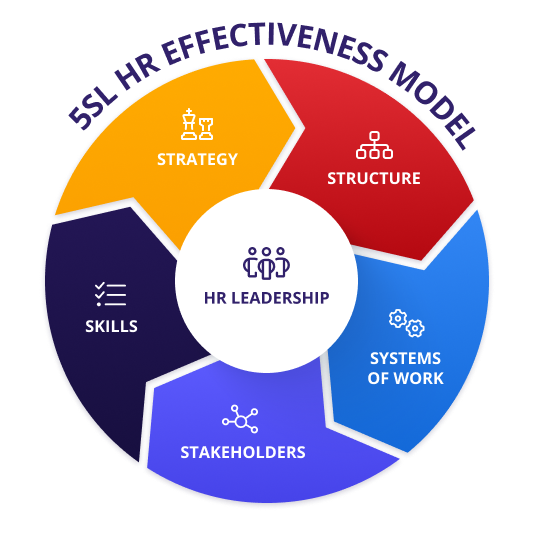
While the full 5SL model encompasses more than just the operational aspects of HR, we’re drawing on its operations-oriented components to create a useful framework.
Let’s unpack each of these.
Structure (the foundation)
The Structure component concentrates mainly on your HR operating model, the way the HR team is organized to deliver its services. It’s the foundation of execution because the model you choose shapes what HR can deliver and how well, and it sets the roles and responsibilities that make the work run.
There are various types of HR operating models, the most well-known and used one being the HR business partner model. Other examples include the functional model, the front-back delivery model, the hub and spoke, and the federated model.
The operating model that best fits your organization will depend on the way your organization operates; a highly decentralized organization usually benefits from a highly decentralized HR operating model and vice versa. Choose a model that matches the business, and work flows to the right people and gets done. Choose one that doesn’t, and execution slows across the board.
The operating model sets the broad shape, and clear roles make it work. Defining people’s roles, accountability, and decision rights so everyone knows what they own and when to escalate is what keeps execution moving instead of stalling in bottlenecks.
To strengthen Structure, focus on:
- Operating model and accountability: Choose an operating model that fits the business, and define the roles and decision rights it sets.
Systems of Work (the core)
Systems of Work covers the practical aspects HR needs to reach operational excellence: HR service delivery, processes and ways of working, data infrastructure, and governance. This is where daily execution actually happens, which is why it sits at the core of the framework.
HR service delivery is the backbone of HR operations. Regardless of the operating model you choose, service delivery will be an integral part of it.
As briefly mentioned above, HR service delivery refers to the system behind how a company provides core HR services, such as benefits, employee relations, onboarding, and payroll. It includes the people, processes, and technology that make HR operations work accurately, consistently, and in line with both internal and legal requirements.
Just like there are different types of HR operating models, there are also multiple types of HR service delivery models. The one most suitable for your organization will depend on the way your organization operates (e.g., centralized or decentralized) and the operating model you decide to opt for.
To strengthen Systems of Work, focus on four areas:
- Service delivery and processes: Standardize core HR processes so quality stays consistent as you scale.
- Technology and automation: Automate high-volume transactional work and consolidate to one system of record.
- Data and evidence: Keep people data clean and use it to inform decisions.
- Governance and ways of working: Set clear policies, decision rights, and review rhythms.
Skills (the enabler)
An effective structure and efficient systems of work won’t lead to HR operational excellence if the people within the HR team don’t have the skills and expertise to put things into practice.
For many HR leaders, this means that they will need to upskill their teams in Execution Excellence: the ability to deliver consistent, high-quality results through adaptive problem-solving, cross-functional collaboration, and disciplined planning.
Execution Excellence is one of the six core HR competencies within AIHR’s T-Shaped HR Competency Model. The competency is made up of four different dimensions that should be a part of every HR practitioner’s skill set. These are:
- Agility and responsiveness
- Problem-solving and decision-making
- Cross-functional collaboration
- Systems thinking.
To meet this requirement of the HR operational excellence framework, HR leaders should consider the following actions:
- HR capability: Build and sustain the skills to run the model, and reduce reliance on single individuals.
Strategies to achieve HR operational excellence
The framework shows you what to build. These strategies are how you build it. Each one strengthens the Structure, Systems of Work, or Skills that HR operational excellence rests on. Here are seven practical strategies organizations use to get there and sustain it:
1. Refine your HR operating model
Choosing the right operating model for your organization, as covered earlier, shapes both what HR delivers and how well roles and responsibilities match the way the business actually works.
With AI changing how HR operates, it also might be the right time to revisit your operating model. Many HR functions still run on structures that often keep data and decisions split across separate teams, which limits what AI can do. Rather than layering AI onto the old setup, leading organizations are redesigning the model, so AI handles routine work and surfaces better insights, freeing HR to focus on judgment and advice.
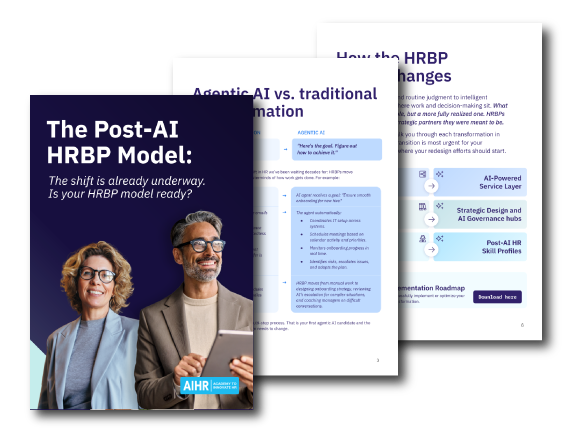
For HR leaders revisiting their operating model, AIHR’s Post-AI HRBP Model Guide offers practical guidance on redesigning HRBP workflows around AI, reducing execution overload, and building a more strategic HRBP function.
2. Choose a service delivery model that fits your workforce
How you structure HR support shapes how fast and consistently requests get handled. There are several HR service delivery models to choose from, and the right one depends on your size, workforce, and operating model.
One common option is the tiered model, which sorts support into levels based on how complex a request is, so routine questions resolve fast, and specialists spend their time where it counts. It tends to suit larger or more complex organizations, and it looks something like this:
- Tier 0: Self-service tools and HR chatbots for frequently asked questions, usually a knowledge base or portal where employees help themselves.
- Tier 1: Requests that self-service can’t resolve go to the HR shared services team.
- Tier 2: More complex cases, such as benefits, compensation, or labor law questions, go to HR specialists.
- Tier 3: Senior interventions and legal disputes go to strategic HR professionals and business partners.
Many requests never leave Tier 0, which frees HR practitioners from routine work and speeds up answers for everyone. Smaller organizations may not need this many layers, and a simpler setup can serve them better.
3. Automate high-volume transactions
Think, for instance, of leave requests, onboarding steps, and payroll queries.
Take a leave request. Instead of an employee emailing HR, waiting for a reply, and having someone update a spreadsheet, the employee submits the request in the system, it routes to their manager for approval, and once approved, it updates their leave balance and payroll automatically. No one on the HR team touches it unless something is unusual. That’s the same work done faster, with fewer errors, and no one chasing anyone.
4. Build a robust data management strategy
Reliable operations run on reliable data. A solid HR data management strategy sets who is responsible for keeping data accurate, how information should be entered so it stays consistent, and how it gets checked over time. For instance, agreeing that job titles are always recorded the same way means a report doesn’t split one role into five slightly different versions.
Clean, consistent data is what makes reporting trustworthy and every downstream decision sounder.
5. Establish HR governance
Operational excellence depends on work being done the same reliable way every time, and that’s what HR governance provides.
With clear policies, decision rights, and review rhythms in place, the same situation gets handled the same way, approvals don’t stall, and problems surface early. That way, the quality of your HR service delivery remains consistent.
6. Embed continuous improvement
Use regular audits and retrospectives to identify potential issues early and resolve them before they become a bottleneck. In practice, that means building HR process improvement into your routine rather than waiting for something to break.
This is where the Lean and Six Sigma thinking mentioned earlier comes back in: both are built on the habit of spotting inefficiencies, fixing them, and checking the results, over and over.
7. Equip your team with the right skills
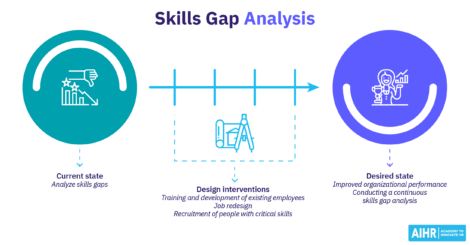
Even the best operating model and technology deliver nothing without skilled people to run them. Start by analyzing where the gaps are in your team. Once you know which skills are missing, you can target development instead of providing generic training options.
HR team development has the most impact when it’s structured, hands-on, and tied to what the business actually needs.
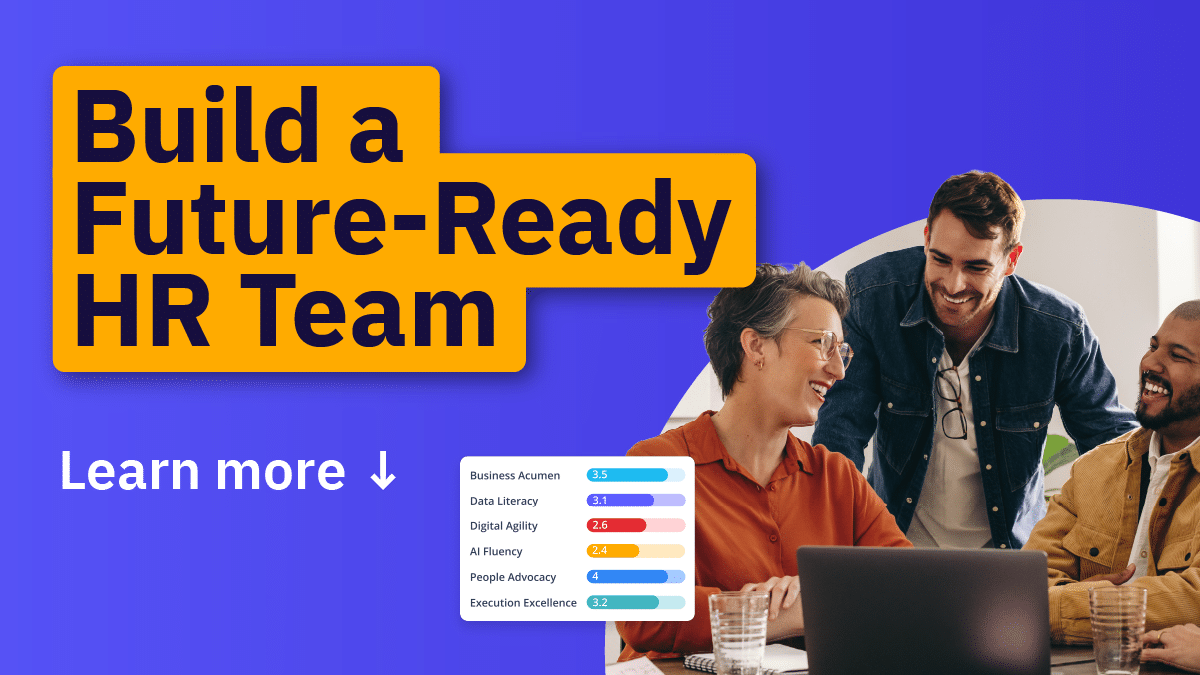
This is where AIHR can help. AIHR for Business lets HR teams build the capabilities that modern operational excellence depends on, with role-based learning paths and practical templates they can apply straight away. That includes competencies like AI fluency and execution excellence.
For teams that need to move faster, AIHR Boot Camps run intensive, cohort-based programs that build practical skills and deliver measurable progress in 1 to 3 months, with people learning together and applying what they learn to real challenges.
A final word
When HR operations run poorly, people feel it: a late paycheck, a benefits question that goes unanswered for a week, an onboarding that starts with a missing laptop. Running the operational side of HR well frees the function to focus on strategy, retains people through a better experience, and earns HR a real say in the business. As AI changes what’s possible, the gap between HR teams that execute well and those that don’t will only widen.
Organizations with mature operations benefit from, among other things, better employee experience, improved retention, and more strategic decision-making. Use the framework as your starting point. Work through Structure, Systems of Work, and Skills, and you have a concrete path from wherever your operations are now to where you want them.