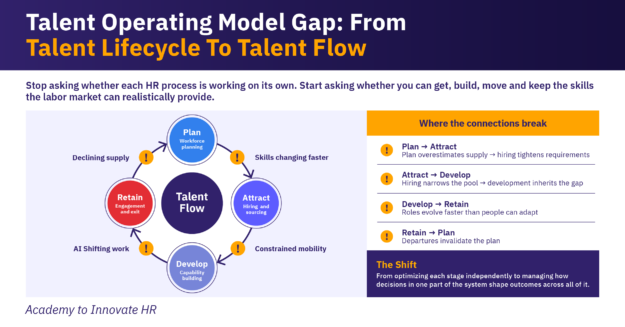
Infographic depicting the talent operating model gap

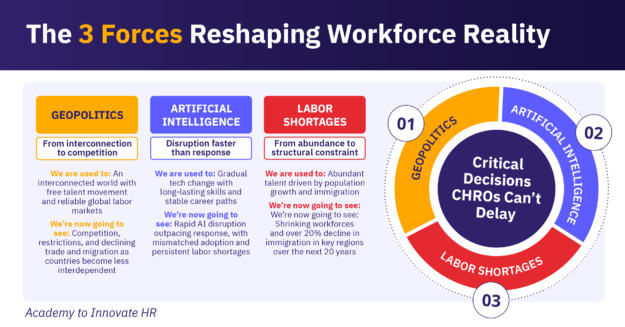
The Talent Operating Model Gap: Why HR Strategies Built on Abundant Labor Are Breaking

In brief Most talent strategies still depend on one assumption: when the business needs people, the labor market will be able to provide them. That assumption is becoming less reliable. Lightcast’s Fault Lines research identifies three forces reshaping the global labor market: geopolitics, artificial intelligence, and labor shortages. Together, they are changing how much talent…

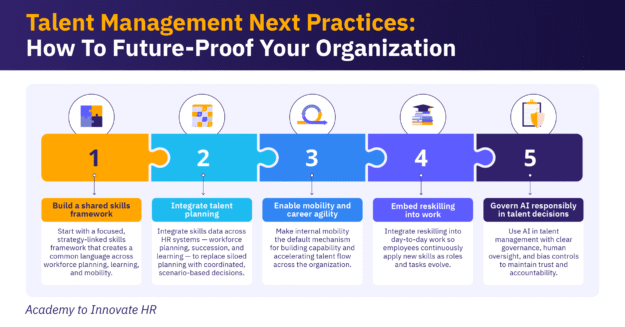
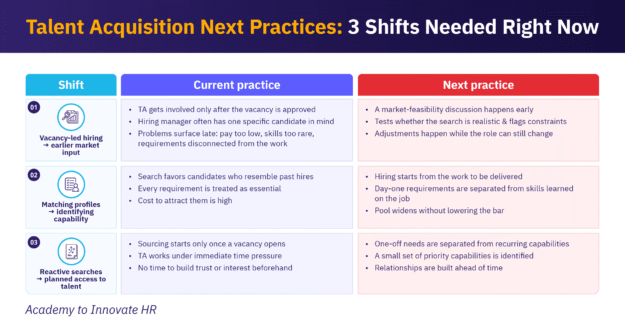
Talent management next practices include introducing shared skills frameworks and responsible use of AI.

Talent Management Next Practices: Building Adaptive Organizations Amid AI Disruption

In brief External pressures and shifts in how organizations operate are reshaping talent management. Slowing growth, ongoing productivity pressure, rapid AI adoption, and accelerating skills volatility are changing how work gets done and how businesses create value. These forces redefine roles, skills, careers, and the relationship between people and work inside organizations. They influence how…

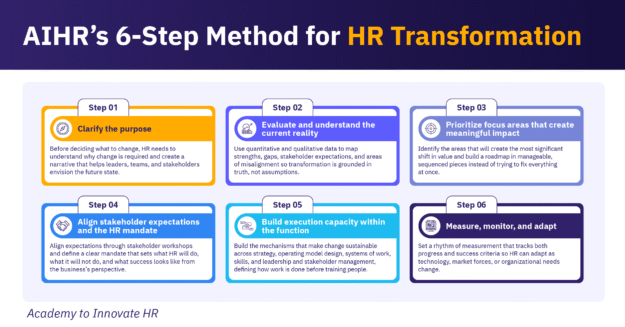
AIHR 6-step HR transformation framework showing key steps from purpose to execution and continuous measurement.

Why Efforts To Transform HR Fail (and What To Do Instead)

In brief HR leaders are confronted with a new reality: artificial intelligence (AI), demographic changes, labor shortages, new organizational designs, rapid shifts in business models, and rising employee expectations are reshaping the world of work faster than most HR functions can adapt. At the same time, organizations are placing greater pressure on HR to operate…