

Having top talent on board is crucial for the long-term success of any business. Currently, hiring remains a major challenge, with 75% of organizations reporting difficulty in filling full-time roles. Effective recruiting strategies help you source, attract, identify, hire, and retain talented professionals who contribute to your organization’s goals. We’ve rounded up 21 of the best recruiting strategies so that you can build the team your company needs to thrive. Let’s start!
Contents
What are recruiting strategies?
21 effective recruiting strategies
How to implement effective recruiting strategies
FAQ

What are recruiting strategies?
Recruiting strategies are the deliberate methods and approaches an organization uses to attract, engage, assess, and hire potential candidates. They provide structure to the entire hiring process by outlining where to look for talent, how to communicate your opportunities, and the steps to evaluate whether someone is the right fit.
These strategies draw on a mix of tools and approaches. That may include sourcing through multiple channels (job boards, social media, internal referrals), using pre-screening or assessment tools, building talent pipelines for future needs, designing candidate-friendly hiring journeys, and aligning hiring criteria with the company’s culture and long-term goals. When applied consistently, they help ensure hiring is fair, efficient, effective, and scalable.
With a well-defined recruiting strategy, you can respond to market demand proactively, optimize sourcing and selection, reduce time to hire, and improve the chances of hiring candidates who align with both the role and your company’s values and long-term goals.
21 effective recruiting strategies
Below are 21 recruiting strategies that HR teams and hiring managers can use to strengthen their hiring approach.
1. Tap into the hidden workforce
The hidden workforce, also referred to as the ‘forgotten’ workforce, represents 14% to 17% of US workers and includes people like:
- Retirees who want to (continue) working
- Caregivers
- Neurodiverse individuals
- People with long-term health problems
- Ex-inmates
- People without a degree.
To make this talent pool more accessible, organizations need to remove the barriers that prevent these candidates from advancing. This typically involves removing unnecessary credentials, offering more flexibility, and designing processes that focus on ability rather than pedigree.
Practical ways to implement this strategy include:
- Adopting skill-based hiring and recognizing transferable skills over prior experience and qualifications
- Writing clearer and more inclusive job ads
- Reducing automated filters that block nontraditional candidates
- Provide training or upskilling paths for those with nontraditional backgrounds.
2. Design an effective employee referral program
Using an employee referral program as (a part of) your recruitment strategy has plenty of benefits, including:
- It accelerates the hiring process: Referred candidates usually move through the funnel faster because they come with a built-in level of trust.
- It increases the chances of culture fit: Employees tend to refer people whose values and work styles they know and trust, which can improve team fit and collaboration.
- It lowers the recruitment costs: Referrals typically require less external advertising and agency support, and they reduce sourcing time, which helps keep cost per hire down.
- It decreases the overall turnover: Referred employees step into the role with more realistic expectations because they’ve already heard about the work and environment from someone they trust.
- It increases employee engagement: When people get the chance to help shape the team, they feel more invested in the company’s success and more connected to new hires.
Creating an effective referral program doesn’t have to be overly complicated or expensive. Just make sure your program includes the following elements:
- Incentives: This can be cash (which usually works best), but extra holidays or other perks also work. You can ask employees what they prefer if you have the option.
- Keep it simple: Ensure that your referral program is easy to understand and use.
- Feedback: Keep employees who’ve referred someone up-to-date about the status of their referral.
- Recognize and celebrate: Find a good way to celebrate employees who’ve successfully referred someone to give them the recognition they deserve. This doesn’t have to be complicated; a mention in your internal company newsletter can be enough.
3. Use AI to enhance sourcing, screening, and candidate engagement
AI-powered recruiting tools are becoming standard in many organisations. According to SHRM, 51% of organizations already use AI in recruiting. In more specific terms, 66% of those using AI rely on it for generating job descriptions, 44% for screening resumes, 32% for automating candidate searches, and 29% for communicating with applicants.
AI-driven tools can help you:
- Expand sourcing beyond your usual reach. AI-powered search tools can scan large talent pools across job boards, social platforms, and internal databases to surface candidates whose experience and skills match your openings (including people who may not use the exact keywords your team searches for manually).
- Improve screening accuracy. AI can analyze resumes, portfolios, and assessments to highlight candidates who meet your requirements. While humans still make the final decision, AI helps recruiters spend their time reviewing the right profiles instead of sifting through lower-quality applications.
- Personalize communication at scale. Automated, conversational tools such as AI chat assistants or email enrichment can answer FAQ, guide candidates through next steps, and maintain engagement, even when hiring teams are busy.
- Predict hiring outcomes. Some platforms utilize machine learning to identify patterns in successful hires, which can help recruiters pinpoint what predicts strong performance and retention.
Used thoughtfully, AI still requires human oversight to avoid introducing bias, but it gives hiring teams more time to focus on relationship-building and higher-impact activities rather than manual administrative work.
Master strategic recruiting to attract and retain top talent
Gain the skills you need to build a future-ready talent acquisition function that supports business goals and enhances candidate experience.
🎓 The Strategic Talent Acquisition Certificate Program will help you to:
✅ Build a data-driven TA strategy aligned with organizational priorities
✅ Design memorable candidate experiences using design thinking
✅ Implement sprint recruiting to improve speed and hiring manager accountability
✅ Redefine your EVP to attract high-quality talent in competitive markets.
4. Optimize job listings for searchability
Making your job listings easy to find and appealing is more than cosmetic; it can make a real difference in who sees your role, who applies, and how many complete the application. Clear, searchable posts also support recruitment SEO, helping your listings appear in relevant searches on job boards and search engines.
What “optimizing job listings” can include:
- Use clear, searchable job titles: Avoid internal-only or creative job titles; stick with what candidates actually search for (e.g., “Customer Service Representative” instead of “Customer Hero”).
- Include relevant keywords for skills, responsibilities, and location naturally throughout the description so search engines and job-board algorithms pick up the listing.
- Make your listing readable and accessible: Break down content with headers (e.g., “Role summary,” “Key responsibilities,” “What success looks like,” “What we offer”). This improves both human readability and SEO performance.
- Be transparent and candidate-friendly in the listing: include clear value propositions (benefits, flexibility, growth opportunities), rather than vague promises. This helps align expectations and reduces drop-off once a candidate clicks “apply.”
- Simplify the application process: Link to a candidate-friendly careers page or use a streamlined application form. A cumbersome application process drives away many candidates even before they finish.
- Optimize for mobile: Many applicants browse and apply on their phones. Ensuring job posts and application flows work well on mobile improves completion rates.
- Keep consistency across platforms: If you post on multiple job boards or on your own career page, ensure titles, descriptions, and keywords are aligned so that each post reinforces the same message and remains equally discoverable.
5. Prioritize internal mobility and talent access
If companies want to stay competitive, they can’t rely solely on recruiting new people to cover every gap. While external hiring remains important, organisations increasingly benefit from identifying and developing talent already inside the company.
Two main pillars play a role here:
- Evolving talent strategies: This involves the emergence of internal talent pools and a re-evaluation of traditional career pathing. Companies will move away from classic career ladders and adopt a career lattice approach to promote horizontal and diagonal career moves.
- Enabling true internal mobility: Mobility should do more than shift people from one team to another. It should open access to the skills the organization needs and make opportunities easier to find. By using workforce data and tools such as internal talent marketplaces, companies can connect mobility with workforce planning, anticipate future needs, and match people to roles where their strengths will have the biggest impact.
6. Work on your employer branding and employee value proposition
Your employer brand is the face your company shows the outside world as a potential employer. It’s the sum of what people think when asked what it would be like to work at company X or company Y.
Employer branding and employee value proposition (EVP) go hand in hand. Your EVP is the promise you make to employees in return for their commitment. It includes all the benefits, rewards, culture, and growth opportunities your organization offers.
A strong employer brand reflects your EVP and helps you recruit candidates. People actively look for signals about what it’s like to work somewhere, and this plays a major role in whether they decide to apply. In fact, 83% of job seekers report researching company reviews and ratings before submitting an application. When your employer brand is clear, consistent, and positive, candidates are more inclined to engage with you and put themselves forward.
A well-articulated EVP also strengthens internal and external advocacy. Employees who feel valued and supported are more likely to speak positively about the company, which can naturally boost referrals and shape a reputation that attracts the right kind of talent.
7. Use employee case studies or success stories
Sharing real stories from your employees is a powerful way to bring your workplace culture to life. Since 83% of job seekers research company reviews and ratings before deciding to apply, showcasing authentic employee experiences can help candidates form a clearer, more accurate impression of what it’s like to work at your organization.
There are several ways to do this effectively:
- Employee spotlights: Short interviews or profiles that highlight someone’s background, their role, and how they’ve grown since joining.
- Day-in-the-life content: A realistic look at what a typical day involves, helping candidates understand the role beyond the job description.
- Impact stories: Examples of challenges solved, projects delivered, or team achievements that show the tangible value employees create.
- Showcase diverse voices: Feature people from different levels, teams, and backgrounds to give a well-rounded view of your culture.
- Share stories across multiple channels: Your careers page, job posts, social media, and newsletters can all help amplify these experiences.
Employee stories make your employer brand more authentic and relatable, helping candidates imagine themselves thriving in your company.
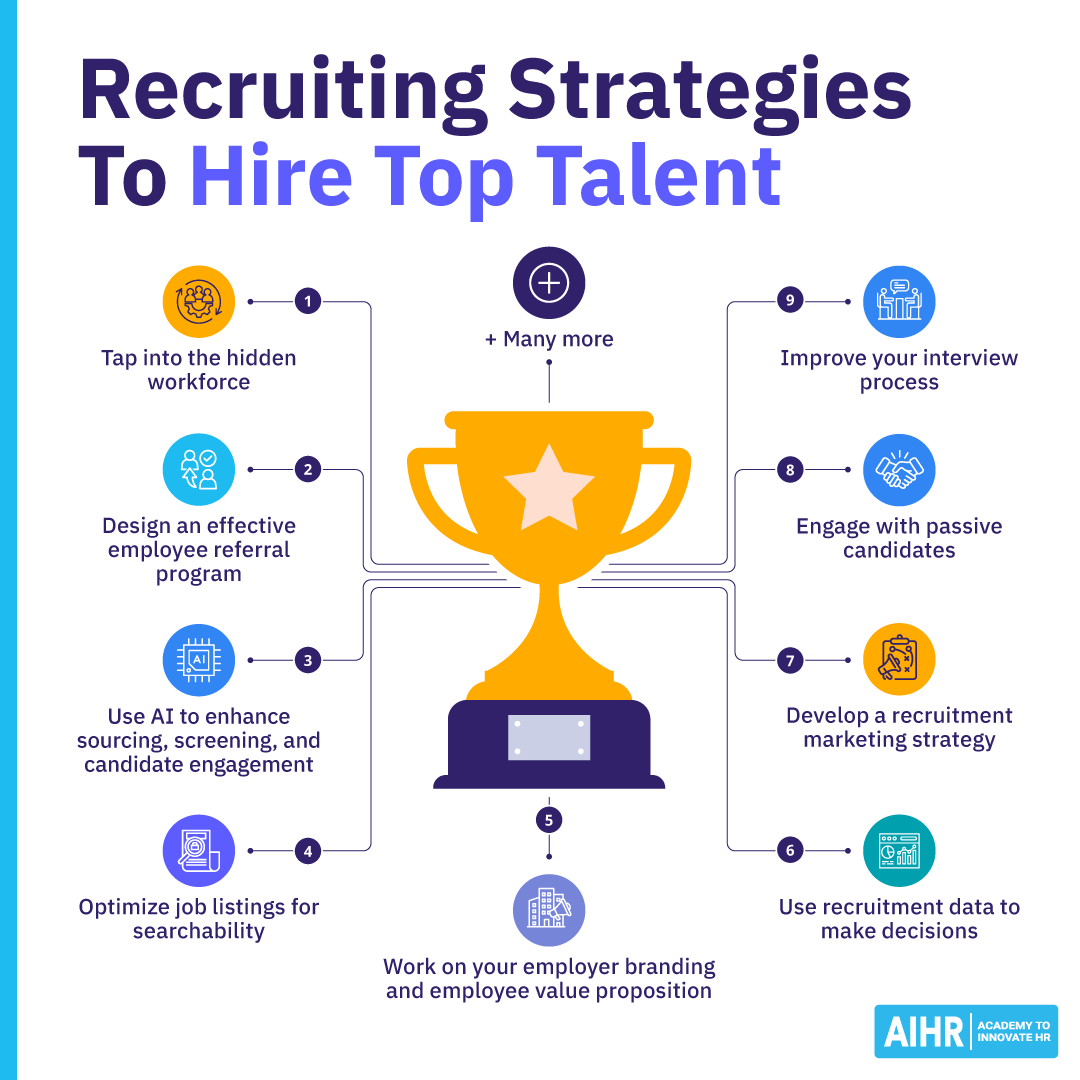
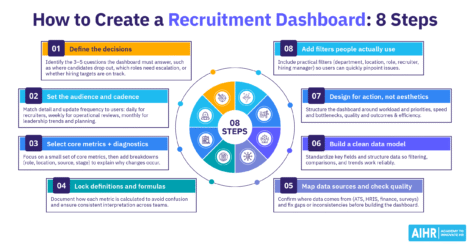
8. Use recruitment data to make decisions
You can use the best recruiting strategies in the world, but without measuring what’s actually happening, it’s hard to know whether those efforts are paying off. Recruiting metrics provide a clear view of how your process is performing and whether you’re attracting the right candidates for your organization. With that insight, you can adjust, refine, and improve your approach based on evidence rather than guesswork.
A few of the metrics worth tracking include:
- Time to fill: How long it takes to close a vacancy from the moment it’s opened. This helps you understand bottlenecks and plan ahead more effectively.
- Time to hire: The time between a candidate entering the pipeline and accepting an offer. This demonstrates the smoothness and efficiency of your candidate experience.
- Source of hire: Where your successful candidates come from. This helps you identify which channels deliver the strongest results.
- New hire turnover: How many new employees leave within a defined period. A useful indicator of whether your hiring decisions and onboarding processes are working.
- Quality of hire: How well new hires perform and contribute after joining. This ties hiring outcomes back to long-term business impact.
9. Improve your company’s online (and offline) presence
Your company’s online and offline presence is a snapshot of your brand identity, values, and the quality of services or products you offer. It’s what makes the first impression on your potential candidates and sets the tone for their expectations.
Your online and offline presence encompasses various channels, including your career page, social media accounts, employer review sites, email campaigns, recruitment events, referral programs, and community engagement.
When these touchpoints feel cohesive, they build credibility, reinforce your values, and show candidates that your organization operates with intention and professionalism.
Here are some ideas for improving your company’s visibility:
- Use employee testimonials: These can be recorded videos or written stories with photos. You can feature them on your careers page, in job posts, or across social media to give candidates a more authentic sense of what it’s like to work at your company.
- Add recruitment FAQ: A simple FAQ section on your website can address common questions about the hiring process and reduce uncertainty for candidates.
- Encourage employees to share content: People often trust messages more when they come from individuals rather than organizations. When employees share company content, it increases visibility and brings a more personal touch to your employer brand.
- Advertise jobs to customers: There are plenty of creative ways to let customers know you’re hiring, like:
- Adding a note on your website or app
- Including job openings in your email newsletter
- Printing open roles on coffee cups, paper bags, napkins, etc.
10. Develop a recruitment marketing strategy
Similar to marketing your products or services to potential customers, recruitment marketing involves utilizing various marketing tactics to showcase your organization and job openings to potential candidates.
Examples of what recruitment marketing can involve:
- Programmatic job advertising to target qualified candidates efficiently
- Sharing your employees’ experiences through social media channels, blogs, podcasts, and videos, painting a vivid picture of life at your organization
- Organizing and attending recruitment events like virtual job fairs, hackathons, and informal lunch-and-learn sessions.
Using recruitment marketing tactics can have a significant impact on the success of your recruitment process. For example, job postings with videos have a 34% higher application rate, and 75% of candidates say that the look and feel of a posting influences their decision to apply.
What’s more, a coordinated recruitment marketing strategy ensures your job openings reach the right people at the right time, helping you maintain a steady flow of qualified applicants.
11. Engage with passive candidates
According to LinkedIn, 70% of the global workforce consists of passive candidates. These are individuals who aren’t actively seeking a new role but are open to considering one if it aligns with their goals or offers something their current job doesn’t. They’re often highly qualified and already employed, which makes them an important talent segment to stay connected with.
One way to engage with passive candidates is to get them to join your talent pool. Strong employer branding helps here, since people are more likely to sign up if they already have a positive impression of your organization. Keeping in touch by sending relevant, helpful content can build familiarity and trust over time. For example, sharing career tips, market insights, or professional development resources can help you stay top of mind in a genuinely valuable way.
Another approach is proactive sourcing. Instead of waiting for these candidates to apply, you identify potential fits in advance and build a pipeline for future openings. This way, when a role becomes available, you already have warm, engaged candidates who understand your organization and may be ready to have a conversation.
Attracting passive candidates in practice
Glan Agua, a solution provider in the water and wastewater sector in Ireland and the UK, encountered recruitment challenges when sourcing candidates for engineering roles.
The competitive market, site-based roles, and the need for a specific skill set, particularly experience in water/wastewater, made the candidate search difficult.
To address this, they partnered with Rent a Recruiter. Their team worked in tandem with Glan Agua’s HR, reaching out to over 8,000 potential candidates on LinkedIn, managing their Indeed page, and conducting interviews. This collaboration resulted in more than 180 candidates being presented to Glan Agua over 17 months.
12. Step up your sourcing game
Sourcing is a proactive approach to recruitment in which recruiters actively search for potential candidates and build relationships with them, even when they aren’t actively looking for a new role. This includes engaging the passive candidates mentioned in the previous section.
Here are three reasons why sourcing should play a critical role in your organization’s talent acquisition strategy:
- It gives you access to a larger talent pool: Sourcing allows you to go beyond direct applicants and identify people who may be a strong fit but haven’t applied yet. It also helps you build a pipeline of potential candidates for future openings, including those who are currently passive.
- It helps fill hard-to-fill roles: Some roles require very specific experience or niche skills. With sourcing, you can reach out directly to individuals who possess the necessary background and tailor your message to them, thereby increasing the likelihood of initiating a meaningful conversation.
- It creates a competitive advantage: By proactively contacting potential candidates, you engage talent before they start actively looking elsewhere. This puts your organization ahead of competitors who rely solely on applicants coming to them.
Here are a few tips to get your candidate sourcing started:
- Create an ideal candidate persona: This involves creating a profile that outlines the desired candidate’s skills, experience, and characteristics.
- Explore LinkedIn Recruiter: LinkedIn remains the world’s biggest professional network. As such, it provides recruiters with unparalleled access to a vast talent pool.
- Optimize your careers page: Think of your careers page as a passive sourcing channel. To optimize it, consider:
- Ensuring easy navigation and user-friendliness
- Implementing a user-friendly job search function
- Providing an option to subscribe to the talent pool and/or job alerts.
13. Re-engage past candidates
Past candidates are one of the most overlooked yet valuable talent sources. Many of the people who made it far in your previous hiring processes were strong contenders at the time, and their experience, availability, or career goals may have changed since. Reconnecting with this group can significantly shorten your hiring timeline because they already understand your organization, have engaged with your process before, and often require less time to assess for mutual fit.
There are a few practical ways to do this effectively:
- Revisit your “silver medalists.”: Candidates who reached late-stage interviews tend to be strong fits. Adding them to a dedicated talent pool makes it easier to reconnect when a relevant role opens up.
- Keep your ATS updated: Many recruiting teams already have great candidates sitting in their database, but lack a clear system for revisiting them. Using tags, notes, or simple scoring helps you identify who to contact first.
- Share new opportunities proactively: When you post a new role, send a brief, personalized update to past applicants who may be a good fit. Even a short message can reignite their interest.
- Be honest and human: When reaching out, acknowledge their previous application, be transparent about why you’re reconnecting, and highlight what’s changed since they last applied.
14. Stay in touch and on good terms with alumni
Many organizations have seen a steady rise in boomerang employees, meaning people who return to a former employer after spending time elsewhere. HBR’s analysis shows that across industries, around 28% of new hires are people who previously left the organization within the last three years. This highlights how valuable alumni can be as a long-term talent source.
Rehiring former employees comes with several advantages:
- They understand how the company works and already have valuable organizational knowledge
- They ramp up faster and reach full productivity sooner
- They bring fresh perspectives gained from their experience elsewhere
- Their return can positively influence morale by signaling that the organization is a good place to work
One relatively simple way to stay in touch with former employees is by creating a private LinkedIn or Facebook page (or both) for alumni. Here, you can give regular updates about the organization and share job openings.
British multinational retailer Marks and Spencer has one of the best corporate alumni networks. The company has created an M&S Family alumni page, where former employees can reminisce about their time with M&S, stay in touch with what is happening across the business, and discover where alums are today. They can also join exclusive alumni events.
A strong offboarding process also helps ensure a smooth transition when employees leave the organization. Someone who thinks fondly of their time as an employee in your organization will speak highly of you to others and is also more likely to return at some point.
To summarize, staying in touch – and on good terms – not only helps you maintain a substantial talent pool but also continuously builds a positive reputation as an employer, allowing you to spread the word about your company even further.
15. Elevate the candidate experience
A large part of the success of recruitment strategies depends on the experience candidates have during the hiring journey. According to CareerPlug’s Candidate Experience Report:
- About 66% of candidates say a positive hiring experience influenced their decision to accept an offer.
- In contrast, 26% of job seekers said they declined a job offer because of a poor candidate experience — for example, due to unclear communication or confusing expectations
- In earlier data from the same source, nearly half of job seekers (49%) said they had declined an offer in the past 12 months because of a poor experience, and 48% reported having at least one negative interaction during recruitment.
- The leading reasons to turn down offers were often related to compensation and benefits falling short of expectations and negative experiences in the interview process.
These insights highlight the importance of candidate experience in achieving hiring success. To elevate your company’s candidate journey, consider measuring your own baseline with a candidate experience survey. Use the findings to guide improvements.
Here are some fundamentals to check:
- Make it easy for candidates to apply (avoid long application forms or excessive document requests)
- Communicate clearly about each stage of the process
- Ensure candidates get timely replies at every step
- Use a structured interview approach.
According to Eva Toledo, Executive Search Consultant at Kepler Search, treating all candidates with respect, providing timely communication, and offering constructive feedback can leave a positive impression, even on those who may not ultimately be hired. “We have even seen referrals from candidates who were not selected based on the positive experience they had with us,” notes Toledo.
16. Implement skills-based recruitment
Skills-based recruitment focuses on hiring people for their skills and potential rather than relying heavily on degrees or traditional career paths. Instead of filtering out candidates who lack specific credentials, it highlights transferable skills and the capacity to learn and grow in the role.
This approach is becoming more common. Around 81% of employers report using some form of skills-based hiring, and nearly 65% apply these practices for entry-level or early-career roles. There is also evidence that skills-based hires stay longer, with some studies showing about 9% higher tenure compared with those hired through conventional requirements.
It’s especially useful for reaching overlooked groups, including the “forgotten workforce” mentioned earlier. By emphasizing capability over pedigree, organizations can consider candidates who bring practical experience, non-traditional learning paths, or strong potential that might otherwise be missed.
Adopting skills-based recruitment usually requires thoughtful adjustments to the hiring process. Some companies have already taken steps in this direction. For example, Bank of America removed degree requirements for most entry-level roles in order to reach candidates who might otherwise be screened out despite having the right capabilities.
Miriam Groom, CEO of Mindful Career and Leader Human Capital at KPMG, advises on how to transition toward skills-based hiring: “Rethink job descriptions. Instead of listing degrees and years of experience, highlight the key skills required. Use skills assessment tools during the recruitment process to objectively evaluate a candidate’s abilities.”
17. Strengthen recruiter-hiring manager relationships
When you think about creative recruiting strategies, strengthening the relationship between recruiters and hiring managers might not be the first thing that comes to mind.
And yet, the relationship between these two people is an essential ingredient for the success of your organization’s hiring efforts. It helps improve quality of hire, reduce time to hire, and positively affects the candidate experience.
Here are some ground rules to take into account:
- Set expectations: This goes both ways. The hiring manager needs to be clear on, for example, their expectations in terms of timelines and candidate requirements (what is non-negotiable and what is nice to have). The recruiter also needs to be transparent about what can be expected regarding timelines and candidates for this type of role.
- Give regular updates: Regularly check in with the hiring managers and encourage them to check in with you about the progress and developments regarding the vacancy. This allows you to change course if and when necessary.
- Celebrate successes: This is an underestimated part of a strong relationship between the recruiter and the hiring manager. When a candidate is successfully hired, recognize this as the result of a fruitful collaboration and mark the occasion.
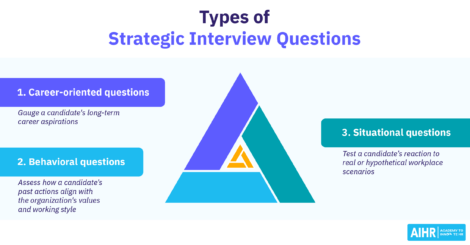
18. Improve your interview process
Your interview process should ensure that all candidates are objectively evaluated. As much as we all want this to be the case, the reality is that often, bias still finds its way into the selection process.
A classic example comes from a Princeton University study on orchestra auditions. When symphonies introduced blind auditions, female musicians became 50% more likely to advance to the next round. This illustrates how structured, objective approaches can meaningfully reduce bias in selection.
There are several ways to strengthen your interview process. One of the simplest is using an interview evaluation form to assess candidates against the same criteria. This creates a clear structure for interviewers, keeps discussions focused on job-related factors, and reduces the risk of subjective decision-making.
Other helpful practices include assembling diverse interview panels and avoiding trick or overly abstract questions. Keeping interviews practical, transparent, and job-related promotes a better experience for candidates and leads to more reliable hiring outcomes.
Ben Lamarche, General Manager at Lock Search Group, highlights the importance of preparation on the interviewer’s side:
“The most awkward moments in my recruiting career have been when I struggled to answer basic candidate questions about the job. Over the years, I’ve realized how job interviews should go both ways. A serious candidate should question you about the company culture, the job description, the hard/soft skills required, and more. Going prepared is as essential for interviewers as it is for interviewees,” says Lamarche.
“I’ve heard of companies that deliberately refuse to disclose particulars about the job in interviews; it’s unfair to professionals who take the time to apply and come in for the meeting.”
19. Leverage contingent workers
As we’ve already seen, many organizations are widening their talent sources to keep up with shifting expectations and ongoing shortages. One practical way to do this is by using contingent worker. These are individuals hired on a short-term, project-based, or as-needed basis, which gives companies more room to adjust their workforce without making long-term commitments.
Bringing in a contractor or freelancer can be a cost-effective option. Hiring expenses tend to be lower, and if the match isn’t perfect, the impact is far smaller than it would be with a full-time hire. Recent industry data indicate that 65% of companies plan to increase their use of contingent workers, highlighting the rapid growth of flexible workforce models.
“Fractional roles, consulting, or gig positions are very beneficial when companies are going through a large digital transformation, a merger, or some other significant change. Often, consultants are specialists who can provide very specific expertise. The expense is limited to the length of the project, as there’s no long-term commitment,” explains Theresa Balsiger, VP of Candidate Relations at Carex Consulting Group.
Besides, a great freelancer can always become a full-time employee if both parties enjoy working together or end up in your talent pool for future opportunities.
20. Launch (virtual) campus recruitment activities
Recruiting through universities is an effective way to connect with emerging talent, especially Gen Z candidates entering the workforce for the first time. It helps companies fill entry-level roles, build an early-career pipeline, and introduce themselves to a new generation of potential employees. Campus recruitment remains a popular strategy for many organizations; recent data show that a large share of employers continue to invest in early talent programs and ramp up their campus recruiting efforts.
You can structure campus recruitment to include both in-person and virtual activities. Here are a few effective tactics:
- Host or join career fairs and project fairs: Participating in real-life or virtual fairs gives you access to soon-to-be graduates and helps you spot students whose interests and skills align with your roles.
- Engage with student organizations: Sponsoring or attending events hosted by student associations puts you in touch with motivated candidates for internships, trainee roles, or graduate programs.
- Create a dedicated graduate-landing page: A landing page tailored to recent graduates, showcasing entry-level roles, internships, and growth paths, makes it easier for students to find and apply for your opportunities.
21. Integrate your recruitment and onboarding processes
While employee onboarding isn’t strictly part of recruitment, a weak onboarding process can undo much of your recruiting effort. Many new hires decide whether they will stay long-term in their first weeks or months. If onboarding is poor, they may leave quickly — or worse, share negative experiences on platforms that future candidates read.
Research shows that 86% of new hires decide how long they will stay with a company within the first six months, highlighting how much impact the onboarding period has on retention.
This makes onboarding an essential element of any recruitment strategy. Think of it as the final step in the hiring journey, the part that confirms a candidate’s choice to join your company and sets them up for long-term success. Without it, even the best recruitment process can fall short.
How to implement effective recruiting strategies
Coming up with recruitment ideas is one thing. Making them work inside a real organization is the harder part. The steps below can help you turn your recruiting strategies into consistent results.
Step 1: Clarify your organization’s recruitment needs
Before you choose any strategy, get clear on what your organization actually needs. This includes the roles you need to fill, the skills that matter most, and the type of people who will thrive in your culture. The more focused your understanding, the easier it becomes to select strategies that support those needs instead of relying on guesswork.
Kendra Janevski, Managing Director, Human Resources at Vault Consulting, recommends identifying which two of three priorities matter most for each role: timing, cost, or quality. “For example, the focus of the recruiting strategy to hire the best quality candidates quickest will mean more cost using headhunters and additional resources to vet and move candidates through the journey.”
Step 2: Audit your current talent acquisition approach
Next, take an honest look at how you currently recruit. Review recent hires, time to fill, candidate quality, and feedback from hiring managers and candidates. Identify what is working well and where people get stuck or drop out. This helps you avoid repeating past problems and shows you where new strategies will have the most impact.
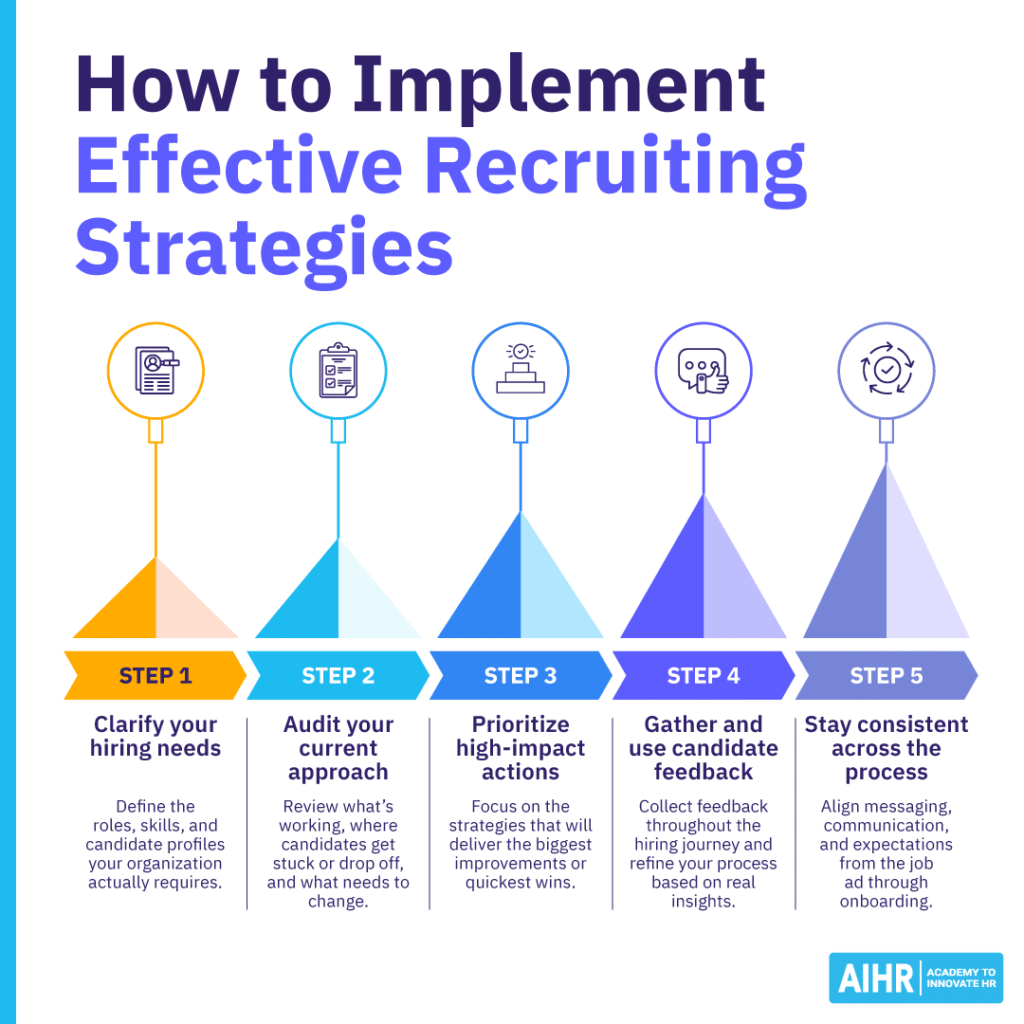
Step 3: Prioritize strategies with the biggest impact
Rather than trying to do everything at once, start with the strategies that will make the biggest difference. Focus on a mix of high-impact changes and “quick wins” that are relatively easy to implement. Early visible improvements help build confidence, secure buy-in from stakeholders, and create momentum for broader, more significant changes.
Step 4: Collect and act on candidate feedback
Treat candidates as a valuable source of insight. Ask for feedback at key stages in the process, for example, after interviews or once a vacancy is filled. Look for recurring themes related to communication, clarity, fairness, or overall experience. Use these insights to refine your process, adjust messaging, or remove unnecessary steps that cause frustration.
Step 5: Stay consistent across the whole hiring journey
Finally, make sure your strategies are applied consistently. Candidates form an impression based on every interaction: the job ad, your careers page, communication with recruiters, interviews, and onboarding. Align your messaging, timelines, and behavior with your organization’s values so candidates know what to expect. A consistent experience builds trust and helps you stand out as a reliable employer.
A final word
Depending on your organization’s hiring needs and budget, you can implement recruiting strategies that get your business in front of the right talent and position it as an attractive employer. A well-executed recruiting strategy not only fills vacancies but also contributes to long-term organizational growth and success.
FAQ
Recruiting strategies are ways to find the best candidates for your organization’s open positions.
A successful recruiting strategy consists of three main elements: what you want to achieve (your goal), how you want to achieve that goal, and a way to measure the success of your strategy.
Examples of recruitment strategies include designing an employee referral program, tapping into the hidden workforce, creating a stellar offboarding process, staying on good terms with alumni, and optimizing your interview process.