

As HR roles become more strategic, more professionals are looking for ways to build the skills needed to operate as effective business partners. But, choosing the right HR Business Partner certification can feel overwhelming, especially with the different options available. There are formal certifications, training programs, and certificate courses, all promising to help you grow into a more strategic HRBP.
Some options focus on credentials and recognition, while others help you build practical skills you can use right away. The best choice depends on what you want for your next career step.
This guide will help you understand your options and choose the HR Business Partner certification or certificate program that fits your goals, experience, and the type of HRBP you want to become.

Contents
What is an HR business partner certification?
What should you look for before choosing a certification or program?
Best HR business partner certification and certificate programs
– Formal certification-focused
– Certificate program and training options for HRBPs
– Other HRBP training courses
Certification vs certificate program: which is better?
How to choose the right HRBP path for your career
Key takeaways
- There is no single best HR Business Partner certification; the right choice depends on your career goals.
- Formal certifications and certificate programs serve different purposes.
- HRBPs benefit most from learning that builds strategic and business-focused capability.
- For many professionals, a practical HR Business Partner course is the most effective first step.
What is an HR business partner certification?
An HR business partner certification typically refers to a credential or learning program designed to help HR professionals develop the skills needed to operate as a strategic partner to the business.
However, the term is used broadly. It can also refer to:
- Formal certifications offered by professional bodies
- Specialized HRBP training programs
- Certificate programs focused on HR Business Partnering.
Some options emphasize recognition and formal credentials. Others focus on building the practical skills HRBPs need to influence stakeholders, support decision-making, and drive business outcomes.
Before you decide, look past the program’s name and focus on what it will actually help you do in your job.
Use an evaluation criterion to decide. For example, consider:
- Does the program focus on developing strategic and business-related skills, or mainly on HR fundamentals?
- How practical is the learning? Do you get real-world tools, templates, or case studies you can apply at work?
- Is the credential recognized and valued by employers in your industry or region?
- What level of flexibility does it offer in terms of pacing and format?
- Will you have opportunities to interact with instructors or peers?
You can also ask yourself a few questions when comparing programs to decide if it’s right for you:
- What new skills or outcomes will I gain by completing this program?
- How will this certification or course directly impact my ability to influence stakeholders and drive business goals?
- Does it fit my current experience level and the direction I want my career to take?
What should you look for before choosing a certification or program?
Before you compare your options, first let’s understand what makes an HRBP-focused certification or program valuable.
A strong HR Business Partner learning path should help you build:
- Strategic thinking: HRBPs need to connect people strategy with business goals. Choose programs that go beyond basic HR tasks and focus on making a real impact on the business.
- Stakeholder influence: A key part of being an HRBP is influencing leaders. Good training should cover communication, consulting, and how to influence others.
- Business acumen: Understanding how the business operates is essential. The best programs connect HR decisions to financial and operational outcomes.
- Practical application: Theory alone is not enough. You should be able to apply what you learn directly in your role.
- Relevance to modern HR: The HRBP role is changing. Find programs that cover today’s challenges, like workforce planning, change management, and making decisions based on data.
- Flexibility: As an HR professional, you will likely need to learn while working. Online, self-paced options can make this easier.
Best HR business partner certification and certificate programs
There are two main types of options to consider: formal certifications and training or certificate programs.
Formal certification-focused
When comparing HR Business Partner certification options, look at both formal certifications and practical certificate programs. Each serves a different purpose. Some help you build credibility through a recognized credential, while others focus on developing the skills you need to perform effectively in the role.
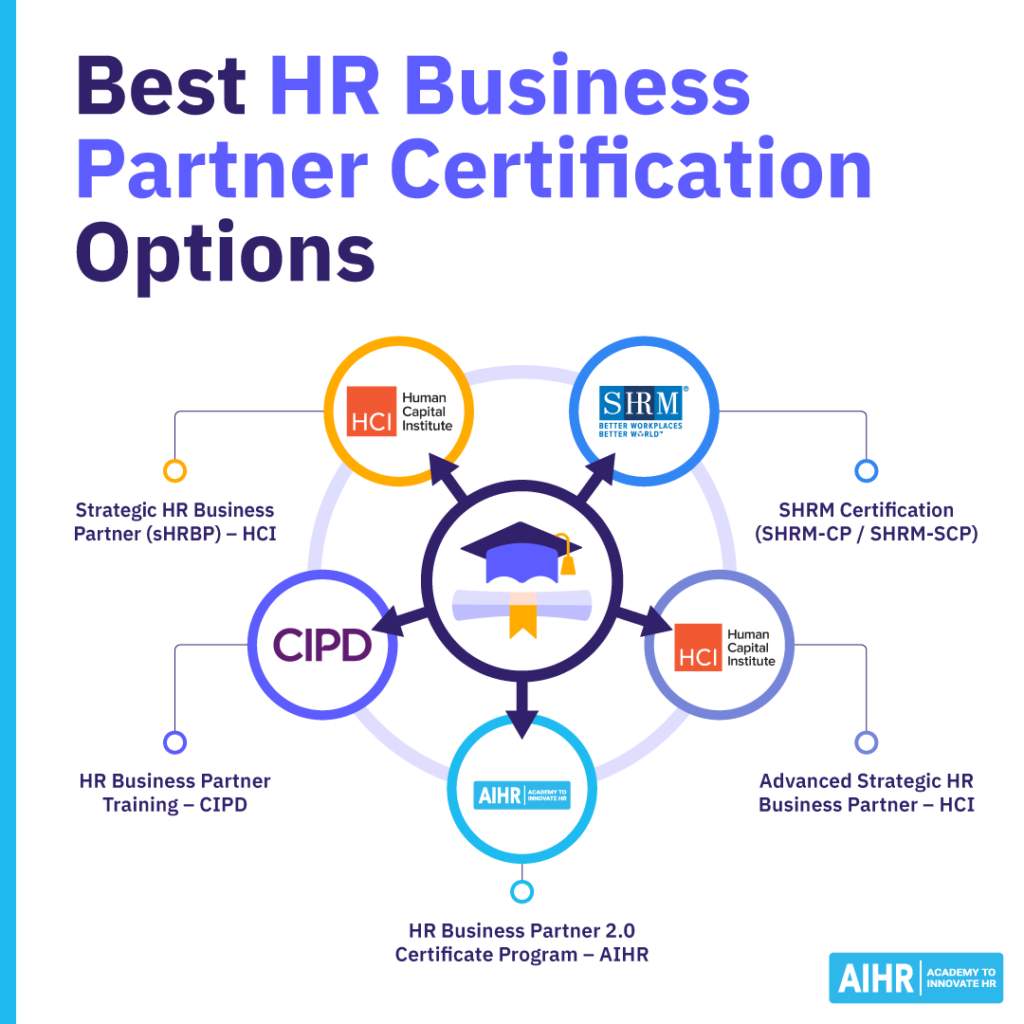
1. Strategic HR Business Partner (sHRBP) – HCI
The Strategic HR Business Partner (sHRBP) certification from HCI is designed as an intensive program to help HR professionals operate as strategic partners and advisors to the business.
Who it’s for: This certification is suited to HR professionals who are already working in, or preparing for, strategic HR roles and want to strengthen their ability to partner with the business and influence outcomes.
What it covers
The program focuses on building a strategic mindset, aligning talent strategy with business priorities, consulting with stakeholders, and solving business problems through HR interventions. It also includes areas such as data-driven decision-making, change management, and measuring business impact.
What makes it useful
The program is delivered as a short, intensive experience (typically over a few days), either virtually or in person. It includes interactive learning, real business case work, and requires participants to complete coursework and pass an exam to earn the certification.
2. SHRM Certification (SHRM-CP / SHRM-SCP)
SHRM certifications are globally recognized credentials designed to validate HR knowledge and competency across operational and strategic HR roles.
Who it’s for: The SHRM-CP is suited to HR professionals working at an operational level or early in their HR career, while the SHRM-SCP is intended for professionals working in strategic roles, including those responsible for aligning HR strategy with organizational goals.
What it covers:
SHRM certifications are based on the SHRM Body of Applied Skills and Knowledge (SHRM BASK) and assess both HR knowledge and behavioral competencies. The focus is on applying HR principles in real-life situations across areas such as leadership, business knowledge, and organizational effectiveness.
What makes it useful:
These certifications are widely recognized by employers and are designed to demonstrate both knowledge and practical HR competency. Preparation can be done online, and exams may be delivered either remotely or in person, depending on the option selected.
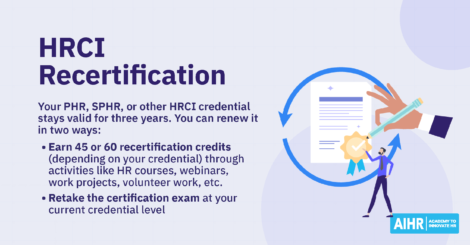
It is also important to note that SHRM certifications require recertification every three years. To maintain your credential, you must earn professional development credits through continuing education, professional activities, or by retaking the exam. This requirement helps you keep your HR knowledge and skills up to date throughout your career.
3. Advanced Strategic HR Business Partner – HCI
The Advanced Strategic HR Business Partner certification is designed as a next-step program for experienced HRBPs who want to deepen their strategic influence and impact at a senior level.
Who it’s for: This program is intended for experienced HR Business Partners and HR leaders who are already working on strategic initiatives and want to strengthen their ability to influence senior stakeholders and shape business decisions.
What it covers:
The program focuses on advanced capabilities such as systems thinking, workforce analytics, behavioral economics, scenario planning, and executive-level influence. Participants work on real organizational challenges and apply these concepts in a practical setting.
What makes it useful:
It is delivered as a short, interactive learning experience (typically two days) with business simulations, peer consulting, and applied exercises. Participants develop solutions to real challenges and refine their strategic approach in real time.
Certificate program and training options for HRBPs
Here, the focus moves from earning credentials to building real skills.
4. AIHR HR Business Partner 2.0 Certificate Program
AIHR’s HR Business Partner 2.0 Certificate Program is designed to help HR professionals build the strategic and practical capabilities required for modern HRBP roles. The program focuses on applying HR expertise in a business context and developing the skills needed to act as a strategic partner.
Who it’s for: This program is suited to mid-level HR professionals transitioning into HRBP roles, as well as existing HRBPs who want to strengthen their strategic impact and move beyond operational work.
What it covers:
The program includes topics such as business acumen, connecting HR strategy to business outcomes, consulting and influencing skills, HR metrics, employee experience, and AI applications in HR.
What makes it useful:
It is delivered online and self-paced, with approximately 33 hours of learning. The program is designed around practical application and includes tools, templates, and case-based learning to support real-world use.
What you can apply on the job:
You can strengthen your ability to connect HR initiatives to business results, build credibility with stakeholders, and contribute more effectively to strategic decision-making.
Other HRBP training courses
5. CIPD – HR Business Partner Training
CIPD offers dedicated business partnering programs designed to help HR professionals build the skills needed to operate effectively as business partners, alongside a broader portfolio of HR learning courses.
Who it’s for: These programs are suited to HR professionals who are moving into HR Business Partner roles or looking to strengthen their ability to work closely with business leaders and contribute to organizational outcomes.
What it covers:
CIPD business partnering courses focus on areas such as linking HR activity to business outcomes, developing influencing and communication skills, understanding organizational drivers, and using data and analytics to support decision-making.
What makes it useful:
Courses are typically delivered through a mix of online learning and live virtual sessions, often over several months. They include practical case studies and applied learning, helping participants build confidence in real business partnering situations.
Certification vs certificate program: which is better?
This is one of the most important distinctions to understand when choosing your next step as an HR Business Partner.
A certification is typically designed to signal a recognized level of knowledge and credibility. It often follows a structured framework and may include an exam or formal assessment. For many HR professionals, certifications are valuable because they are widely understood by employers and can support career progression, especially in organizations that prioritize standardized credentials.
A certificate program, on the other hand, is usually about building practical skills instead of testing your knowledge with an exam. These programs use learning modules and give you a certificate of completion when you finish. The main goal is to help you build skills you can use right away, like influencing stakeholders, aligning HR work with business goals, and supporting business decisions.
For HRBPs, the right choice depends on what you want to achieve next in your career. If your priority is gaining a formal credential, strengthening your professional profile, or meeting role requirements that specify certifications, then a certification is likely the better option. This path often supports advancement to senior HR roles where recognized credentials are valued and may be required for progressing to leadership positions or specialized areas.
If your focus is on becoming more effective in your role, building practical capability, or transitioning into an HRBP position, then a certificate program may be more useful.
Skill-building through certificate programs helps lay the foundation for strategic contribution and prepares you for future opportunities, making it easier to step up to more senior responsibilities over time. HR professionals often find that the most effective approach is to combine both over time, starting with skill-building to improve performance and then pursuing a certification once they are applying those skills in a strategic context.
Planning your professional development around both immediate skill needs and long-term career aspirations can help you move confidently toward senior HR roles.
When to choose an HR business partner certificate program
You might not need a credential right now, but rather want to build the skills to do well as an HR Business Partner. In that case, a certificate program is a good choice if your goal is to learn practical skills you can use every day at work.
This is often the case for professionals who are transitioning into an HRBP role from HR generalist or operational positions, where the focus shifts from execution to strategic contribution. It is also relevant for those who need to strengthen key capabilities such as business acumen, stakeholder influence, and the ability to align HR initiatives with organizational priorities.
A structured HR Business Partner certificate program can help you make this transition by showing how the role works in real life. Instead of just teaching frameworks, it helps you build skills that lead to real business results, like advising leaders, helping with decisions, and turning business needs into HR actions.
How to choose the right HRBP path for your career
The right path depends on where you are now. If you want a formal credential, a certification could be the best choice, especially if your company or future employer values recognized certifications or you want to boost your professional profile.
If your main goal is to build skills, a certificate program or course is often the best place to start. This lets you develop what you need to succeed in the role before worrying about credentials.
If you want both, start with skill-building. Then, pursue a certification once you have practical experience to support it. Also, some courses and certificate programs, like AIHR’s, are recognized by global HR associations to earn professional development credits.
Next steps
The best next step depends on what you want to achieve. If your priority is building a recognized credential, start by exploring formal HRBP certifications and understanding what they require.
A practical HR Business Partner course or certificate program is often the better place to start if your goal is to become more effective in your role. This then helps you build the skills you need now, rather than focusing only on a credential.
For HR professionals aiming for more strategic roles, building your skills first often leads to better long-term results. AIHR’s HR Business Partner 2.0 Certificate Program is made for this. It focuses on the skills HRBPs really use and helps you develop them in a flexible, practical way.
Explore the program or visit the demo portal to see how it fits your learning goals before deciding on your next step.
FAQ
The best certification depends on your goals. If you want a recognized credential, options like sHRBP are strong. If you want practical skills, a certificate program like AIHR’s HRBP certificate program may be more useful.
Most HRBPs have experience in HR roles, along with strong business understanding, stakeholder management skills, and strategic thinking capability.
Typically, you move into an HRBP role after gaining experience in HR operations or generalist roles, then develop strategic and business-focused skills.
HRBPs benefit from training in business acumen, stakeholder management, consulting skills, and strategic HR.
Some certification programs and many certificate programs like AIHR’s are available online. The format depends on the provider.
A certification usually focuses on recognition and credentials, while a course or certificate program focuses on skill-building and practical application.