
What are the best online courses for starting a career in HR? Fresh graduates and career seekers have likely asked this question at some point. This is especially relevant, since HR and people operations roles are consistently in demand as companies experience workforce changes and skills shortages.
Despite this, entry-level HR roles are no longer ‘learn as you go’. Employers may expect candidates for junior positions to already have basic HR knowledge, which is driving demand for online HR courses to close this gap. This article explores how an online course can help you start an HR career, what the best online HR courses are, and how to choose the right one for you.
Contents
Why take an online course to start an HR career?
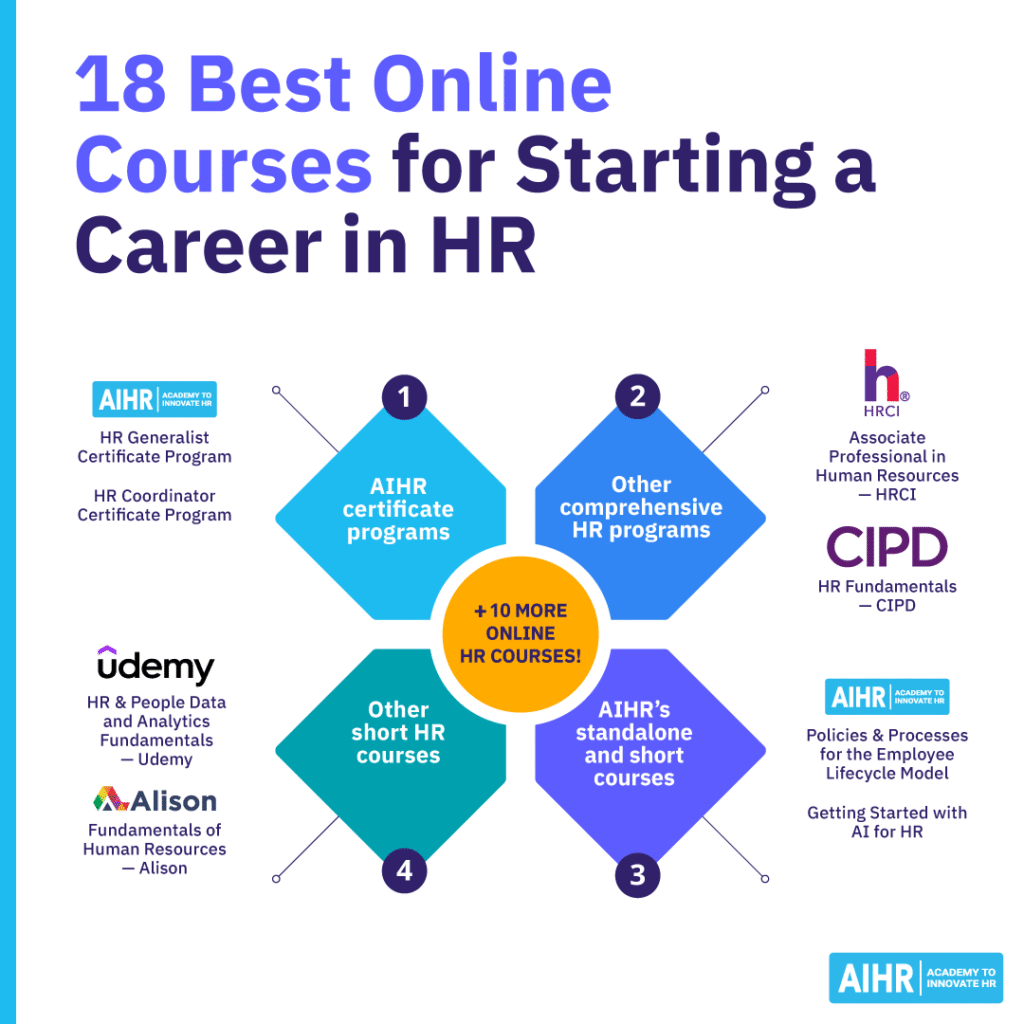
The 18 best online courses for starting an HR career
How to choose the best online HR course to start your career
Key takeaways
- Online HR courses can shorten the path to a role in Human Resources by helping you build practical, job-ready HR skills.
- The best HR courses for beginners tend to focus on application, not just theory, and mirror real HR work to help prepare you for an HR career.
- Choosing the right course for yourself depends on your target role, skills gaps, and learning preferences.
- A structured learning pathway that covers different aspects of your area of interest in HR typically delivers more value than standalone HR courses.
Why take an online course to start an HR career?
Aspiring HR professionals may run into issues with access to upskilling opportunities. Traditional HR career paths often require prior internships, entry-level HR work, or internal transfers. Online HR courses, however, have increased career prospects by making core HR knowledge accessible to anyone. As long as they’re willing to invest time and effort.
Faster entry into HR
Online HR courses provide a structured introduction to HR fundamentals that might otherwise take years to learn on the job. Such courses typically cover topics like recruitment administration, onboarding, employee documentation, performance processes, coaching, career development, and basic employment law.
Well-designed online HR courses help learners progress through a curated curriculum that reflects how HR actually operates inside a company. This structured exposure can often reduce the time it takes to become ‘HR-ready’, making you more marketable and competitive in a job search.
Job-ready, practical skills
HR is not purely people-focused and intuitive. It also involves systems, processes, documentation, and decision-making processes. Good online HR courses account for this to ensure they offer a well-rounded learning experience.
Course students may practice writing job ads aligned with role requirements, screening candidates objectively, and responding to common employee questions and concerns. This practical experience is invaluable for an entry-level HR role, where execution matters from day one. It also gives you transferable skills you can apply to a variety of junior HR roles.
Proof of commitment to HR upskilling
Recognized HR certificates demonstrate that a candidate has taken the initiative to invest in understanding HR fundamentals, responsibilities, ethics, and compliance.
They also indicate that a candidate can articulate their transferable skills in interviews. This may include concrete examples of how they’ve already applied HR concepts in simulated or project-based settings.
Flexible and affordable learning
Flexibility is a key advantage of online HR programs. Many learners pursue HR upskilling while working full-time and managing personal commitments. Self-paced formats allow steady progress without disrupting their careers or personal lives, while cohort-based programs offer structure and peer learning.
Affordability is another main benefit of online HR courses. Compared to university degrees or in-person diplomas, these courses typically cost less, making them an accessible entry point into the HR profession.
Clearer career direction within HR
HR is a broad field that beginners may underestimate. Online courses often introduce learners to a wide range of HR, including recruitment, HR operations, learning and development, analytics, DEIB, compliance, compensation and benefits, and digital HR.
This exposure helps learners make informed decisions about where to specialize next, reducing the likelihood of costly missteps or dissatisfaction later on in their careers.
Accelerate your HR growth and development with AIHR
Explore all AIHR has to offer to drive your HR upskilling and help you become a more well-rounded HR professional.
With the AIHR’s Full Academy Access, you’ll get:
✅ Access to all AIHR certificate programs, which also let you earn recertification credits
✅ On-demand training, free downloadable templates, and other useful resources
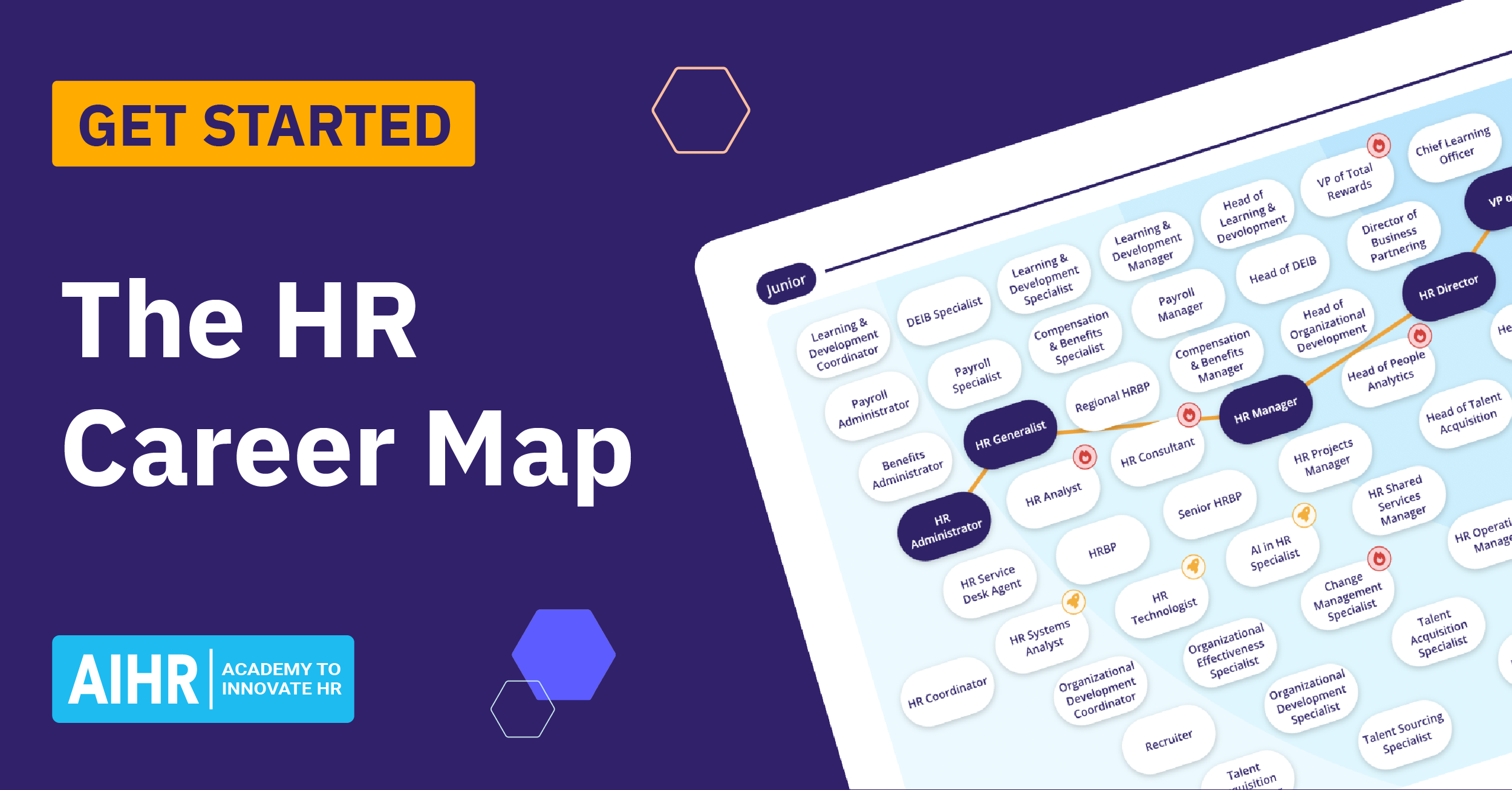
✅ Use of AIHR’s interactive HR Career Map tool to help map your HR career path
The 18 best online courses for starting an HR career
Below is a selection of online HR programs and short courses designed to help beginners build foundational HR skills and capabilities. Do note that we’ve compiled this list based on publicly available information. We have not tried the courses ourselves, except for AIHR’s courses.
AIHR certificate programs
AIHR’s certificate programs are designed with a practitioner-first mindset, combining HR theory with hands-on assignments and real-world scenarios. Here are a few options to explore:
1. HR Generalist Certificate Program
This HR Generalist Certificate Program covers the full employee life cycle, including recruitment, performance management, and employee relations. It’s suitable for those aiming for HR Generalist, HR Officer, or People Operations roles. You’ll learn to handle both strategic and operational HR tasks and how HR supports business objectives while managing day-to-day responsibilities.
2. HR Coordinator Certificate Program
Designed for entry-level HR professionals, the HR Coordinator Certificate Program focuses on operational excellence. It prepares learners to support HR teams through HR administration, compliance, reporting, and effective employee communication. This program is an excellent starting point for you if you intend to take on an HR Assistant or HR Coordinator role.
3. Sourcing & Recruitment Certificate Program
The Sourcing & Recruitment Certificate Program focuses on talent acquisition (TA) within Human Resources. This program will help you develop skills in candidate sourcing, résumé screening, interviewing, and employer branding — all critical skills for junior recruitment roles. It’s particularly valuable if you’re interested in agency recruitment or internal TA positions.
4. Digital HR 2.0 Certificate Program
The Digital HR 2.0 Certificate Program introduces learners to HR technology, automation, and data-driven decision-making. It’s ideal for beginners who want longevity in their HR careers and to understand how digital tools shape modern HR. You’ll work on real-world projects to develop the skills, industry-leading expertise, and hands-on experience to drive HR’s digital transformation.
Other comprehensive HR programs
Here is a short list of other relevant HR programs that can help you start your HR career:
5. Associate Professional in Human Resources (aPHR)
The aPHR by the HR Certification Institute (HRCI) is a globally recognized credential that focuses on Human Resources fundamentals, compliance, and operations. As a globally recognized certificate, it’s a popular choice among HR beginners and aspiring HR professionals seeking internationally transferable HR credentials.
6. HR Fundamentals
Developed in accordance with the Chartered Institute of Personnel and Development (CIPD) standards, the five-week HR Fundamentals course offers learners a strong theoretical grounding in HR principles. It’s particularly relevant for candidates who are aiming for HR roles within the U.K., the Republic of Ireland, or Europe.
7. HR Skills® Fundamentals Certificate
This self-paced program consists of eight courses focused on practical HR competencies, including performance management, employee relations, and communication. This makes it suitable for beginners transitioning into HR roles. Learners have 12 months to complete all the courses in this certification.
AIHR’s standalone and short courses
AIHR’s short courses allow learners to build targeted skills or explore specific HR topics without committing to a full certificate program. Here’s a list:
8. Policies & Processes for the Employee Lifecycle Model
The Policies & Processes for the Employee Lifecycle Model online course helps learners build confidence in structuring HR policies across employee touchpoints. It’s designed to help you gain the skills to manage every aspect of the HR function — from building an authentic employer brand to designing performance and reward processes.
9. Getting Started with AI for HR
Getting Started with AI for HR is an online course that introduces AI concepts relevant to HR work. You’ll learn about the HR purposes and benefits of different types of AI, AI’s potential to automate HR tasks, and how an AI adoption framework can transform Human Resources workflows and processes. You’ll also learn how to drive AI adoption.
10. Using Gen AI in HR
The Using Gen AI in HR online course focuses on practical generative AI applications in HR tasks. You’ll learn to build relevant, hands-on skills with the most widely used Gen AI tools, explore HR-specific use cases across different applications, and identify where AI can fit into your organization’s day-to-day HR tasks and workflows.
11. Workplace Health and Wellbeing
The Workplace Health and Wellbeing course covers wellbeing strategy and implementation. It teaches you how workplace wellbeing drives performance, the key components of employee wellbeing, how to spot signs of distress, and how to apply holistic interventions and technology to strengthen your wellbeing strategy.
12. Digital HR and the Future of Work
Digital HR and the Future of Work explores emerging HR trends and technologies. It teaches you how digital HR drives innovation, efficiency, and performance. You’ll also learn how it strengthens EX and HR service delivery, and how to balance new digital approaches with existing HR practices to improve engagement and retention.
13. Diversity, Equity, Inclusion & Belonging
The Diversity, Equity, Inclusion & Belonging course builds foundational DEIB knowledge for HR practitioners. It helps build a strong foundation in DEIB and its practical application, and teaches you to understand intercultural differences. You’ll also learn how to overcome common barriers to progress that prevent meaningful, positive change.
14. HR Communications Toolkit
Through AIHR’s online HR Communication Toolkit course, you’ll develop the soft skills you need to strengthen your HR communication expertise, guide conversations, shape outcomes, and build trust. You’ll also learn to recognize early signs of conflict and different conflict styles, as well as the six stages of an effective feedback session.
Other short HR courses
Here is a list of other short courses suitable for HR beginners:
15. Fundamentals of Human Resources
A beginner-friendly introduction to HR concepts, the free Fundamentals of Human Resources course by Alison is suitable for learners exploring HR as a potential career path. You’ll learn to handle employee relations and performance (including conflict), and lead key changes such as technology, legislation, and working conditions.
16. HR & People Data and Analytics Fundamentals
The HR & People Data and Analytics Fundamentals course by Udemy introduces HR metrics, dashboards, and basic analytics concepts, helping learners understand how data informs HR decisions.
17. HR Foundations: Core Human Resources
HR Foundations: Core Human Resources is an online class by LinkedIn Learning that provides a structured overview of HR responsibilities. Professor and author Wayne Cascio guides learners through core HR areas like finding and keeping top talent, helping people do their best work, and creating L&D opportunities and incentives.
18. Human Resource Management
The free Human Resource Management course by Great Learning covers core HR functions from a more business-focused perspective, making it useful for those transitioning into HR from management or operations roles. The course will teach you key HR principles like recruitment, performance management, and compensation.
How to choose the best online HR course to start your career
Selecting the “right” course is crucial, as it helps you plan your time and budget accurately and sets you on the career path of your choice. Consider the following when trying to decide on an online HR course:
Start with your target role (next six to 12 months)
Define the HR role you plan to pursue in the near term in order to kick-start your career in HR. Different roles tend to require different skill sets, so the best course for you should align directly with your immediate career goals. This will ensure a solid foundation that helps you start off strong.
Choose based on the skills you need to demonstrate
Analyze job descriptions for your desired role(s), and identify recurring skill requirements. This will guide you when prioritizing courses that help you demonstrate those skills through assignments or projects. While not extensive, this type of background and experience in HR can be useful to a beginner.
Prioritize practical output over theory
Courses that produce practical, tangible outputs provide stronger interview talking points, as they display your transferable skills and ability to apply those to the job at hand. These outputs may include templates, mock policies and interviews, interview guides, and practice audits.
Confirm course levels and prerequisites
Ensure the course is designed for beginners and doesn’t assume prior HR experience. This should be clear in the course description or prerequisite section. A mismatch in level can lead to disengagement or incomplete learning, leaving you frustrated and wasting time and money.
Pick a format that fits your learning style
Self-paced learners tend to thrive on flexibility, while cohort-based learners benefit from structure and accountability. Ultimately, completion matters more than pace. You know yourself better than anyone else does, so pick a format that best matches your interests and needs.
Validate the course’s credibility
Look into the course’s instructor backgrounds, learner outcomes, reviews, and degree of industry recognition. Credible providers typically have strong practitioner involvement and up-to-date content that better prepare candidates for a career in Human Resources.
Create a simple progression plan
Rather than treat learning as a one-time activity, map your progression. It can look like this: from a foundational HR course to a role-specific specialization to advanced or strategic HR skills.
This approach mirrors real HR career development and delivers better long-term outcomes. While you can change the course of your HR career at any time, starting with a detailed plan keeps you on track at each step.

Final thoughts
Online HR courses have become a highly effective and accessible way to enter the HR profession. They help aspiring HR professionals build foundational HR knowledge, practical skills, and credibility, all while maintaining flexibility and affordability.
The most successful learners approach HR upskilling strategically, choosing courses aligned with their target roles, prioritizing hands-on application, and committing to continuous development. The right online course isn’t just helpful, it’s often the difference between aspiration and opportunity.