

A systematic selection process does more than fill a vacancy. It forms the backbone of effective talent management and determines whether the people you hire actually perform. Employee selection still isn’t easy. SHRM’s Talent Trends Report found that 69% of organizations struggled to fill full-time roles in the past year, a level not seen since 2016. When qualified candidates are harder to find, a comprehensive recruitment and selection process becomes even more important for attracting and correctly identifying the best fit for your organization.
In this article, we’ll take a closer look at the selection process for hiring and share best practices for designing one that helps you find top-quality employees while delivering a good candidate experience.
Contents
What is the selection process?
Recruitment vs. selection: What’s the difference?
The importance of a strategic selection process
7 selection process steps
Common selection criteria
Selection process software
Free selection process checklist
Metrics used in the selection process
How to improve the recruitment and selection process: Best practices
FAQ
What is the selection process?
The selection process is how employers evaluate job candidates’ skills, competencies, and experience to identify the most qualified person for a role and the organization.
It starts once a job opening is advertised and candidates begin applying. From there, it follows a funnel structure. A large pool of applicants gets progressively narrowed down through screening, interviews, and assessments until the best fit remains.
The selection process typically includes the following seven stages, which we cover in detail below.
- Application
- Screening & pre-selection
- Interview
- Assessment
- References and background check
- Decision
- Job offer & contract

Recruitment vs. selection: What’s the difference?
Recruitment and selection are two different stages of hiring, though people often use the terms interchangeably. Recruitment attracts candidates. It covers the job ad, where you post it, and how you reach passive candidates, with the goal of building a large, qualified pool. Selection is what happens once that pool exists. It’s the screening, interviewing, testing, and reference checks that narrow the pool down to one hire.
Here’s a look at the key differences:
Goal
Attract a large, qualified pool of candidates
Identify the single best fit from that pool
Direction
Widens the candidate pool
Narrows the candidate pool
Typical activities
Job postings, sourcing, employer branding, outreach
Resume screening, interviews, assessments, reference checks
Who’s involved
Recruiters, sourcers, marketing
Hiring managers, interview panels, recruiters
Comes first?
Yes, recruitment happens before selection
No, selection follows recruitment
Success metric
Number and quality of applicants
Quality and fit of the final hire
The importance of a strategic selection process
Organizations usually have some type of hiring procedure in place, though they don’t always follow it consistently. A well-thought-out selection strategy does more than fill each vacancy. It contributes to the lasting success of the business.
A strategic selection process offers the following advantages:
- Supports long-term organizational goals: Incorporating strategic objectives into candidate selection systems puts the focus on finding individuals with the skills, experience, and mindset to carry out what the organization is aiming for currently and in the future. For example, a company that is rapidly growing or facing a merger can look for candidates with attributes such as resilience and adaptability, which indicate the ability to successfully navigate change and uncertainty.
- Creates a positive candidate experience: A structured, consistent selection process helps candidates know what to expect. Informing them of upcoming steps keeps them engaged and clear on what’s next. CareerPlug’s Candidate Experience Research found that 66% of candidates said a positive hiring experience influenced their decision to accept an offer, while poor communication or unclear expectations led others to decline.
- Ensures job and culture fit: Evaluating candidates beyond their knowledge and specialized skills helps identify who will thrive in the position and work environment. For instance, someone with the ideal technical expertise yet who prefers to work alone may not do well in an organization that functions in teams with shared tasks and constant collaboration.
Starbucks provides a clear picture of its culture and values on its career page. This gives potential employees a better idea of what Starbucks would expect from them and the type of atmosphere they’d be working in. - Boosts employee performance and satisfaction and reduces turnover rates: Effective candidate vetting and selection produce a stronger likelihood that new hires will be the right fit, perform well, and find contentment in their positions. Not only will they be productive and contribute to business success, but they are also apt to stay with the company longer.
- Builds a competitive advantage: A thorough and strategic selection process can support an organization’s competitive advantage by bringing in the most qualified and productive employees for improved business outcomes. It also creates a better candidate experience, which, in turn, improves your employer brand. This earns you a wider and higher-quality applicant pool for every job opening.
A good selection process helps HR and recruiters assess candidates fairly, consistently, and with the role in mind. To do it well, you need practical skills in screening, evaluation, and structured decision-making.
AIHR’s Sourcing & Recruitment Certificate Program teaches you to:
✅ Use effective screening methods to identify best-fit candidates
✅ Apply assessments and candidate evaluation techniques
✅ Run a structured job intake process with hiring managers
✅ Use recruitment data to improve the quality and efficiency of your hiring process
💡 Check out the lessons in AIHR’s Demo Portal for a clear idea of what you’ll get.
7 selection process steps
Although the specifics differ according to each organization and position, the selection process happens in a series of steps that candidates move through.
Let’s take a closer look at each step:
1. Application
Once you’ve published a job advert, candidates begin to apply. That’s the first step in your selection process. However, the number, quality, and diversity of applications will vary. Here’s what you need to know about the different aspects of the application stage:
Application process
The application process itself is crucial. Is it mobile-friendly and quick, or does it require candidates to manually fill in all their CV info into your system? A career site that isn’t optimized for mobile is a practical web-design issue that can hinder HR’s success in the candidate selection process.
Test your application process yourself to understand where applicants might struggle. That way, you can ensure you’re providing a smooth application experience that won’t turn away potential employees.
Advertising channels and tools
Where you post and promote your job ads matters too. Here are the five most popular sources for job seekers:
- Online sites: Job boards, such as Indeed, and postings on social media such as LinkedIn and Facebook.
- Company websites/career pages: If you work in HR for a large enterprise, such as Walmart in the U.S. or the NHS in Britain, many people will come directly to your site. For smaller companies, job seekers may not target your website for job announcements. However, they may refer to the website once they learn about the opening elsewhere.
- Recruitment agencies and sites: Jobhunters may register with one or several recruitment agencies or seek out field-specific recruitment sites.
- University and college career departments: Consider holding promotion and recruitment events at local, national, or international educational institutions. In Britain, the Civil Service and armed forces host many events like this, often visiting campuses with more socially and ethnically diverse populations.
- Word of mouth: Many people will ask their family and friends for advice on where to apply and for any leads on job openings.
Optimizing job ads
Digital tools can create more efficient job postings that bring in diverse applicants. Textio uses data and AI machine learning to help companies optimize their job adverts. The tool makes sure the text reflects not only what your business is looking for in a candidate, but also what culture and values matter to your company.
Why does inclusivity matter? To increase the diversity of your workforce, you must take concrete steps to expand inclusivity. Diversity matters not just from an idealist or moral perspective but also for maximum success and profit. A report published by McKinsey & Company found that ethnically diverse companies were 39% more likely to outperform competitors.
Other factors impacting the number and quality of applicants
The size of an application pool is influenced by many factors, including the following:
- External issues: These are the matters taking place outside the organization and beyond HR’s scope. Namely, the economic climate, unemployment rates, demographic trends, and social and cultural factors.
- Industry conditions: An organization’s industry also impacts the size of its applicant pool. For instance, if you’re trying to recruit candidates with specific qualifications like teachers, law enforcement, or hospital nurses, your recruiting department’s role will be more challenging than those that hire for less specialized roles.
- Internal factors: The size of an organization and its employer brand will draw in varying numbers of applicants. Google, for example, receives around 3 million applications a year. This means that, on average, more than 400 people apply per job opening. What an organization offers in the form of pay, benefits, and opportunities for progression has a considerable impact as well.
- Sourcing strategy: The number and quality of applicants also depend on a compelling job posting and where you publish it. How informative, engaging, and widely appealing it is directly impacts who you will attract. Job adverts should always use gender-neutral and inclusive language.
- Your requirements: For example, you can also assess whether higher education is a necessity for certain positions. If it’s not, you’ll increase the number of available candidates. The recent SHRM State of the Workplace report found that 28% of HR departments are relaxing their education/degree requirements. For example, The Spectator is a widely read British weekly magazine. The publication does not require a university degree or even a CV for its internships.
2. Screening & pre-selection
The goal of the initial screening phase is to reduce the pool of candidates from a large number to a manageable group of three to ten people who are eligible for an interview. This can be done in various ways, such as the following:
Resume screening
The most well-known technique is resume or CV screening, which assesses whether candidates meet the job criteria. If a role requires 5 or more years of experience, a recent graduate without that experience can be ruled out quickly.
Some companies screen for less obvious signals, too. Trader Joe’s looks for applicants who express genuine enthusiasm for the brand in their application, according to one of its store managers.
CV reviewing can be time-consuming for HR at scale, and software helps. Options range from resume screening tools built into an ATS to AI-powered screeners that predict quality of hire.
Use this kind of technology carefully. Have it regularly reviewed for bias, and consider a blind review policy that removes personal characteristics like name, age, and gender from resumes to counter implicit bias.
Phone screening/chatbot
After the resume screening, a phone (or video) screening interview is next. This helps align expectations between the candidate and employer. The recruiter can ask candidates any questions they have after screening resumes. The recruiter can go through a checklist that may include topics such as pay expectations, full-time or part-time hours, flexible work options, start date, and other potential deal-breakers. Since this is a fairly standard procedure, having a chatbot ask these questions is also an option.

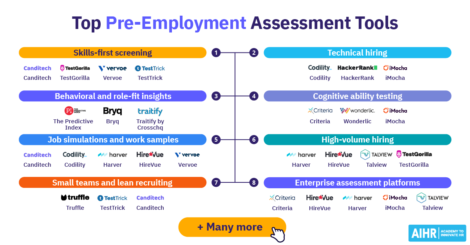
Pre-selection or pre-employment assessments
Pre-selection is a powerful screening method that helps eliminate potential mismatches. SHRM’s State of the Workplace research found that 35% of HR departments rely on pre-employment tests or assessments to identify qualified candidates.
Dedicated pre-selection tools offer assessments like cognitive testing, job simulations, or other tests that help predict quality of hire, sometimes alongside resume screening.
A job simulation gives candidates a realistic preview of the role, showing both its rewarding and challenging elements. This aligns expectations between employer and employee and leads to stronger-fit hires. Pre-selection tools are also increasingly powered by AI.
These tests are especially useful for high-volume recruiting, such as assessing a customer service candidate’s active listening skills. They eliminate obvious misfits so the strongest candidates remain.
Be aware that not all pre-selection tools and screenings are entirely accurate, so choose your vendor carefully.
3. Interview
The interview is the third step in the selection process funnel, and the most visible one to candidates. Its purpose is to assess how well-suited candidates are for the role and to gain insight into their verbal fluency and sociability.
A job interview involves the candidate being asked questions by the direct manager, the recruiter, or both. It provides structure for posing job-related questions and gives you a chance to sell the role to the candidate.
Interviews may happen virtually or in person. Many companies run a first-stage interview remotely for efficiency, then bring candidates on-site for a final round to build a stronger personal connection and let them experience the workplace firsthand.
Informing candidates upfront about how the interview process works makes it more productive. Salesforce, for example, has an “Understanding the Interview Process” page that explains who candidates will meet and how to prepare.
Types of interviews
There are two main types of interviews, structured and unstructured. A structured interview uses a standardized set of questions prepared in advance and posed to every interviewee, giving you a uniform way to record information and rate each candidate’s qualifications.
An unstructured interview doesn’t follow a predetermined list of questions. It works more like a conversation, and the interviewer can improvise based on what comes up.
Other interview formats include peer interviews and panel interviews, which aim to gain insight into a candidate’s personality, behavior, and approachability among team members or the people they’ll support.
Evaluating interviews
A common interviewing technique is the STAR method, a systematic way to draw structured information out of a candidate. STAR stands for Situation, Task, Action, and Result.
- Situation: Have the candidate describe a particular situation they were in.
- Task: What goal was the candidate working towards?
- Action: Have the candidate describe in detail which actions they took to make the best of the situation and complete their task.
- Result: Have the candidate describe the outcome of the action and ask what the candidate learned.
The STAR method works well for checking whether a candidate has the key competencies the job requires. For a role that involves managing multiple stakeholders, for example, you might ask, “Describe a situation in which you had to manage multiple stakeholders.”
Using an interview evaluation form makes candidate evaluation at this stage more consistent and fair. Interview guides also help interviewers run more productive conversations.
4. Assessment
While screening and pre-employment assessments can roughly weed out the least suitable candidates, a full assessment is usually more accurate.
Types of pre-employment assessments
Commonly used assessments are the General Mental Ability (GMA) test, also known as an IQ test, and the Five-Factor Model of Personality test. While these can be part of your pre-selection process, many organizations conduct them in later stages of hiring instead.
Multinational technology corporation IBM has designed “scientifically validated assessments to be engaging, fair, and relevant to each role.” With these assessments, IBM recruiters can measure skills and abilities that may not be revealed during interviews, giving candidates a chance to showcase more of what they have to offer.
When it comes to personality questionnaires, research shows that conscientiousness is the strongest noncognitive predictor of job performance. Candidates who score high in conscientiousness are often described as hard-working, dutiful, achievement-oriented, and detail-oriented.
Other assessments include work sample tests, integrity tests, and job knowledge tests. The scientific literature shows that work sample tests are among the best predictors of job performance.
Having candidates complete a case study or solve a real problem during the interview lets you compare their work against other applicants and against the expected standard for the role, while giving them a clearer sense of what the job actually involves.
Work sample tests bring the most value in roles where practical skills and job-specific tasks are critical to performance. For a software developer role, for example, you could give candidates a coding task or ask them to debug a piece of code.
5. References and background check
By this point, you have reduced the long list of applicants down to one to three candidates. Reference checking is the essential next step in the candidate selection process.
Ask the candidate to provide references. Reference checks confirm the accuracy of what a candidate has told you, and if you have doubts about a certain competency after the interview, they’re a good way to gather more information from a different perspective.
A background check is commonly used for government roles and jobs involving access to highly confidential information, such as healthcare. One example is a criminal record check for teaching positions or other roles with a high level of responsibility for others, which helps screen out people who may abuse a duty of care to vulnerable people. Unless absolutely necessary, conduct background checks later in the selection process rather than earlier.
Requirements for background checks vary by country. In the U.S., employers typically use private companies to run them. Background checks in hiring are subject to the federal Fair Credit Reporting Act (FCRA) and must fulfill Equal Employment Opportunity Commission (EEOC) requirements. Choosing an FCRA-compliant provider helps ensure it’s done correctly and consistently.
6. Decision
The next step is deciding on the candidate with the greatest potential for the organization. Predefined criteria, applied consistently to every candidate, help reveal the best fit.
Usually, the hiring manager makes the final decision, sometimes with input from other managers and colleagues. Occasionally, the best choice is someone less qualified right now but committed to growing and staying with the organization long-term.
7. Job offer & contract
Once the decision is made, the selection process has one last phase. The chosen candidate still needs to accept the offer. At this point, you should have gleaned enough information from the various screenings and job interviews to have some confidence that the candidate is likely to accept the job.
The offer is then made to the candidate. You can send an offer letter outlining the main job details and employment conditions. If they accept the offer, you can proceed to issue a formal employment contract. Once that is signed by all parties, the selection process steps are complete.

Common selection criteria
Selection criteria are the specific standards a candidate needs to meet before you make an offer. Most roles get evaluated against a mix of the following.
- Technical skills and qualifications: The hard skills, certifications, or licenses the role requires. For a data analyst role, this might mean SQL proficiency and experience with a specific BI tool. For a nurse, it might mean an active state license.
- Experience: Years in a similar role or industry, though many organizations are relaxing this requirement in favor of skills-based hiring. A criterion here might read “3+ years in a customer-facing sales role” rather than a specific job title match.
- Competencies: Behavioral indicators like communication, problem-solving, or leadership are usually mapped to a competency framework. For a team lead role, this could mean the ability to give structured feedback or manage conflicting priorities across a team.
- Culture and team fit: How well a candidate’s working style matches the team and the organization. This is worth defining concretely, like comfort with ambiguity in a fast-moving startup, rather than a vague sense of “fit,” which can become a proxy for bias.
- Growth potential: Especially relevant when you’re hiring for a position where someone can grow into. A criterion here might be demonstrated ability to pick up new tools quickly, evidenced by a candidate’s history of self-taught skills.
Selection process software
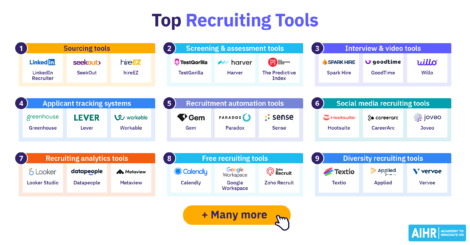
Selection process software can help you manage candidate screening, interviews, assessments, and background checks more efficiently. The right tool depends on which parts of your selection process you want to improve.
Applicant tracking and recruitment management
Helps you manage applications, candidate screening, interviews, and hiring workflows in one system.
Screening and interview scheduling
Uses conversational AI to screen candidates, automate interview scheduling, send reminders, and support video screening.
Interviews and assessments
Supports structured interviewing and candidate assessments to help recruiters evaluate applicants consistently.
Pre-employment assessments
Provides assessments designed to measure factors such as aptitude, skills, and personality during candidate selection.
Background checks
Supports employment background screening, including criminal record searches and employment or education verification.
When comparing selection process software, start with the problem you need to solve. For example, you may need faster screening, more consistent assessments, or simpler interview scheduling. Also check integrations with your applicant tracking system (ATS), reporting capabilities, and how much oversight recruiters retain over automated decisions.
Free selection process checklist
Managing the hiring process takes coordination, with a lot of moving parts. This checklist helps you stay organized from the moment applications come in to the final job offer. It’s broken down by stage so you can keep track of what needs to happen and when, without second-guessing whether you missed a step.

Metrics used in the selection process
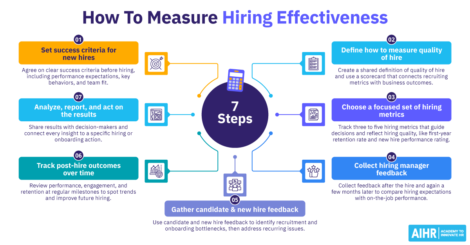
Tracking certain recruiting metrics helps you evaluate the outcomes of the candidate selection process. The following benchmarks are commonly used as indicators of an effective selection process:
- Application completion rate: This metric shows the percentage of candidates who complete and submit an application form after accessing it. A low completion rate may mean the application form is cumbersome or has technical glitches.
- Time to fill: This measures the time it takes to hire a candidate from the moment of approving a job requisition until the candidate accepts your offer. A lengthy time to fill a metric indicates a prolonged and inefficient selection process.
- 90-day and 1-year attrition: Attrition within the first three months signals a weakness in the selection process steps. The cost of a bad hire varies by source, but SHRM has cited estimates ranging from the U.S. Department of Labor’s 30% of first-year wages to $17,000-$240,000 in direct costs, depending on the role. It is recommended to treat every case of 90-day attrition as a critical HR incident and analyze it closely for what went wrong. Then, you can prevent it from happening again through better communication, selection, onboarding, and management. A high first-year attrition rate can also be attributed to an inadequate selection process.
- Candidate experience: How do candidates rate their experience in this selection process? If it is an agreeable experience for them, your process is on the right track. In addition, they will have a positive outlook on the organization, whether they are hired or not. Satisfied candidates won’t be deterred from applying again in the future and will advocate for your business and employer brand.
- Selection process funnel effectiveness: Because selection goes through a funnel with multiple steps, knowing the effectiveness of the funnel helps. You don’t want 50% of your 100 applicants to pass through to the interview stage; otherwise, you’ll be interviewing too many people. Yield ratio is a recruiting metric that indicates the percentage of candidates that move from one stage of the recruitment process to the next.
- Offer acceptance rate: The offer acceptance rate is the percentage of job offers that candidates accept out of the total number of offers your organization extends. It indicates the attractiveness of the job offers and the overall effectiveness of the recruitment process in aligning with candidates’ expectations and needs.
- Quality of hire: This metric measures how well a new hire is performing after a year in their job. This is usually rated by their manager in the annual performance appraisal. If the quality of hire is consistently good, it suggests that the employee selection process works.
How to improve the recruitment and selection process: Best practices
We’ve explained the different stages of the selection process, but other dynamics are always in play behind the scenes.
Here are some best practices to consider as you try to create more effective methods of selection:
Build a solid job intake process
A clear understanding of a role is the key to finding the right candidate for it. This starts with a function profile based on the job description, i.e., what type of work experience, educational background, and skill proficiencies are needed. Open communication between hiring managers and recruiters will provide the insight needed to effectively kick off the selection process.
In many cases, recruiters should dig deeper than what is on a job intake form. Speaking directly with hiring managers helps clarify the job requirements. Recruiters who practice active listening will glean valuable details on what personality types and soft skills suit the role and will balance out a team.
Strengthen hiring manager-recruiter relationships
A strong partnership between hiring managers and recruiters helps the selection process flow more smoothly and improves the candidate experience. Emphasize that recruiters should build a good rapport with hiring managers, keep them informed, and ask for their input. This will allow the candidates who are the closest fit to make it to the end.
Working side-by-side with recruiters means that hiring managers’ needs are more clearly understood. This, in turn, builds trust that recruiters are doing their best to fill positions sufficiently.

Standardize the selection process
Every organization will have its own approach to the selection process for hiring, but it should always be standardized. By following the same structure for each job opening, the process remains consistent. This leads to more reliable outcomes and a satisfying hiring experience for candidates.
A standardized selection process will include:
- Reliable or automated screening methods
- Structured interview formats
- Use of interview guides
- Consistently applied assessments
- Established criteria and scorecards for evaluating candidates
- Thorough documentation and checklists.
Train hiring managers/decision-makers
Ensure that whoever is doing the hiring is equipped to carry out their role in the selection process. This includes explaining the steps in the process and preparing them with interview checklists.
It may also be necessary to train decision-makers in how to conduct structured interviews, as well as unconscious bias awareness, and interpreting body language.
Use a data-driven approach
Utilizing data throughout the selection process enables you to combat bias and speculation. Information gathered from resumes, assessments, and interview scorecards can be the basis for moving candidates through the selection funnel. Although hiring decisions shouldn’t be made only on data, it can help get the most qualified applicants to the interview stage.
Moreover, analyzing this data can reveal bottlenecks and inefficiencies in the selection process, allowing for continuous improvement.
Continuously evaluate and improve the process
Your employee selection process will evolve as the needs and circumstances of the organization change. You should also update it regularly to match your hiring standards and business goals.
As we’ve just mentioned, using data helps you identify which parts of the process need attention. Gather feedback from candidates and hiring managers to ensure the process remains effective.
Implementing these improvements not only optimizes the selection process but also enhances candidate experience and strengthens overall recruitment outcomes.
A final word
A thoughtful selection process helps you identify the best-fit candidates while reducing the risk of costly hiring mistakes. To do this well, you need practical skills in sourcing, screening, interviewing, and evaluating candidates.
AIHR’s Sourcing & Recruitment Certificate Program helps you build these skills across the full recruitment cycle. You’ll learn how to source and engage candidates, improve screening, strengthen employer branding, and use recruitment analytics and AI tools to make better hiring decisions.
FAQ
The selection process is how employers evaluate job candidates’ skills, competencies, and experience to identify the most qualified person for a role. It typically includes seven stages: application, screening, interview, assessment, reference and background checks, decision, and job offer, that narrow a pool of applicants down to one hire.
The seven steps in the selection process are commonly referred to as application, screening and preselection, interview, assessment, reference and background check, decision, and job offer and contract.
An applicant tracking system (ATS) centralizes resume screening, interview scheduling, and candidate communication in one place, so nothing falls through the cracks as your pool narrows. Most platforms also flag qualified candidates automatically based on the criteria you set, which speeds up the early screening stages without replacing human judgment at the interview and decision stages. Many now build in bias-reduction features, like removing candidate names during initial screening, and reporting tools that show where in the funnel strong candidates tend to drop off.