




There is one task that can challenge even the most experienced HR professional: how to fire an employee in a professional and compassionate way. It requires advanced skills in communication, emotional intelligence, conflict resolution, and crisis management, as well as knowledge of employment laws and regulations.
HR professionals not only have to manage the challenging aspects of employee termination but may also need to support managers. Around 71% report feeling uncomfortable with the termination process.
Does it ever get easier? Probably not. However, having the right strategies can make the experience fairer and less stressful for everyone involved.
Contents
Reasons to fire an employee
How to fire an employee legally in 10 steps
What to say when firing an employee
Dos and don’ts when firing an employee
How much does it cost to fire an employee?
FAQ
Key takeaways
- Knowing how to fire an employee properly helps employers handle termination in a clear, professional, and respectful way.
- Before firing an employee, employers should confirm that the reason is valid, well-documented, and consistent with company policy and employment law.
- The termination meeting should be private, direct, and empathetic, while also covering next steps such as final pay, benefits, and returning company property.
- After termination, HR should complete offboarding tasks, communicate the departure appropriately, and review the process to reduce future risk.
Reasons to fire an employee
Before terminating an employee, make sure your decision is valid and well-documented, following your organization’s termination policy and employment laws. There may be several good reasons to fire someone, but each one should be supported by evidence, previous feedback where appropriate, and a fair review process.
1. Poor performance
Employees who consistently underperform despite receiving constructive feedback, support, and time to improve may not be a good fit for the role. Ensure that poor performance has been clearly communicated and well-documented.
- Example: Grounds for dismissal could be a sales representative who consistently misses monthly targets. Although they have been given ample training and over six months to improve, their performance remains poor.
2. Sexual harassment
Sexual harassment is a serious violation that can lead to immediate termination. HR should thoroughly investigate any allegations, and if the misconduct is confirmed, the employee may be dismissed.
- Example: An organization with a zero-tolerance policy may fire a supervisor for making inappropriate advances toward junior team members.
3. Theft or fraud
Stealing or engaging in fraudulent activities can cause serious financial harm to an organization, its clients, and its overall reputation.
- Example: A hedge fund manager who has been embezzling funds from his clients. Not only are there grounds for termination, but they can also lead to legal action against the employee.
4. Safety violations
Repeatedly violating safety protocols, even after several verbal and written warnings, can pose a serious risk to the employee, their colleagues, and the organization. It’s important to document each violation and the resulting disciplinary measures.
- Example: A warehouse worker who has been involved in two accidents due to reckless forklift driving, resulting in injuries to both themselves and a coworker.

5. Attendance issues
Employees who are frequently late or have multiple unexcused absences can negatively impact the team. It’s important to discuss these issues with the employee to see if there’s a valid reason. If none is found, they should receive verbal and written warnings.
- Example: A project manager has been consistently late for the past six months, causing significant delays to important projects. Despite receiving three written warnings, the behavior hasn’t changed.
6. Substance abuse
Using drugs or alcohol at work or having a substance abuse issue that affects performance or safety is a serious offense. Offering support, such as providing the opportunity for treatment, is a compassionate approach. In some cases, employers may be required to do so, like under the Americans with Disabilities Act (ADA), which recognizes substance abuse as a disability.
- Example: A school teacher who refuses to seek help for an alcohol problem could be terminated, as their behavior puts students at risk.
7. Disrespectful behavior
Employees who show disrespect toward authority, ignore company rules, or engage in insubordination can create significant issues.
- Example: An IT manager who deliberately disregards security protocols demonstrates insubordination, which also poses a serious security risk.
It’s important to note that all states (except Montana) allow for “at-will” employment. An employer can terminate employees for any reason (or no reason). However, firing an employee for illegal reasons is prohibited, including:
- Discrimination based on race, ethnicity, religion, gender, sexual orientation, age, or disability is not allowed. If proven, it could lead to lawsuits and fines
- Retaliation against an employee for reporting harassment, discrimination, security violations, or whistleblowing on illegal company activities is prohibited
- Taking legally protected leave, such as medical or parental leave, under laws like the Family and Medical Leave Act (FMLA), cannot be grounds for termination
- Firing an employee for exercising their legal right to join or participate in labor union activities would violate the National Labor Relations Act.
Letting an employee go is one of the most sensitive responsibilities in HR. It requires clear communication, sound judgment, and a strong grasp of HR policies and processes.
With AIHR’s HR Generalist Certificate Program, you’ll learn to:
✅ Apply HR policies and processes consistently across the employee lifecycle
✅ Prepare for courageous conversations and communicate with confidence
✅ Manage sensitive people matters with a fair, professional, and human-centered approach
How to fire an employee legally in 10 steps
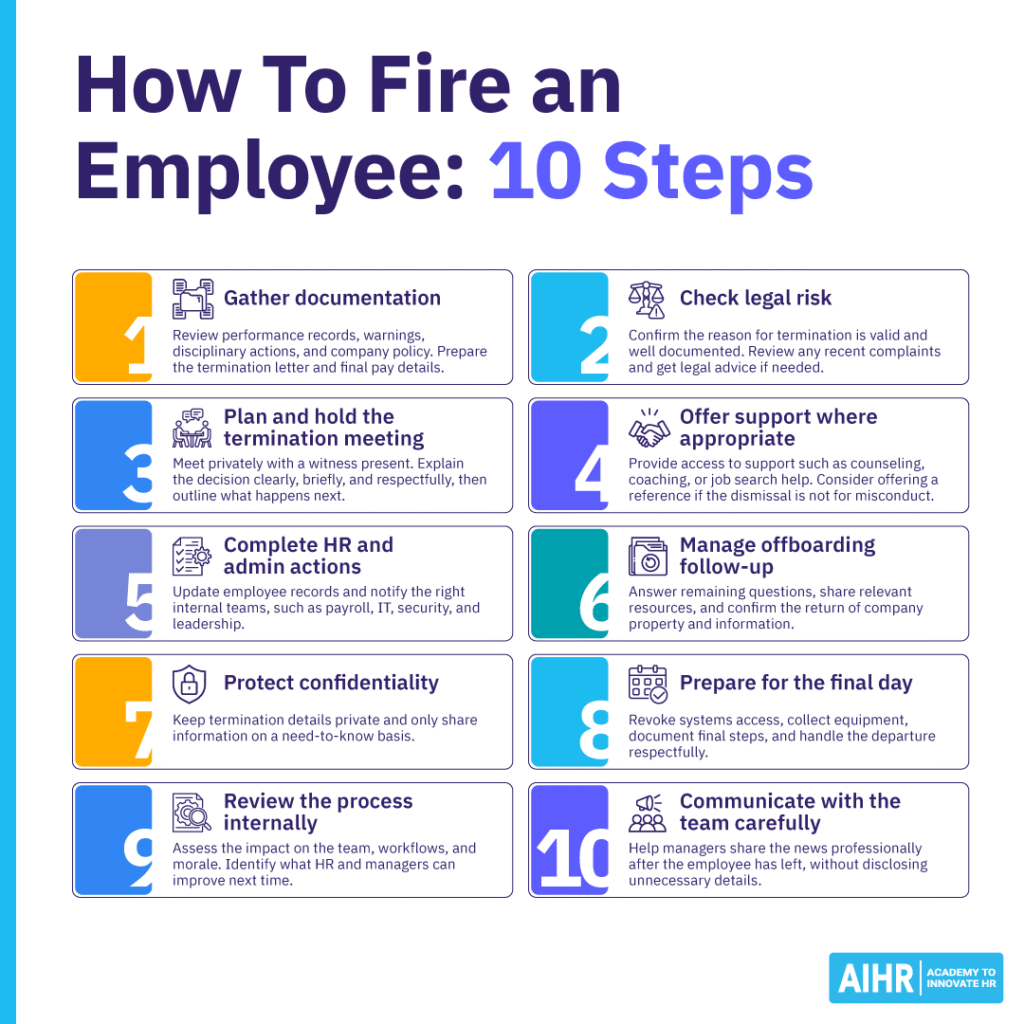
How can you ensure that terminating an employee is done in a professional (and respectful) way? Follow a structured process, such as these essential steps:
Step 1: Prepare the necessary documentation
- Carefully review all relevant documentation that supports the reasons for termination, such as poor performance reviews, warning letters, and disciplinary actions.
- Double-check your organization’s termination policy to ensure you have valid reasons and all the necessary documentation to terminate the employee.
- Prepare a termination letter that outlines the reasons for termination, the last day of employment, severance or final pay, and the continuation of health coverage (COBRA), if applicable.
Step 2: Consider potential legal complications
- If in doubt, consult with a legal representative to ensure the reasons for termination are valid. Share all supporting documentation with them.
- Check that the employee has not filed any recent complaints. This step can help prevent any claims of unlawful discrimination or retaliation.
- If there is a potential for legal disputes, consider other alternatives to termination, such as reassignment or giving the employee more time to resolve issues.
Step 3: Conduct the termination meeting
- Choose a conducive, comfortable, and private setting. Have a witness in the room, such as the employee’s manager or other HR representative.
- Communicate the reasons for termination, referring to the supporting documentation. Keep the conversation short, direct, and focused. In most cases, the best way to fire someone is to be clear, respectful, and calm, without creating confusion about whether the decision is final.
- Be empathetic by listening and answering the employee’s questions. However, be clear that the decision is final, outlining the next steps in a simple checklist.
HR tip
Before the termination meeting, roleplay with the manager or another HR representative. Practice your responses to some challenging questions an employee may have. It can be helpful to create a script of what you might say in different scenarios. Taking the time to practice can ensure you stay focused and to the point, avoiding missteps that could lead to legal disputes.
Step 4: Provide support and resources
- Depending on the nature of the dismissal, offer access to support services such as counseling, coaching, or job assistance.
- If an employee is not being dismissed for gross misconduct, offer to provide them with a reference letter.
Step 5: Organize post-termination procedures
- Update the employee’s employment record with the notes from the termination meeting, including the termination letter, severance package, or any other relevant documents.
- Inform relevant stakeholders of the employee’s termination, such as payroll, IT, security, and department heads.
- If not prepared in the termination meeting, arrange for the employee’s final paycheck or severance payment, as well as information about unemployment benefits (if the employee is not terminated for misconduct).
Step 6: Follow up with the employee
- If the termination is not immediate (as in gross misconduct), schedule a follow-up meeting to check in with the employee and answer any remaining questions they may have.
- Share any information about available resources, such as counseling and job placement services.
- Review the final checklist to ensure the employee has followed necessary procedures, such as returning company equipment or sensitive information.
Step 7: Maintain employees’ privacy
- Do not discuss the termination details with the employee’s team members or other employees unless absolutely necessary.
- Avoid mass electronic distribution of the employee’s records and any documentation related to the termination.
- Respond professionally to any reference requests you may receive unless the employee is terminated for a serious offense or misconduct.
Step 8: Be prepared for the last day of employment
- Check that the employee’s access to the computer and security systems has been revoked and all company property has been returned before they leave.
- Arrange for the employee to be escorted out discreetly and respectfully.
- Finalize any outstanding documentation, including the date and time of termination, final tasks completed, and any other necessary transition details.
Step 9: Conduct a final review of the termination process
- Schedule a meeting with the manager and any relevant team members to review how the termination has affected workflows, morale, or any other issues.
- Conduct an internal HR review to identify areas for improvement, such as communication, payroll, or other key HR processes.
HR tip
Consider having a short exit interview with the terminated employee. It could offer you with valuable feedback on how the termination process was conducted, giving the employee an opportunity to express any issues or share suggestions. Extend the offer, letting the employee know it is voluntary and any information shared will be confidential.
Step 10: Communicate with relevant employees
- Support the manager or senior leaders in communicating the employee’s termination after they have officially left the company. When firing employees, internal communication should stay professional, limited to what others need to know, and respectful of the individual’s privacy.
- If the termination involves serious misconduct, arrange for group meetings or company-wide meetings to address the issue and answer any questions openly.
Although every situation will be different, following these steps will give you the structure you need to ensure the termination process is professional, legal, and respectful.
What to say when firing an employee
Knowing what to say when firing someone can help you keep the conversation clear, respectful, and professional. The script should be brief, direct, and focused on the reason for termination and the next steps.
Script for firing an employee who is not a good fit
When you need to fire someone who is not a good fit, keep the discussion focused on role alignment and expectations rather than personal criticism.
| “Thank you for meeting with us today, [Name]. We wanted to speak with you about your role and your employment with the company. Over the past [time period], we’ve reviewed your progress and overall fit for the position, and after careful consideration, we’ve decided to end your employment effective [date]. This decision is based on the fact that the role has not turned out to be the right match. We’ve discussed the expectations of the position and the areas where improvement was needed, but we have not seen the alignment required for long-term success in the role. This decision is final. We know this is difficult news to receive. We’ll walk you through the next steps, including your final pay, benefits, and the offboarding process. If you have questions about the practical details, we’ll make sure those are answered.” |
This script keeps the tone respectful while making the message clear. It also avoids language that sounds overly personal or vague.
Script for firing an employee for poor performance
If the reason for termination is poor performance, tie the decision to documented expectations, previous feedback, and any support the employee received. The conversation should not introduce concerns for the first time.
| “Thank you for meeting with us, [Name]. We asked to speak with you today because we need to discuss your employment. As you know, we’ve had several conversations over the past [time period] about your performance in this role, including specific expectations around [brief examples]. We’ve provided feedback, discussed the improvements needed, and given you time and support to work toward those expectations. Unfortunately, the performance required for the position has still not been met consistently. Because of that, we’ve made the decision to terminate your employment effective [date]. We understand this is not easy news to hear. We’ll go over the next steps with you, including final pay, benefits, and any company property that needs to be returned. If you have questions about those logistics, we’ll address them with you now.” |
This version feels more natural than a very short script, while still keeping the discussion focused and factual.
Script for firing an employee because you can’t afford them
If the business can no longer support the role, make it clear that the decision is due to financial circumstances, not the employee’s performance or conduct.
| “Thank you for meeting with us, [Name]. We wanted to speak with you about an important business decision that affects your role. Due to financial constraints and changes in the business, we’ve had to review our staffing needs and make some difficult decisions. As a result, we’ve decided to end your employment effective [date]. I want to be clear that this decision is not a reflection of your performance or your contribution to the company. This is a business decision based on the fact that we can no longer support the role financially. We know this is difficult news, and we want to make this process as clear as possible. We’ll walk you through your final pay, benefits, and any transition support available, as well as the steps for returning company property.” |
This gives a little more warmth and context without becoming too long.
Script for firing an employee for insubordination
If the reason for termination is insubordination, refer to the specific conduct and any prior warnings where relevant. Avoid emotional or judgmental wording, and keep the focus on behavior and policy.
| “Thank you for meeting with us, [Name]. We need to speak with you about your employment. As you know, we’ve previously addressed concerns regarding insubordination, including [brief factual example or reference to prior warning]. Despite those discussions, the behavior has continued, and it represents a serious breach of workplace expectations and company policy. After reviewing the situation, we’ve made the decision to terminate your employment effective [date]. This decision is final. We understand this is difficult news. We’ll now go through the next steps with you, including your final pay, benefits, and the offboarding process. We’ll also explain any immediate arrangements, such as the return of company property and access to systems.” |
This wording is firm without sounding aggressive, which is important in more sensitive termination situations.
A termination meeting should be direct, respectful, and brief. Preparing a script in advance can help managers stay calm, communicate consistently, and avoid saying more than necessary in a difficult moment.
Dos and don’ts when firing an employee
Dos
- Have a sufficient cause for termination: Carefully review the employee’s performance records to ensure there is enough supporting evidence for termination, such as written warnings, performance improvement plans (PIPs), and disciplinary reports.
- Choose the right time and place: Try to schedule the meeting early in the week, allowing the employee time to process the news and get any support they need. Avoid firing an employee at the end of the day, on Fridays, or before holidays, as support services may be unavailable. Also do not terminate employees on parental or medical leave because of the legal protections.
- Keep termination meetings short and to the point: Provide a direct and straightforward explanation of why an employee is being terminated. Along with the supporting documentation, summarize the situation without engaging in a long discussion. Be empathetic in answering their questions, but emphasize that the decision is final.
- Avoid the element of surprise: Being fired should never come as a surprise to the employee. Ensure they have received multiple verbal and written warnings. Employees should know that termination is possible if they do not improve. Conduct on-the-spot dismissals for serious misconduct only. If not, it could result in legal disputes.
Don’ts
- Delay the decision: Once there is enough cause for termination and the employee is aware of their performance issues or misconduct, do not put off the termination process. A delay could lead to low productivity, morale, or mistrust in the organization for allowing employees to continue working.
- Fire the employee without a witness present: To help prevent legal issues down the road, always include a witness in termination meetings. Often, this is someone from human resources or the manager. Before the meeting, brief them on supporting documentation. Ensure you take notes and have the witness confirm the final record of the meeting.
- Humiliate the employee: It is crucial to treat the employee with respect during the process. If possible, meet with them individually and face-to-face, avoiding mass firings via email or video conferencing. Having a respectful approach also helps maintain the morale of other team members and avoid any negative impact on your employer brand.
- Discuss the termination with other employees: Maintain the privacy of the terminated employee. Do not share the details about their termination with their colleagues or other employees. This practice can help maintain the employee’s dignity and the overall professionalism of your organization.

How much does it cost to fire an employee?
The exact costs of dismissing an employee will depend on the individual case and can vary from one state or region to another. However, here is a list of potential expenses:
- Severance pay: Depending on your company’s termination policies and the tenure of the position, you may have to offer a severance package, which could include a lump sum payment of 2 to 6 weeks’ salary. Please also review any state severance pay requirements.
- Unemployment insurance tax rate: If the employee is not terminated for serious misconduct, they may be eligible for unemployment benefits (which employers have to pay). An organization’s insurance premiums could potentially increase with the number of claims filed by former employees.
- Replacement and hiring costs: According to recent data from the Society of Human Resource Management (SHRM), the average cost of hiring a new employee is about $4,700. However, total costs could be up to three to four times the position’s annual salary.
- Legal fees: If a termination leads to disputes, wrongful termination lawsuits, or requires navigating labor laws, legal fees can add up quickly.
Here is an estimate of the potential costs involved in terminating a software engineer who has been with a company for four years, earning $175,000 per year.
- Severance pay: Based on the company’s standard severance package of two weeks’ pay per year worked:
- 4 years x 2 weeks/year x $175,000/year = $14,000
- Unemployment insurance: Assuming a rate of 1.5% of the employee’s weekly pay:
- Weekly pay: $175,000/year / 52 weeks = $3,365.38
- Unemployment insurance cost: 1.5% x $3,365.38 = $50.48 per week
- Over an estimated 20 weeks of unemployment: $50.48 x 20 weeks = $1,009.60
- Hiring costs: In this case, the estimated costs for hiring a new software engineer would be around 1.5x the annual salary:
- $175,000 x 1.5 = $262,500
- Onboarding and training: To minimize time to productivity, the new software engineer receives a comprehensive onboarding, costing $8,000.
- Total estimated costs: $14,000 (severance pay) + $1,009.60 (unemployment insurance) + $262,500 (hiring costs) + $8,000 (onboarding) = $285,510.
A final word
Although each termination experience will be different, these essential strategies can help you create a similar structured process. One that is not only professional, ethical, and legal but also compassionate and respectful. A well-delivered termination experience can prevent a negative impact on both the individual and the organization.
If you want to build the practical skills to handle situations like these with more confidence, AIHR’s HR Generalist Certificate Program can help you strengthen your knowledge of core HR processes, policy application, and employee relations.
FAQ
To terminate an employee politely, keep the conversation short, clear, and respectful. Explain the reason for termination, refer to the supporting documentation, and make it clear that the decision is final. At the same time, answer the employee’s questions with empathy and walk them through the next steps, such as final pay, benefits, and offboarding.
Employers should have clear supporting documentation before firing an employee. Depending on the case, this can include performance reviews, warning letters, disciplinary actions, attendance records, and notes from previous meetings. The article also stresses the importance of checking that the reason for termination is valid, well-documented, and consistent with company policy and employment laws.
The process starts with preparing the necessary documentation and checking for legal risks. From there, employers should hold a private termination meeting, explain the decision clearly, provide support where appropriate, complete post-termination procedures, protect the employee’s privacy, prepare for the last day, review the process internally, and communicate the departure to relevant employees. Following a structured process helps make termination more professional, legal, and respectful.
Valid reasons to fire an employee can include poor performance, sexual harassment, theft or fraud, safety violations, attendance issues, substance abuse, and insubordination or other disrespectful behavior. However, the decision should always be supported by evidence, previous feedback where appropriate, and a fair review process. Employers should also make sure they are not firing someone for an illegal reason, such as discrimination, retaliation, or taking protected leave.
Bipolar disorder is generally considered a disability under the ADA, which means an employer cannot terminate someone because of the condition itself. However, an employer may still be able to terminate employment for a legitimate, well-documented, non-discriminatory reason, such as poor performance or misconduct, as long as reasonable accommodation has been considered where required and the decision is not retaliatory.



 POPULAR: 3,687 DOWNLOADS