

Guide to Measuring Learning Effectiveness
Most L&D budgets get spent without anyone knowing what actually worked. This guide shows you how to measure the effectiveness of your training and turn L&D data into proof of impact.




HR professionals


Why measuring learning effectiveness matters
Training is one of the biggest investments HR makes, and most of it never shows up in how people actually work. Without measurement, you have no way to know whether a program changed behavior on the job or quietly faded after the final session.
Measuring learning effectiveness closes that gap. It shows you what is working, what is not, and where to improve. It also gives you the evidence to defend your L&D budget, since the teams that can prove business results are the ones that keep executive support and win resources for what comes next.
Key learning effectiveness metrics
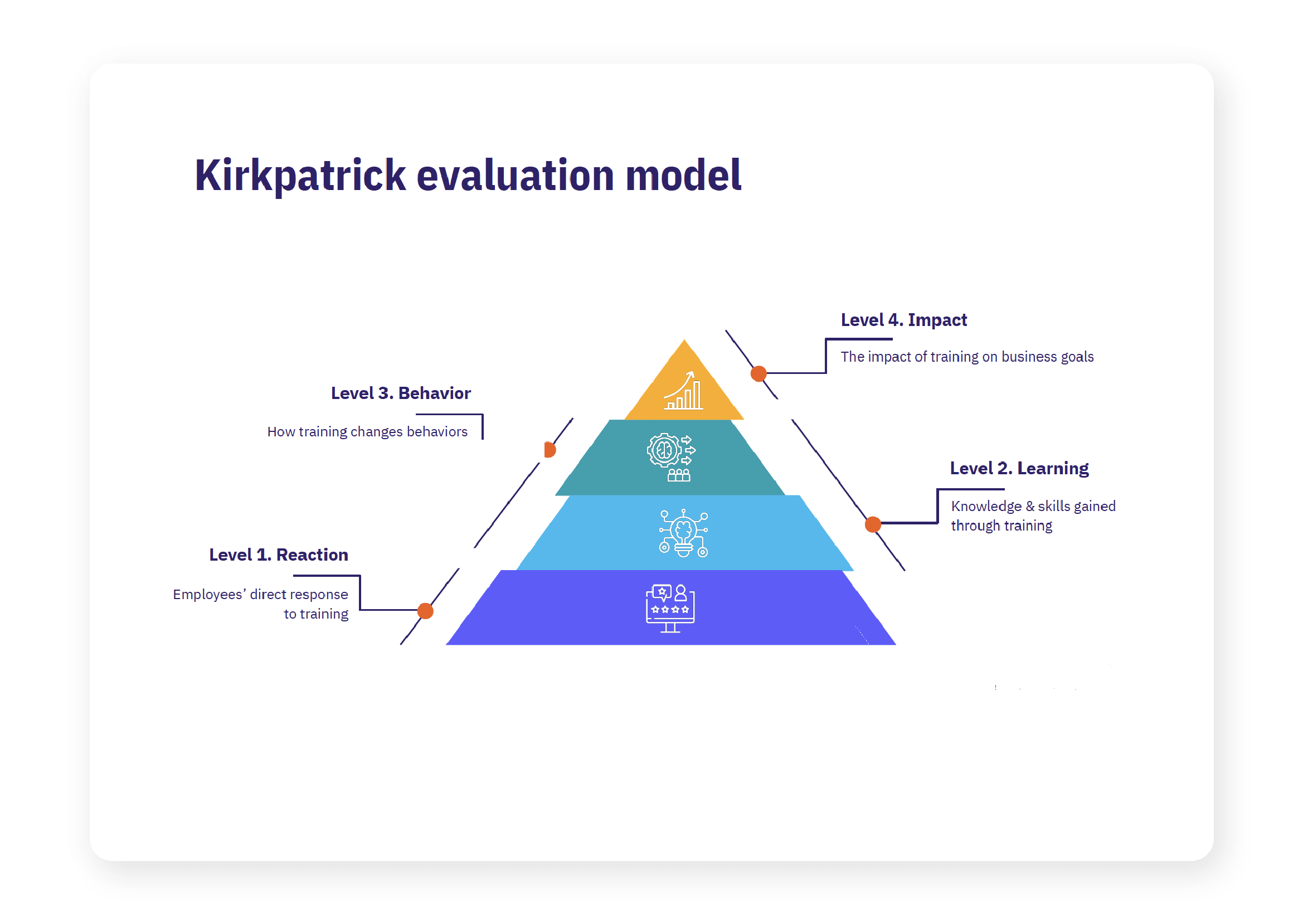
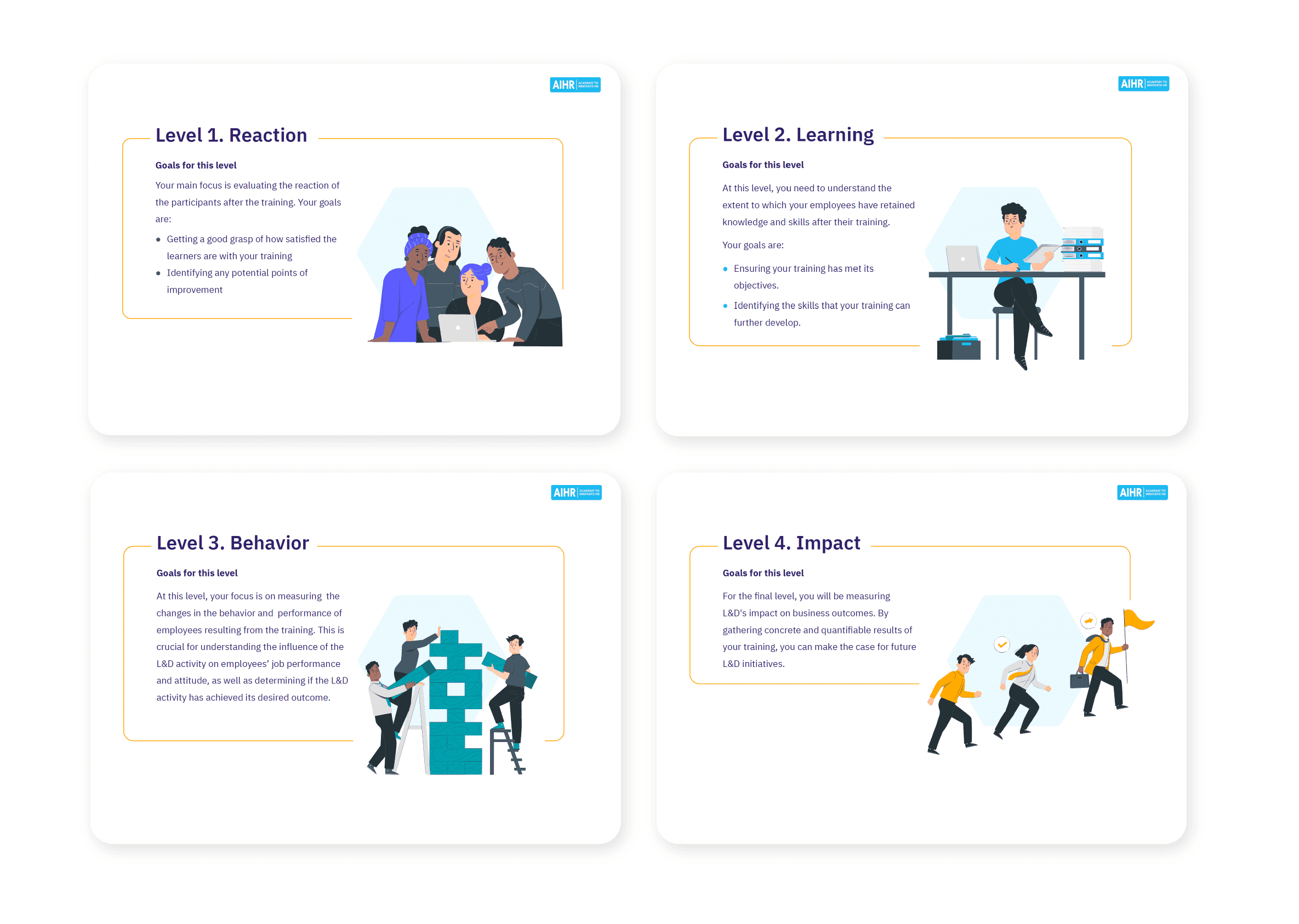
The guide is built on the Kirkpatrick model, which measures training across four levels, from how learners first react through to the impact on the business. For each level, you get the key learning metrics to track, along with a formula and a worked example where relevant.
The guide covers metrics across all four levels:
- Reaction metrics such as training experience satisfaction, course completion rate, and learner drop-off rate
- Learning metrics such as knowledge and skill retention, and assessment pass rate
- Behavior metrics such as employee performance post-training and employee engagement rate
- Impact metrics such as training ROI, operational efficiency, and customer satisfaction
Fill out the form above to get every metric with its formula and a worked example.
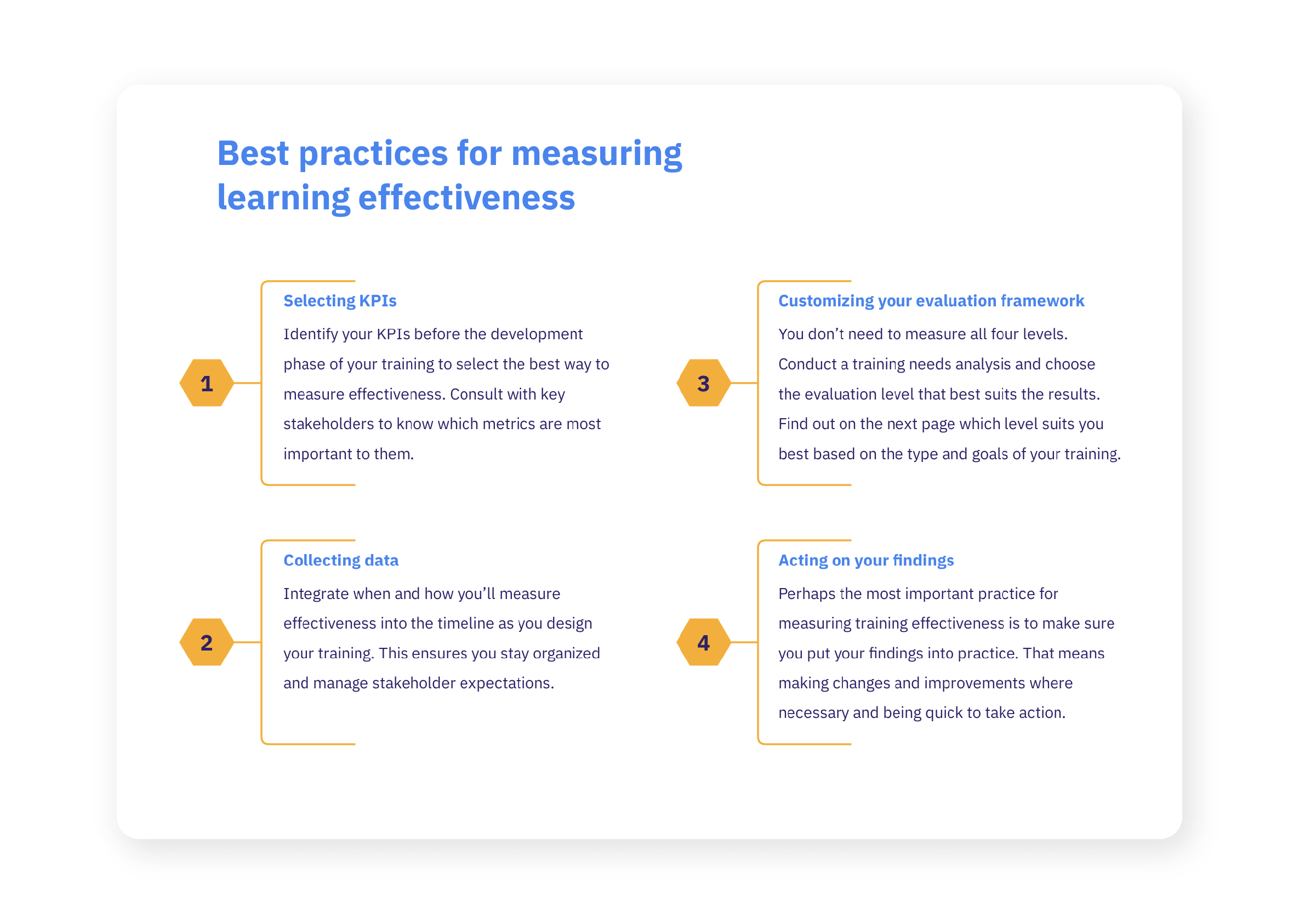
How to measure learning effectiveness
Learning effectiveness measurement works best when you track the right things at the right time, not everything. You can follow this practical, four-step approach:
- Select your metrics early, during the design phase, and confirm which results matter most to your stakeholders
- Plan your data collection into the program timeline, so you know when to measure each level
- Customize your framework to the type and cost of the program, since you rarely need all four levels
- Act on what you find, feeding the insights back into the next version of the program
You also get a sample data collection schedule that maps when to measure each level, from the start of a program through the months after it ends.
HR tip: You don’t need to measure all four levels of the Kirkpatrick model to start. Pick one level that matches your program, track it for a cycle, and use what you learn to build out from there.