
A well-structured employee training plan is more important than some employers may think. Employees likely to switch employers in the next 12 months are almost twice as likely to seriously consider L&D opportunities in their decision compared to those planning to stay.
Effective training powers people strategy, from performance and leadership to engagement and succession. This article discusses why this is important, how an employee training plan template can streamline the process, and provides a free template (as well as tips on using it).
Contents
Why is an employee training plan important?
Why use an employee training plan template?
7 key elements of an employee training plan template
Free employee training plan template
6 top tips for using AIHR’s employee training plan template
9 examples of employee training plans
How can HR create effective employee training plans?

Why is an employee training plan important?
A training plan is a structured guide that outlines what employees need to learn, how they’ll learn it, and what success looks like. It helps them pick up job-specific skills quickly, minimizing confusion and ramp-up time, especially during onboarding.
As an HR professional, you can use training plans to build a culture of continuous learning that drives business growth. Here’s what makes them so effective:
- Faster skills development: Clear learning paths help employees get up to speed quickly, reduce mistakes, and improve productivity from day one.
- Better performance and engagement: Investing in training shows employees they’re valued. This boosts morale, teamwork, and retention while encouraging curiosity and adaptability.
- Smoother onboarding: A good plan speeds up integration and gives new hires clarity and direction, making early engagement stronger and transitions smoother.
- Stronger future-readiness: Training closes skill gaps, prepares people for leadership, and keeps your workforce aligned with evolving business needs. It also ensures fairness and consistency across teams.
Why use an employee training plan template?
Templates help HR teams save time and avoid missing key steps, and can make training more consistent, trackable, and effective.
For example, new hire templates ensure smooth, compliant onboarding across locations and give new employees a clear path to productivity. Individual templates, on the other hand, allow you to tailor training to specific roles or goals, making learning more relevant and easier to apply.
Templates also make it easier to track progress and results. With clear goals and timelines, HR and managers can see what’s working, spot issues early, and adjust quickly. This boosts learning outcomes and makes it easier to prove the value of training.
Learn to develop flexible, effective employee training plans
Build your skills in developing and implementing effective employee training plans tailored to individual learning needs and styles, ensuring workforce and business success.
AIHR’s Learning & Development Certificate Program teaches you how to create a solid L&D program, create a culture of learning to close skills gaps and retain employees, and use learning analytics to measure the impact of your training plans.
👀 Curious if it’s the right fit?
You can preview the course lessons before enrolling — no commitment needed.
7 key elements of an employee training plan template
A structured employee training plan template provides a clear and consistent foundation for developing employees effectively. Below are the key elements an employee training template should include:
- Employee information: Include the employee’s name, job title, department, and direct manager. Be sure to tailor the training plan to each individual’s role and professional needs to ensure accurate tracking and documentation.
- Training goals: Clearly define what the employee should learn or achieve by the end of their training. Focus the training on job-specific skills they need to develop, and provide benchmarks to evaluate their success.
- Training timeline: Outline the training schedule (daily or weekly, as well as the duration). Use this structured schedule to help manage expectations, keep the employee on track to reach their goals, and ensure logical training delivery.
- Required materials or tools: Include any documents, software, equipment, or learning platforms the employee needs to access. List these in the template to avoid overlooking anything, and make sure the employee has everything they need to learn effectively.
- Assigned trainers or mentors: Identify which party is responsible for each part of the training to ensure accountability and expert input. Targeted support and guidance can further help the employee achieve their training goals.
- Evaluation methods: Outline how training outcomes will be measured (quizzes, performance reviews, or skill demonstrations). Assess whether training objectives are being met and identify areas needing reinforcement.
- Follow-up: Note post-training follow-up actions (check-ins, refresher sessions, or development planning) to help reinforce learning and support long-term performance. Including this step makes training part of a continuous improvement process.
Free employee training plan template
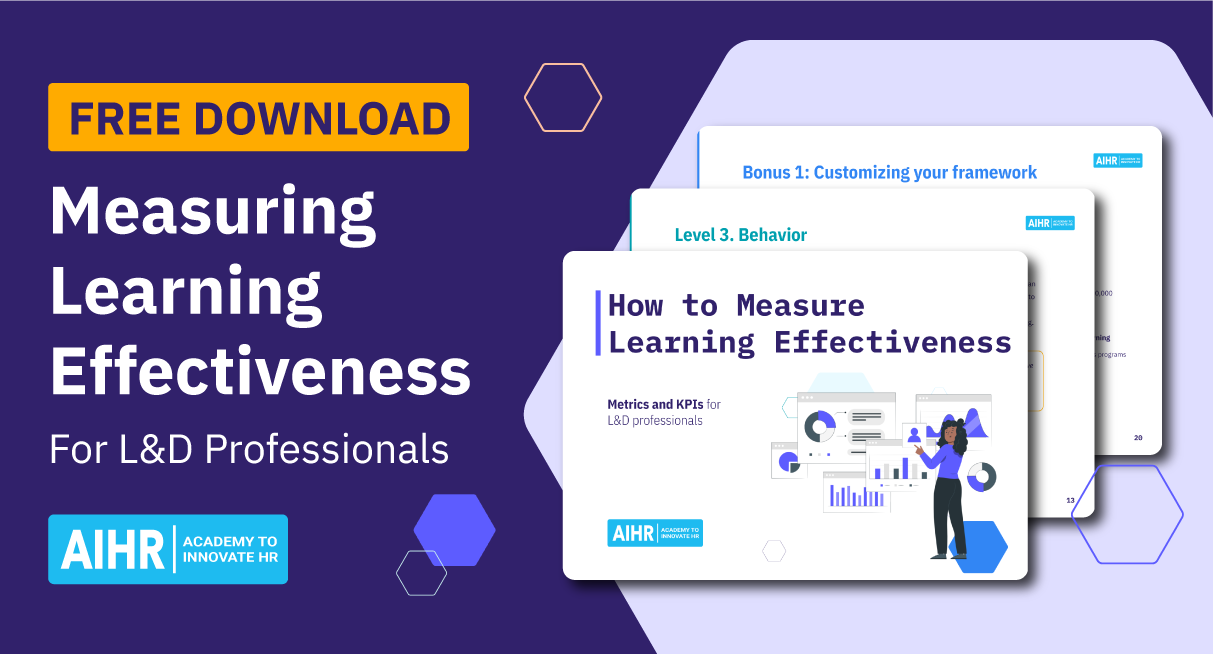
AIHR has developed an easy-to-use, customizable employee training plan template that lets you tailor your training plan to suit employees’ individual needs. Download it for free below.

6 top tips for using AIHR’s employee training plan template
Here are six tips to follow to get the most value out of AIHR’s employee training plan template:
Tip 1: Set specific and measurable training goals
In the Training Goals section, write clear, measurable goals aligned with job responsibilities and business outcomes. Avoid vague objectives like “improve communication” and instead, be as specific as possible (e.g., “demonstrate proficiency in the company’s CRM system within two months”).
Tip 2: Choose the right training methods for each role
In the Required Materials/Tools section, list the learning methods and materials for each goal, and match the learning format to the goal type. For instance, if the goal is to learn technical skills, hands-on practice or simulations might be best. A mix of formats (e.g., videos, manuals, e-learning) can also suit different learning styles.
Tip 3: Assign trainers thoughtfully
In the Assigned Trainers/Mentors section, choose and list individuals who know the subject matter and have the time and communication skills to support new learners. Adding this to the template creates accountability and gives the employee a clear support structure during the training period.
Tip 4: Incorporate milestones into the timeline
Use the Training Timeline section to break the training schedule into manageable phases, with regular (weekly, bi-weekly, or monthly) milestones to track progress and support mid-course adjustments. Including these checkpoints also facilitates feedback and coaching opportunities.
Tip 5: Make sure evaluation is ongoing and role-specific
In the Evaluation Methods section, go beyond completion checklists. Instead, consider using quizzes, performance observations, or mini-assessments (or customer feedback if relevant). Evaluation should be continuous and tied directly to the original training goals to measure impact and progress.
Tip 6: Don’t skip the follow-up
Use the Follow-Up section to schedule check-ins 30, 60, or 90 days after training. The goal here is to ensure knowledge retention, identify gaps, and support continued training and development. Use this space to suggest additional training or stretch assignments based on performance.

9 examples of employee training plans
Here are nine examples that show how different training types align with business goals and workforce development:
Example 1: New hire training plan
- Who it’s for: Recent hires.
- What it covers: Company orientation, core policies, team introductions, systems access, and role expectations.
- Why it matters: A strong new employee training plan accelerates onboarding, reduces time to productivity, and improves employee retention by giving new hires a structured start.
Example 2: Role-specific training plan
- Who it’s for: Employees in specific functions like sales, customer service, or technical roles.
- What it covers: Tools and processes, customer interaction standards, product knowledge, or sales techniques.
- Why it matters: Tailored employee training plans ensure staff have the skills they need to succeed in their respective jobs and deliver consistent results.
Example 3: Compliance training plan
- Who it’s for: All employees, especially in regulated industries.
- What it covers: Workplace safety, harassment prevention, data privacy, and industry regulations.
- Why it matters: Compliance training reduces legal risk, ensures adherence to regulatory standards, and helps foster a safe, ethical work environment.
Example 4: Software or tools training plan
- Who it’s for: Teams adopting new digital tools or platforms.
- What it covers: Platform navigation, key workflows, shortcuts, and troubleshooting tips.
- Why it matters: Helping employees learn to use business-critical systems boosts productivity and reduces errors, especially during new technology rollouts.
Example 5: Leadership development plan
- Who it’s for: High-potential employees, new managers, or team leads.
- What it covers: People management, decision-making, communication, coaching, and strategic thinking.
- Why it matters: Developing leadership capacity supports succession planning and strengthens team performance at all levels.
Example 6: Performance improvement plan (PIP)
- Who it’s for: Employees needing support to meet expectations.
- What it covers: Clear performance objectives, targeted training, coaching sessions, and progress reviews.
- Why it matters: A structured plan improves accountability and provides a fair, supportive path to performance recovery and retention.
Example 7: Cross-training plan
- Who it’s for: Employees learning to perform duties outside their primary role.
- What it covers: Processes, systems, and responsibilities in adjacent roles or departments.
- Why it matters: Cross-training builds workforce agility, strengthens collaboration, and helps teams maintain productivity during absences or peak periods.
Example 8: On-the-job training plan
- Who it’s for: Roles where practical, hands-on learning is most useful.
- What it covers: Task-based training with guidance from experienced colleagues or supervisors.
- Why it matters: Employees can learn in real time, and apply their new knowledge directly to their work. This can enhance employee engagement, productivity, and retention.
Example 9: Remote employee training plan
- Who it’s for: Remote or hybrid employees.
- What it covers: Virtual onboarding, collaboration tools, communication norms, and self-management strategies.
- Why it matters: A well-designed training plan for remote employees builds connection, alignment, and productivity across distributed teams.
How can HR create effective employee training plans?
First, let’s explore HR’s role in developing and managing employee training plans. HR must work closely with managers to make sure training supports business goals, meets legal requirements, and helps employees grow.
To achieve this, you must start by identifying training needs based on strategic priorities, performance data, skills gap assessments, manager input, and compliance requirements. Next, set clear, measurable objectives. These could include improving productivity, meeting regulations, building leadership skills, or preparing teams for new tools and ways of working.
From there, develop or source the right content. This could be in-house modules, external courses, vendor programs, e-learning, workshops, mentoring, simulations, or on-the-job training. Once you’ve done this, partner with managers to tailor it to specific roles so it stays relevant and gains buy-in.
HR should work closely with managers to understand the key skills, tools, and tasks each role requires. This ensures practical training aligned with real job needs. A training plan template helps standardize the process, saving time and making sure you don’t miss anything essential (e.g., compliance steps or onboarding basics).
To make training effective, do the following:
- Personalize it: Adapt formats to fit different learning styles—be it visual, hands-on, or self-paced.
- Keep it current: Review content regularly and use feedback from employees and managers to make updates.
- Track progress: Use digital tools, like an LMS, to monitor completion, send reminders, and measure results.
This approach keeps training relevant, efficient, and easy to scale.
To sum up
The most effective employee training plans are targeted, flexible, and continuously improved. With the right tools, collaboration, and attention to individual needs, you can ensure every training plan not only supports employee growth but also contributes to stronger business outcomes.
Using an employee training plan template can help you standardize and streamline the process, driving fair, consistent training that gives all employees suitable development opportunities. Download and use AIHR’s free employee training plan template to get started.