
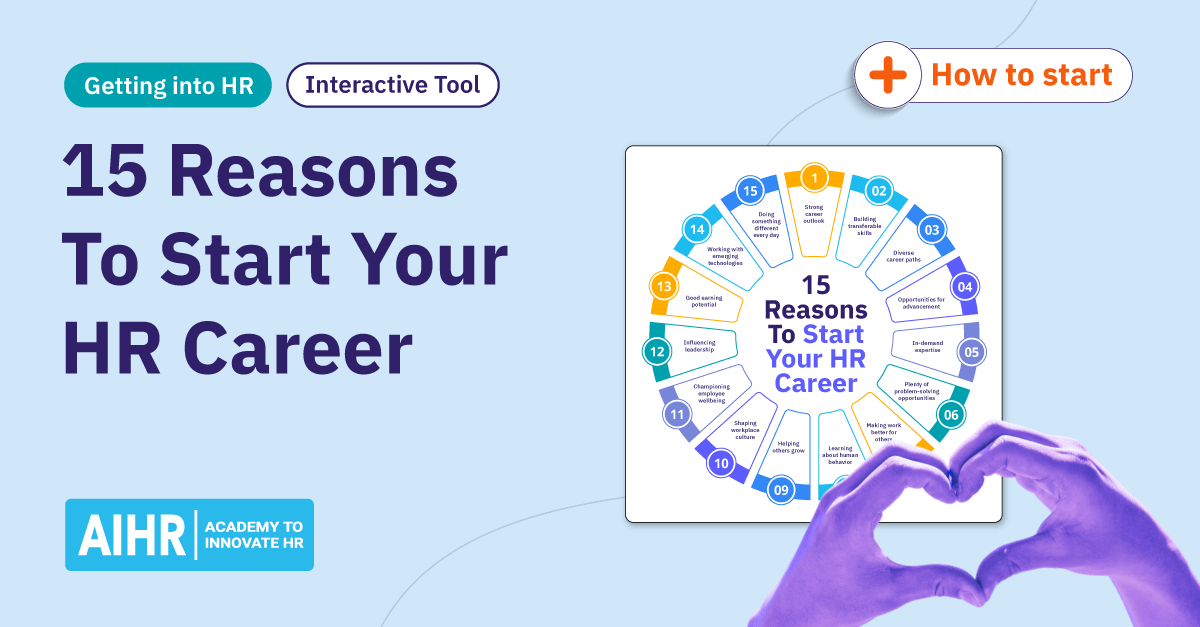
Why work in HR? A quick online search and its AI overview generate some of the following responses: making a positive impact, contributing to organizational success, and diverse and engaging work. It seems that despite HR’s bad reputation, there are still plenty of excellent reasons to consider a career in human resources. Let’s unpack some of them.
Contents
15 compelling reasons why people choose to work in HR
How to start your career in Human Resources

15 compelling reasons why people choose to work in HR
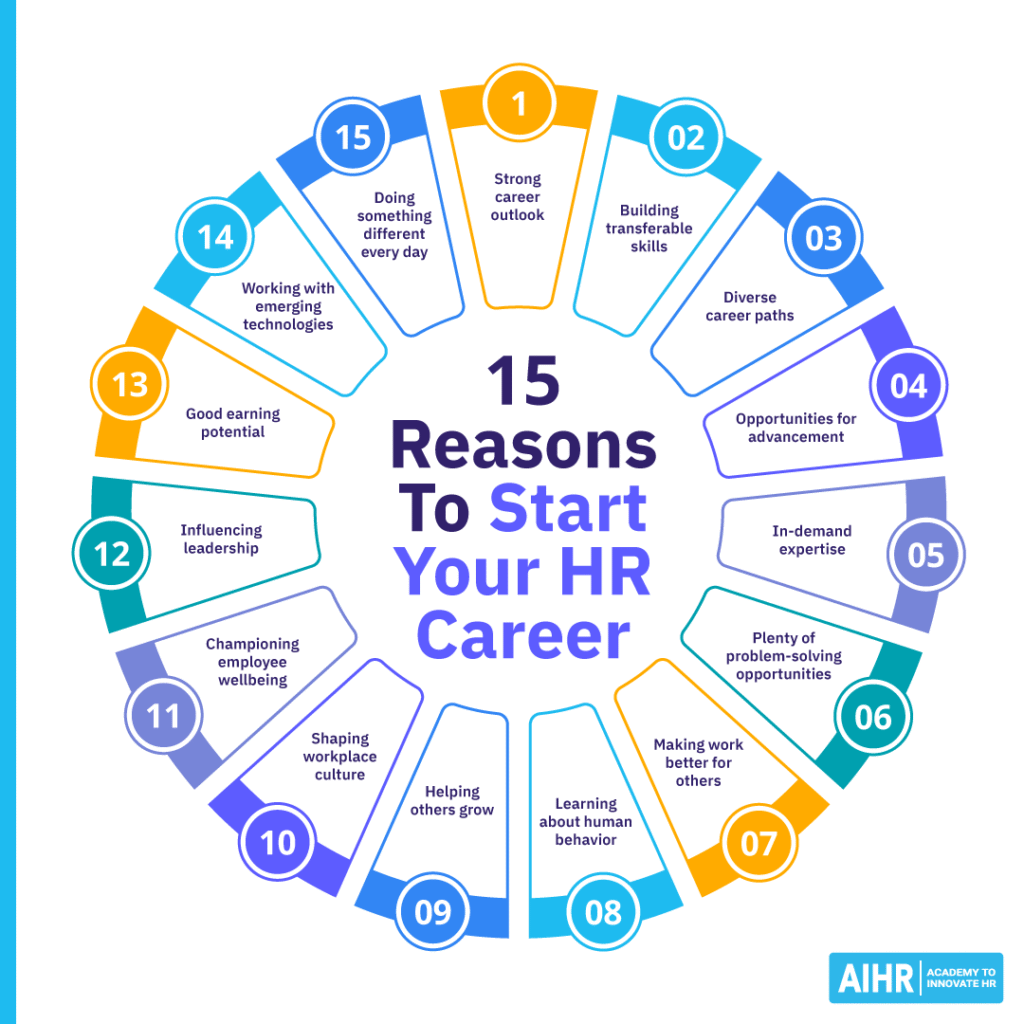
Is HR the right career for you? The answer depends on what you’re looking for in your next role. Here are 15 compelling reasons to move into the field of Human Resources, in no particular order:
1. Strong career outlook
First off, what does the future job outlook for human resources look like? As businesses increasingly place more emphasis on people strategy, HR roles are expected to grow, and as we move further into the year, the demand for HR professionals remains high.
According to the U.S. Bureau of Labor Statistics (BLS), employment of human resources specialists is projected to grow by 8% over the next decade, which is faster than the average for all occupations. This growth reflects the ongoing need for companies to recruit, retain, and manage a diverse workforce effectively.
An analysis of thousands of job postings and placements from global staffing firm Robert Half shows that the top 25% of HR roles in demand currently include:
2. Building transferable skills
Working in HR invariably means developing a wide range of transferable skills. These include communication, project management, relationship building, resilience, conflict resolution, organizational strategy, and many more.
These skills are relevant across industries and functions. So, if you ever choose to move into another field, you’ll bring valuable experience with you.
3. Diverse career paths
HR isn’t a one-size-fits-all profession. You can specialize in talent acquisition, learning and development, employee relations, compensation and benefits, DEIB, and more.
Another choice you will have to make, for instance, is to decide what type of company you want to work for. Do you want the breadth of an HR Generalist role at a small business? The speed of a high-growth scale-up? Or the resources of a large corporate HR department?
An HR career in retail, for example, will look very different from HR in tech or consulting. Your experience will shift depending on the path you choose, and that variety can be a real advantage.
4. Opportunities for advancement
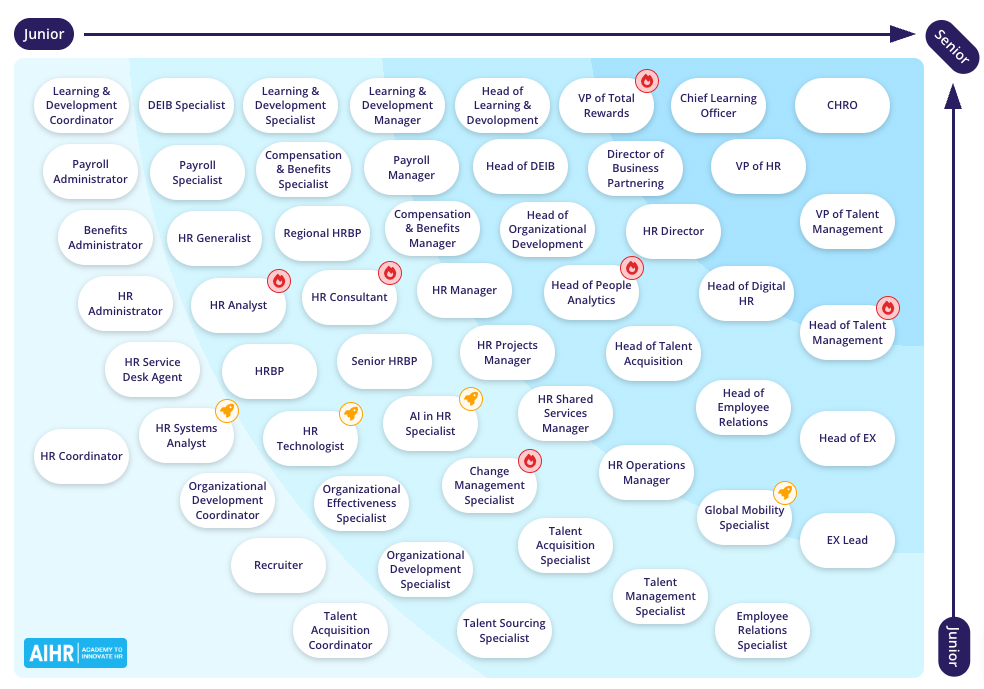
A career in human resources offers many pathways to leadership roles such as Director of Total Rewards, HR director, or Chief People Officer. Whether your starting point is as a Payroll Administrator, an HR Business Partner, or a Recruitment Consultant, with the right skills, support, and experience, you can reach any of your HR career goals.
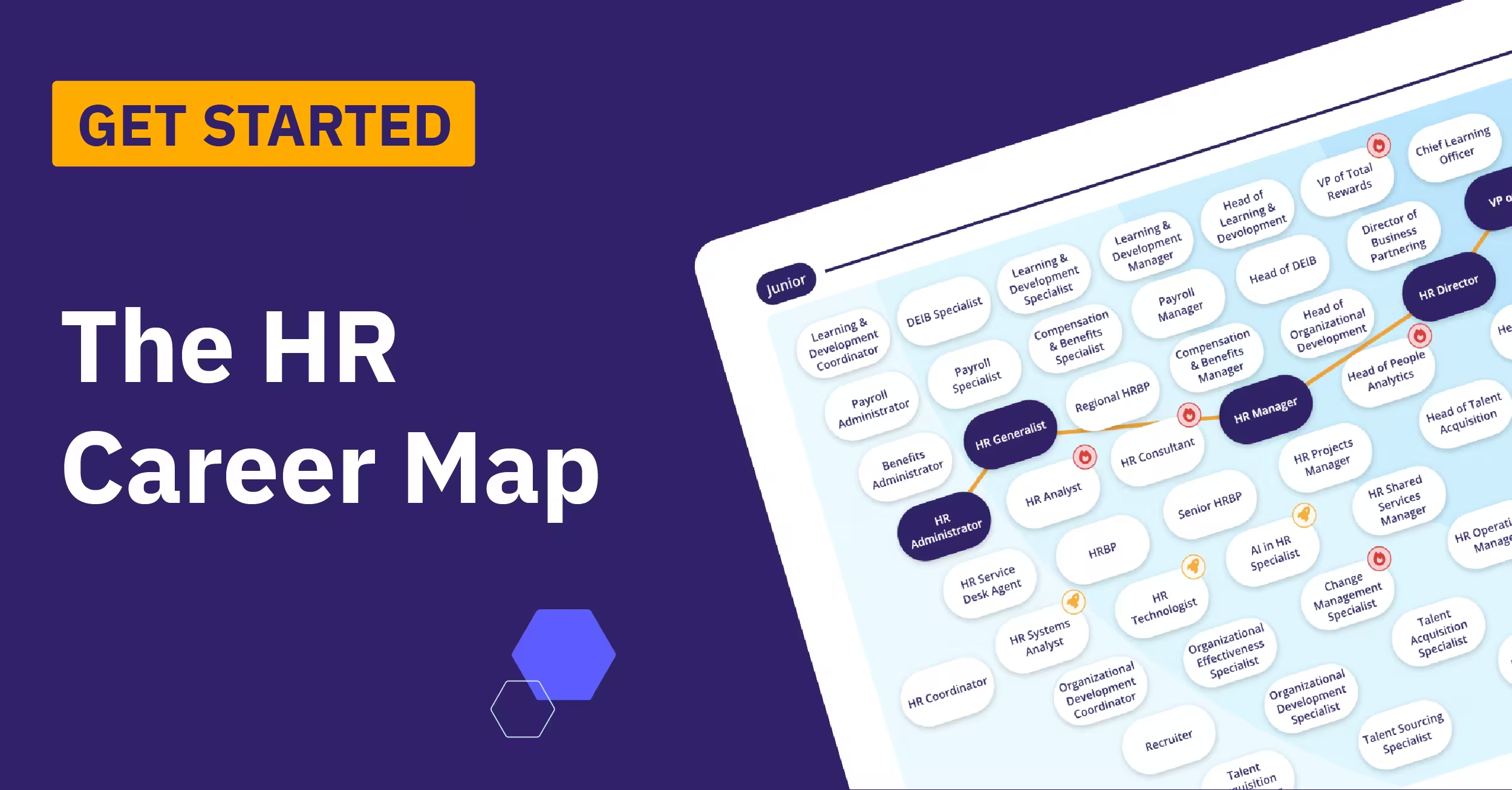
Want to explore your options? Check out our HR Career Map to see how different HR roles connect and where your career could go.
5. In-demand expertise
Organizations need HR professionals who understand both people and business. From navigating employment law and compensation strategy to implementing AI in the workplace, HR professionals bring essential knowledge to the table.
Combined with your transferable skills and an understanding of current workplace trends, you become highly valuable, whether you stay in HR or pursue another path.
HR career tip
Want a feel for what HR work is like? See if you can shadow or intern with an HR practitioner for a day or two to experience it firsthand.
6. Plenty of problem-solving opportunities
If you enjoy figuring things out, HR offers constant opportunities to put your problem-solving skills to work. You might mediate a workplace conflict one day, troubleshoot a payroll issue the next, and the day after that, help restructure a team for better collaboration.
Whether it’s resolving interpersonal issues, aligning policies with regulations, or navigating gray areas in employee relations, HR calls for a sharp eye and sound judgment.
7. Making work better for others
There’s something uniquely satisfying about improving people’s experiences at work. From shaping fair policies to building a workplace that fosters inclusion, HR helps create environments where people can thrive.
Just look at the key HR functions:
- Performance management
- Learning and development
- Career planning
- Employee participation and communication
- Personal wellbeing
Each of these areas impacts an employee’s experience and growth. HR professionals play a central role in shaping how people feel about work, and that influence matters.
Explore a promising HR career with AIHR
Considering a career in HR? Get a good headstart with practical, job-ready HR skills to help you confidently enter the field of Human Resources.
With AIHR’s Demo Portal, you’ll gain access to:
✅ Interactive project kick-off sessions that introduce you to the platform and its key features
✅ HR templates, guides, and other materials to improve your HR knowledge
✅ HR learning resources and competency frameworks to help build your HR skills
8. Learning about human behavior
A career in HR gives you a front-row seat to how people think, communicate, and make decisions. From recruitment to exit interviews, you’re constantly observing patterns in motivation, group dynamics, and behavior.
This knowledge isn’t just interesting, it’s critical to doing your job well. Understanding how people respond to feedback, incentives, leadership, or change helps you design more effective programs, resolve issues faster, and drive better outcomes across the organization.
9. Helping others grow
Depending on the specific path and role you choose within the field of HR, you play a key role in learning and development, coaching, and career progression.
Learning and development (L&D), for instance, is all about enhancing people’s skills, competencies, and knowledge to help them grow and further boost their work performance.
But you don’t need to work in L&D to make an impact. Any HR role can involve mentoring, creating growth pathways, or making sure people have the right tools to develop. And in doing so, you contribute to stronger teams and better retention.
10. Shaping workplace culture
If you’re interested in organizational culture and how to help shape it, a career in HR might be just the thing for you. You help define values, set behavioral expectations, and create systems that support both.
The role HR plays can be summarized in three parts:
- Champion: Promote initiatives that reinforce the desired culture.
- Coach: Work with leaders to drive behaviors that support business goals.
- Consultant: Use data to assess and guide the impact of culture efforts.
If you’re passionate about building environments where people feel aligned, included, and engaged, culture work in HR can be incredibly meaningful.
HR career tip
Start building your HR network early. Online HR communities like AIHR, CIPD, and SHRM can help you find support, ask questions, and stay updated. If you prefer in-person connections, look for local meetups or HR conferences in your area.
11. Championing employee wellbeing
Employee wellbeing is another topic that’s now under the umbrella of HR in many organizations. Especially since the pandemic, it’s expanded beyond just mental health to include:
- Mental wellbeing
- Social wellbeing
- Financial wellbeing
- Career wellbeing
- Physical wellbeing
- Building resilience
HR professionals advocate for support programs, fair treatment, and a healthy work-life balance. If you’re passionate about improving the quality of life at work, roles in larger HR teams, such as People Experience or Benefits, offer dedicated paths for wellbeing strategy.
12. Influencing leadership
HR professionals often advise managers and senior leaders, helping guide company strategy. Our T-shaped HR Competency Model highlights the importance of influencing others as an essential soft skill for HR professionals to succeed in their role.
Let’s look at the importance of the ability to successfully influence stakeholders for HR business partners, for example. Where mastering this interpersonal skill enables HRBPs to (among other things):
- Secure buy-in from decision-makers and secure resources like budget or tools
- Drive organizational change and overcome resistance
- Advocate for initiatives that enhance employee experience
- Guide leadership teams to make informed, people-focused decisions.
Without influence, HR risks being sidelined, resulting in low adoption of key programs and unsuccessful change efforts. That’s why building trust, credibility, and strong communication is essential.
13. Good earning potential
It’s no surprise that compensation is a major factor in career decisions. According to Gallup, the number of employees who rate pay and benefits as “very important” rose from 41% pre-pandemic to 54%.
HR roles, especially at the senior level, can offer excellent salaries and benefits. Roles such as Compensation Director, Vice President of People, or Chief People Officer often come with six-figure salaries and performance bonuses. But even outside of the C-suite, many HR roles are financially rewarding. For example, Recruiting Managers, HR Shared Services Managers, and Benefits Managers frequently fall into the six-figure range depending on experience, industry, and location.
But there are other high-paying HR jobs, too. Positions like Recruiting Manager, HR Shared Services Manager, or Benefits Manager, for example, often also come with six-figure salaries.
14. Working with emerging technologies
HR today is deeply intertwined with technology. From AI-powered analytics to automated workflows and decision-support tools, HR tech is transforming the way people teams operate.
A recent example of this shift was reported by The Wall Street Journal. Moderna, the vaccine-maker, merged its HR and tech functions under a Chief People and Digital Technology Officer. Their goal? To redesign work by distinguishing what should be handled by people versus technology, including AI tools developed in partnership with OpenAI.
One commenter on LinkedIn summed it up well: “As HR leaders, we’re no longer just shaping culture, we’re architects of the human–AI collaboration that will define the next decade. The question isn’t whether AI will change work. It’s whether we’re ready to lead that change.”
15. Doing something different every day
Depending on the type of company you decide to work for and the role you’re in, you will be performing different duties on a daily basis. For example, as an HR Generalist, you are responsible for recruiting, employee and benefits administration, employee relations, compliance, and much more.
Few careers offer this level of exposure to so many parts of a business. HR’s cross-functional nature makes it ideal for people who like to learn, adapt, and wear multiple hats.
How to start your career in Human Resources
Once you’ve found your reason(s) to work in HR, the next logical step is figuring out how to break into the field. Whether you’re switching careers or starting fresh, here are some practical tips to help you get started:
- Talk to someone already working in HR: Perhaps you know someone in HR in a previous company you worked for, or maybe even your current company or someone in your professional network. Reach out to them and ask them for a coffee. Since they are already in the field you want to move into, they are well-placed to answer any questions you may have and provide valuable tips.
- Identify your transferable skills: If you’ve worked in other fields like customer service, operations, or administration, chances are you already have relevant skills (communication, multitasking, or conflict resolution). Map your existing strengths to common HR competencies, then explore ways to fill any knowledge gaps through training or certifications.
- Get certified: You don’t necessarily need a degree in HR to get started. Earning a reputable HR certification can help you build foundational knowledge and demonstrate your commitment to the field. For example, at AIHR, we offer a wide range of online HR certificate programs designed to suit different interests and career stages.
- Create a stellar resume. Even in today’s job market, a solid resume still matters. If you’re applying for an entry-level HR role, make sure your resume clearly highlights your transferable skills, relevant coursework, certifications, and achievements. Need help? Check out our guide on creating an entry-level HR resume with clear formatting tips and real examples.
- Prepare for interviews with common HR questions: While every interview is different, some questions show up time and time again. Be ready to speak to your understanding of HR principles, how you handle difficult conversations, and how you stay organized.
- Know your “why”: Above all, be ready to answer the one question that’s nearly guaranteed to come up: “Why do you want to work in HR?” Your answer should reflect your motivations, whether that’s helping people thrive at work, shaping culture, or driving business performance through people strategy.
To sum up
To sum up, if you’re thinking about your next career move and wondering why you should work in HR, you can always come back to this article and revisit the reasons listed.
They don’t all need to resonate with you. With so many different paths, there’s likely a space where your skills and values align. So maybe the better question isn’t, “Why work in HR?”
It’s “Why not?”