
If you sense that today’s candidates and employees have higher expectations, you’re not alone. In fact, 72% of surveyed HR professionals and executives agree. Organizations that want to attract and retain high-quality talent need to respond in a way that’s consistent, scalable, and tied to business priorities. A strong people strategy creates that alignment.
It clarifies how to build critical capabilities, create clear growth pathways, and shape a supportive culture, so leaders and HR can make better decisions about where to invest and outcomes to prioritize. This can improve employer reputation and business performance. This article explores the key pillars of an effective people strategy, along with real-world examples and practical steps to help you start building one.
Contents
What is a people strategy?
Why is a people strategy important?
Key pillars of a people strategy
6 people strategy examples
How to develop an effective people strategy: 5 steps
FAQ

What is a people strategy?
A people strategy is a framework that explains what an organization aims to offer prospective candidates and employees. It clarifies the employee experience that the company promises and aligns that promise with the employer brand. It also links the organization’s talent needs to business goals by defining the capabilities required to achieve desired outcomes and how the company will attract, support, and develop the people who can deliver them.
A people strategy should connect business strategy and HR strategy and reinforce your employer brand. It should also reflect the organization’s values around how it treats employees so leaders can build an environment where people feel engaged, supported, and motivated to achieve shared goals.
People strategy vs. HR strategy
People strategy and HR strategy can sound similar, but they serve different purposes.
A people strategy is outward-facing. It sets out what the organization promises to candidates and employees and the kind of employer it commits to being. It also sets the direction for how leaders can help employees do their best work by building needed capabilities and shaping a culture that supports performance.
An HR strategy focuses on execution. It sets the HR function’s long-term priorities and defines what HR will deliver over a given period to support organizational success, from core people processes to the programs and initiatives that bring the people strategy to life.
Why is a people strategy important?
A people strategy provides a clear definition of who the organization wants to be as an employer and what it will prioritize to get there. Without one, organizations miss opportunities to build workforce capabilities that support business goals and to develop a cohesive culture.
Executing a people strategy enriches organizations in multiple ways, including:
- Employee empowerment: People play a central role in achieving the organization’s vision, and a people strategy helps employees see how they create value. When leaders set employees up for success with the right support and a positive environment, employees thrive and contribute more.
- Commitment to employees: When organizations document and implement a people strategy, they make a clear commitment about what employees can expect in return for their work and dedication. Organizations can also weave it into the employee value proposition and employer branding to support recruitment and retention.
- Better response to uncertainty and changes: When leaders champion employees and give them ownership of their work, employees adapt, problem-solve, and innovate more easily during new or unexpected circumstances.
- Support for long-term business success: A people strategy creates a plan to develop the workforce over time. As employees build skills and work more effectively, the organization strengthens performance and resilience, even when challenges arise.
A people strategy only creates impact when it’s translated into aligned priorities, consistent ways of working, and measurable progress. That takes shared capability across HR, not just one strategy owner.
With AIHR for Business, you can equip your HR team to:
✅ Align leaders and HR stakeholders around clear priorities and trade-offs
✅ Turn strategic themes into practical initiatives across talent, culture, and workforce planning
✅ Track progress with meaningful people metrics and adjust based on what the data shows
🎯 Make people strategy executable — by building capability across the whole HR team.
Key pillars of a people strategy
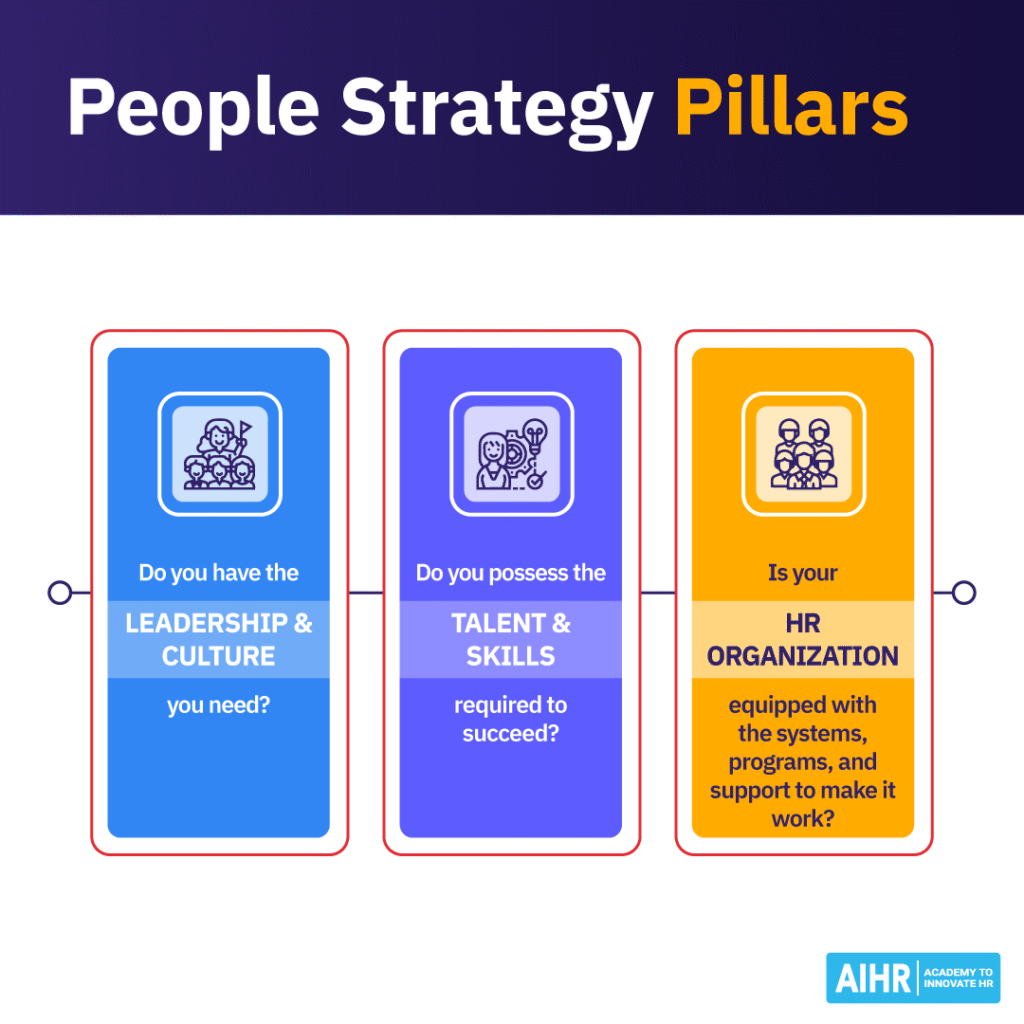
Boston Consulting Group (BCG) highlights five fundamentals of a people strategy: leadership, culture, talent, skills, and HR. You can group them into three practical focus areas. Together, these pillars help you define the experience you want to create, build the capabilities you need, and put the right HR support in place to sustain it.
- Leadership and culture: A strong leadership presence and a supportive culture inspire employees and spur commitment to organizational success.
- Talent and skills: Organizations need to attract, develop, and deploy the right skills to meet strategic needs.
- HR: HR needs to enable the other fundamentals by providing the systems, programs, and support that make them work in practice.
Did you know?
Work culture ranks third behind job security and fair pay as a reason employees stay with an organization, according to Mercer’s Global Talent Trends report (see p. 28).
6 people strategy examples
Now that we’ve covered what a people strategy is in theory, let’s look at how different organizations communicate theirs.
Here are six real-world people strategy examples you can use for inspiration:
Example 1: Adidas
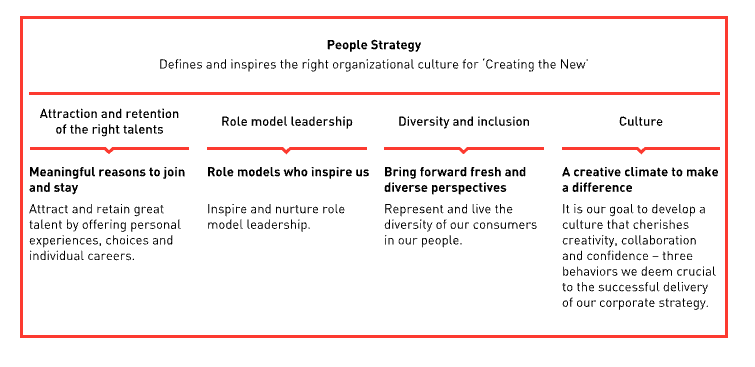
Europe’s largest sportswear manufacturer, Adidas, sees its people strategy as a commitment to winning employees’ hearts and minds so the company can deliver its business strategy.
Example 2: Cisco
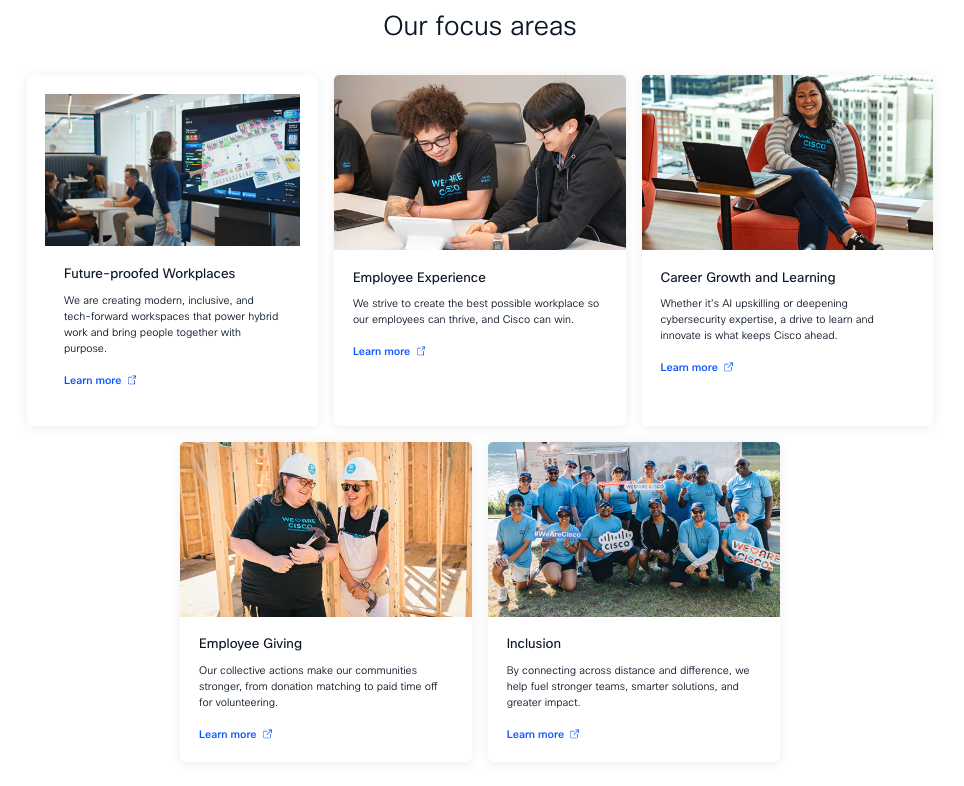
Multinational digital communications technology conglomerate Cisco communicates its people approach through its Purpose content, saying its people “power” its purpose and fuel the business and culture through learning, connection, and collaboration.
Example 3: City of London
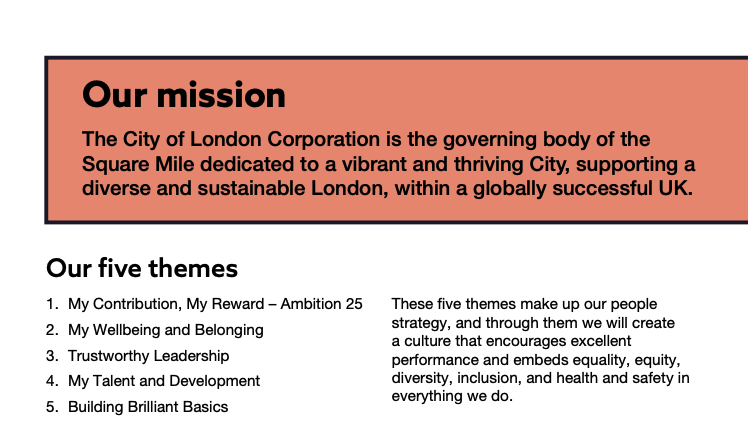
The City of London Corporation’s People Strategy links its people priorities to public service goals and highlights the need to support employees as one organization while still allowing leaders to tailor outputs to their teams’ needs.
Example 4: Spotify
Spotify’s HR team shared how it shaped its people strategy around a people-first approach while staying purpose-driven, with a focus on balancing business priorities and people priorities.
Example 5: Albatross Group
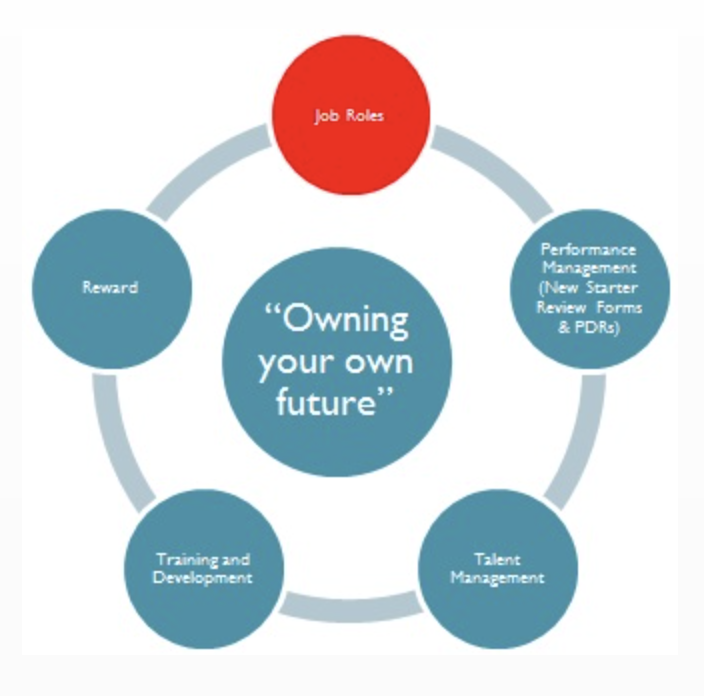
The Albatross Group, a travel and tourism company, describes its people strategy as “all about our people owning their own future.” The company also emphasizes consistency, stating that employees should follow the same process and access the same opportunities across the group, regardless of team or manager.
How to develop an effective people strategy: 5 steps
Developing a people strategy takes focused planning and clear choices. To give you an idea of what this process involves, we’ve broken it down into five broad but actionable steps:
Step 1: Look at the “big picture”
Start with a clear understanding of the organization’s overall business strategy, then map out what it means for employees.
Consider questions such as:
- What are the organization’s driving forces (e.g., innovation, growth, technology, efficiency)?
- How do these forces shape the work employees do?
- What is the fundamental contribution employees make to bottom-line business outcomes?
- How does organizational culture play into employee engagement and performance?
Step 2: Audit current practices and define people outcomes
Evaluate your current people and HR practices to spot gaps, then use what you learn to define priorities and outcomes for your HR people strategy.
This step should include:
- Defining the areas to review, such as skills gaps, talent management, recruitment, compliance, and culture
- Reviewing HR data, workforce metrics, and employee feedback to check whether day-to-day practices match documented policies
- Assessing whether current and past practices have delivered the results you want
- Identifying how workforce strengths and weaknesses affect business performance
- Writing clear cause-and-effect statements, such as “Upskilling improves efficiency by boosting productivity.”
- Turning goals into measurable outcomes, such as linking turnover reduction to retention initiatives
- Assigning each priority to the relevant HR owner or team
- Setting targets and timeframes for key objectives.
Step 3: Put the focus where it matters
Identify what is critical to your organization’s success. Then decide which people issues have the most impact on this and what will happen if you don’t address them. This should reveal the highest-impact areas to focus your people strategy efforts and resources.
AIHR’s research shows that top-performing companies often treat ESG, DEIB, and employee engagement as critical to success. These priorities show up in their HR strategy focus areas, and they actively monitor and report on related metrics. You can apply the same approach to your people strategy by translating these priorities into a clear promise to employees and candidates, and by tracking progress over time.
Step 4: Create content that speaks to all stakeholders
Compelling content will get the people strategy out to employees and candidates for better implementation and buy-in. This means creating visuals, narratives, and documents, and ensuring they’re accessible.
Here are some tips:
- Create a one-page executive summary that highlights key pillars and shows how the strategy supports business goals. Use visuals to make it easy to scan.
- Explain any HR policy, practice, or activity changes being made to support the strategy.
- Describe any new initiatives, resources, or opportunities available to employees.
- Share the content through internal channels (intranet, apps, comms channels) and externally where relevant, such as the careers page.
HR tip
Think through how employees may react to changes in people processes. Anticipate what questions and concerns they may have and be prepared with answers and information.
Step 5: Measure, review, and adjust
Your people and culture strategy must be evaluated and refined on an ongoing basis to keep it relevant and aligned with business needs. This is especially important during times of major internal or external shifts.
Track key metrics, such as retention, turnover, productivity rates, training ROI, and employee engagement scores, to see if they’re delivering the anticipated results. Gather employee feedback data as well.
When results stall or gaps show up, adjust priorities or refine the activities behind the strategy. When results improve, capture what works and embed those practices into ongoing processes across the organization.
Next steps
Done right, a people strategy shapes an employer-employee relationship that enables employees to perform at their best and helps the organization get the most from its strengths.
Organizations increasingly rely on a clear people strategy to attract, engage, and retain talent. Start by using the key pillars and aligning your focus areas with business goals. Then you can invest in what matters most: a capable workforce that consistently delivers results.
FAQ
BCG highlights five fundamentals of people strategy: leadership, culture, talent, skills, and HR. You can group these into three practical pillars: leadership and culture, talent and skills, and HR.
• Leadership and culture: The leadership behaviors and workplace culture you want employees to experience day to day.
• Talent and skills: The capabilities the organization needs and how it will attract, develop, and deploy them.
• HR: The HR practices, systems, and programs that enable the other pillars and help the organization deliver on its people strategy.
An HR strategy focuses on execution. It defines what the HR function will deliver over a specific period, which priorities it will focus on, and how it will support the organization’s goals through initiatives, processes, and services. A people strategy focuses on the promise and the experience. It clarifies what the organization commits to offering candidates and employees, and it should align closely with the employer brand. HR then uses the HR strategy to deliver on that promise through concrete programs and actions.
A good people strategy example clearly states what employees can expect and what the organization asks in return. For instance, the Albatross Group describes its people strategy as “owning their own future”, which signals a focus on development, opportunity, and employee ownership of career growth.