

Garden leave is well established in the UK, especially in roles where longer notice periods and post-exit restrictions are common. It is less common in the U.S., largely because at-will employment means many workers do not have a contractual notice period for it to apply to. Where organizations use it, the arrangement typically applies to executives, senior employees, or people whose contracts create a formal exit timeline.
For HR, this raises practical questions about pay, restrictions, and what is actually enforceable. This article explains how garden leave works, what legal rules to consider in the U.S., and how to build a policy that protects the business without alienating employees.
Contents
What is garden leave?
How does garden leave work?
Garden leave vs. severance vs. non-compete
Is garden leave legal in the U.S.?
Advantages and disadvantages of garden leave
Examples of garden leave
How can HR develop an effective garden leave policy
FAQ
What is garden leave?
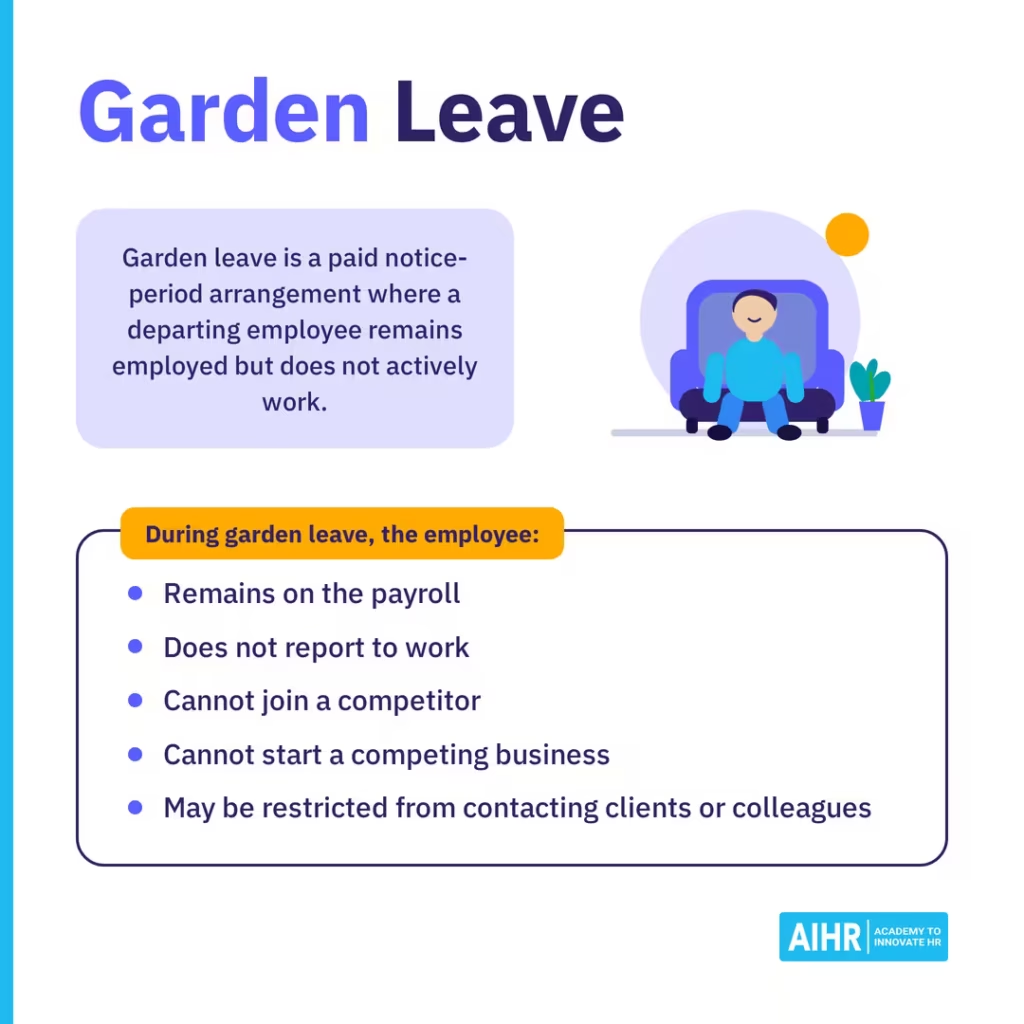
The term “garden leave” comes from the British civil service and military, where an official could be sent home on full pay and, with nothing else permitted, was left with little to do but tend the garden. Today, it describes much the same idea. Garden leave is an arrangement where an employer asks a departing employee to stay away from work during their notice period while keeping them employed and fully paid. It can apply whether the person resigns or is let go, and the terms are usually set out in the employment contract. In practice, it most often covers senior leaders, salespeople, and anyone with access to sensitive information or key client relationships.
Employers use it to protect the business. Holding a departing employee out of the office but still under contract stops them from taking clients, recruiting former colleagues, or carrying trade secrets to a competitor before they officially leave.

How does garden leave work?
Garden leave is triggered by a clause in the employment contract. Once either side gives notice, the employer can activate it and ask the employee to spend their remaining weeks at home rather than in the office. Because the person stays employed the whole time, they keep their full salary and usual benefits, though some employers ask to use up any remaining paid time off first.
How long it lasts depends entirely on the notice period. It can run from a few weeks to several months, but never beyond what the agreement allows. Senior employees usually have longer ones, so their garden leave runs longer too.
The employee stays bound by the same terms throughout. They generally cannot work for a competitor, start a competing business, contact clients or colleagues, or begin a new job before they leave formally. For HR, the task is to keep salary and benefits running, confirm everything is clearly documented, and stay available for any agreed handover. If employment ends partway through, they are still owed whatever salary and benefits they are due.
Garden leave vs. severance vs. non-compete
Garden leave gets confused with a few similar-sounding arrangements, so here’s how the three differ:
Garden leave | Severance pay | Non-compete | |
What it is | Paid time at home while someone is on their way out but still on staff | A payout made once the position ends, often for signing a release | A clause limiting where a person can work after they go |
When it applies | During the wind-down before departure | After the last day | For a set period once someone has left |
On the payroll? | Yes, on full pay and benefits | No, settled as a separate sum | No |
Free to take another job? | No, barred from rivals and any new post until they officially leave | Yes, once the split is final | Restricted from joining a competitor within the agreed scope |
Main purpose | Shield clients, teams, and sensitive know-how during a delicate exit | Cushion the financial hit of losing a position and close things cleanly | Stop a former hire from helping competitors down the line |
Is garden leave legal in the U.S.?
Yes. In the U.S., garden leave usually runs through the employment contract rather than a specific law. This means an organization can keep a departing employee at home on full pay while their remaining employment time runs out. Because most U.S. jobs are at-will and do not require a notice period, this arrangement usually only works when a contract creates one. That is why it mostly applies to executives and senior staff.
It often works alongside a non-compete, a clause that prevents someone from joining a competitor for a set period after leaving. Those are the rules that vary by state. Some, including California, Minnesota, North Dakota, and Oklahoma, won’t enforce most non-competes, so employers will rely on garden leave, confidentiality, and non-solicitation terms instead. The practice itself is widely accepted; the restrictions around it vary from state to state.
Massachusetts uses the term differently. In state law, “garden leave” means pay owed during a non-compete period after someone leaves, not time at home during notice, so it’s worth checking which one a Massachusetts contract refers to.
For HR, it comes down to putting the terms in writing, checking the rules of the state where the employee works, and running anything that restricts them after departure past employment counsel.
Garden leave helps protect the business during employee exits, but it also affects pay, benefits, and contracts. HR needs the right C&B knowledge to handle these decisions consistently.
AIHR’s Compensation & Benefits Certificate Program teaches you to:
✅ Understand how compensation and benefits decisions connect to wider HR processes
✅ Use pay principles to support fair and consistent employee practices
✅ Analyze C&B data to guide better rewards decisions
✅ Shape a Total Rewards Strategy aligned with business priorities
💡 Check out the lessons in AIHR’s Demo Portal for a clear idea of what you’ll get.
Advantages and disadvantages of garden leave
Garden leave cuts both ways, and whether it helps or hurts depends on which side of it you’re on.
For the employer
The main benefits include:
- Protection of business interests: It helps reduce the risk that confidential information, trade secrets, or client lists will be shared with competitors during the transition.
- Greater control during the notice period: Because the departing team member remains on the payroll, the organization can still enforce agreed restrictions, such as confidentiality and limited client contact.
- Smoother handover: This time gives the organization time to appoint a replacement, redistribute work, and support clients and colleagues through the transition.
- Lower risk of disruption: Garden leave can reduce the chance of workplace disruption, client poaching, or attempts to recruit colleagues before the person exits.
The trade-offs to weigh are:
- Cost: The organization must continue paying salary and benefits during this period, even though the person is no longer actively working.
- Reduced productivity: It can affect productivity because the departing team member no longer contributes to day-to-day operations.
- Lower morale: Coworkers may view garden leave as unfair or overly restrictive, especially if the organization does not explain the process clearly. This can affect employee morale.
- Enforcement challenges: Restrictions such as non-compete clauses and non-solicitation agreements can be difficult to monitor and enforce in practice.
For the employee
On the employee’s side, the upsides are:
- Continued compensation: The individual continues to receive salary and benefits during this period, which provides financial stability during the transition.
- Time to find new employment: Can provide time for the employee to find a new job without the pressure of immediate unemployment.
- Improved work-life balance: The break from work can provide time to rest, focus on personal responsibilities, or prepare for the next career move.
- A clearer way to meet restrictions: In some cases, garden leave can help someone comply with restrictive covenants without immediately entering a legal dispute.
The main drawbacks include:
- Fewer networking opportunities: Garden leave can limit contact with colleagues, clients, and industry peers, potentially affecting future career prospects.
- Uncertainty about the next step: The person may feel unsure about their future, especially if they have not yet secured a new role.
- Isolation: Being away from the workplace can feel isolating, particularly when the person still has a formal employment relationship with the organization.
- Restrictions on future employment: The employee’s ability to work for certain competitors or contact clients of their former employer may be constrained.
Examples of garden leave
Garden leave can apply in different situations, depending on the employee’s role, access to sensitive information, and risk to the business. Here are some common examples:
- A senior sales manager joins a competitor: A sales manager resigns to take a role with a direct competitor. Because they have access to client relationships, pricing details, and upcoming sales strategies, the organization places them on garden leave for their notice period. They remain employed and paid but stop working with clients or internal sales teams.
- An executive leaves during a strategic project: A senior leader resigns while the company is preparing for a merger, restructuring, or product launch. Garden leave helps limit access to confidential plans while giving the organization time to manage the handover.
- A recruiter moves to another agency: A recruiter resigns to join a competing recruitment firm. During this time, they cannot contact candidates, hiring managers, or clients from their current employer. This reduces the risk of client or candidate poaching.
- A finance professional has access to sensitive data: Someone in finance resigns after working with payroll, budgets, or acquisition plans. The organization may keep them away from active work to protect confidential financial information until their employment officially ends.
- A technology employee works with proprietary systems: A software engineer or product manager resigns after working on a confidential product roadmap. Garden leave limits further access to systems, code, and strategic plans while the company protects its intellectual property.
How can HR develop an effective garden leave policy
An effective garden leave policy should protect the organization without placing unnecessary restrictions on departing employees. HR’s role is to make the policy clear, fair, legally sound, and consistently applied.
Here are the key steps to follow:
1. Define when garden leave applies
Garden leave should not apply automatically to every resignation. HR should explain which roles or situations may require it.
It is usually more appropriate for people who have access to sensitive information, client relationships, strategic plans, or intellectual property. This may include senior leaders, sales professionals, recruiters, finance specialists, or anyone moving to a direct competitor.
2. Set out the garden leave clause in the contract
The strongest protection comes from a written garden leave clause in the employment contract, agreed at the time of hire rather than at exit. This gives both sides clarity long before a resignation or termination happens.
The clause should cover when it can be used, how long it may last, which restrictions apply, and whether pay and benefits continue. Where it isn’t built into the original contract, a separate garden leave agreement signed at the point of departure can serve the same purpose. Either way, HR should review the wording with legal counsel to confirm compliance with the relevant state laws.
3. Clarify pay, benefits, and employment status
During garden leave, the person usually remains employed until their notice period ends. The policy should clearly state what continues during this time.
This may include base pay, health benefits, pension contributions, bonuses, or other contractual entitlements. Clear wording helps reduce confusion and prevent disputes during the exit process.
4. Set reasonable restrictions
The policy should explain what the person can and cannot do during this time. Restrictions should be proportionate to the business risk.
For example, the organization may restrict contact with clients, access to company systems, work for a competitor, or share confidential information. These limits should protect legitimate business interests, not simply block someone’s next career move.
5. Manage access and company property
HR should work with IT, legal, and the person’s manager once garden leave begins.
This may include removing access to email, shared drives, customer relationship management systems, financial data, or confidential files. The policy should also explain when company property, such as laptops, phones, access cards, and documents, must be returned.
6. Plan the handover
Garden leave can create operational gaps if the handover is rushed. Before the leave starts, HR and the manager should agree on what needs to be transferred.
This may include client updates, project notes, key contacts, deadlines, and status reports. A clear handover helps reduce disruption for colleagues, clients, and the wider business.
7. Communicate and apply the policy consistently
Garden leave can feel punitive if the organization does not explain it clearly. HR should explain to the person why the decision has been made, what happens next, and who they can contact with any questions.
Relevant team members may also need a short, professional update about the transition. HR should document the reason for each decision and apply the same criteria across similar cases.
Next steps
Garden leave works best when HR clearly documents when it applies, how pay and benefits continue, and which restrictions are reasonable. Review your employment contracts with legal counsel and make sure managers apply the policy consistently.
To build stronger skills in this area, explore AIHR’s Compensation & Benefits Certificate Program. You’ll learn how to design fair, competitive, and future-ready compensation and benefits strategies that support business goals while meeting employee expectations.
FAQ
Garden leave usually lasts for the length of the employee’s notice period. This can range from a few weeks to several months, depending on the employment contract, role seniority, and business risk. Senior leaders and people with access to sensitive information often have longer contractual exit timelines.
Yes. The person continues on full salary and retains their usual benefits until the notice period ends. The current employer continues to pay them, and some organizations ask staff to use up accrued vacation first. HR should spell out exactly what continues, including bonuses and pension contributions, to avoid disputes.
Usually not. They remain under contract until the leave ends and are typically barred from starting a new role, especially with a competitor. They can line up their next job, but the start date has to wait. Employers should make this restriction explicit in writing, so both sides know where they stand.
Garden leave is a paid arrangement in which a person remains employed but does not actively work. A layoff usually occurs when an organization cuts roles due to business needs, budget changes, or restructuring. In a layoff, employment may end immediately or after a formal transition period.
A notice period is the time between resignation or termination notice and the employee’s final employment date. Garden leave can happen during that notice period. The person stays employed and paid, but the organization asks them not to work, contact clients, or access company systems.