
Employee recognition is one of the most cost-effective ways organizations can strengthen engagement and retention, yet it remains underused. Gallup research shows that only about 23% of employees strongly agree they receive the right amount of recognition for their work, even though those who do are four times more likely to be engaged. For HR professionals, this gap represents a clear opportunity to influence performance, motivation, and employee experience through relatively low-cost, high-impact actions.
By building an employee strategy that prioritizes meaningful recognition, organizations can reduce turnover, improve job satisfaction, and create a more positive work environment. This article explores different approaches to employee recognition and shares 39 practical ideas you can use to motivate and engage your workforce.
Contents
What is employee recognition?
Why is employee recognition important?
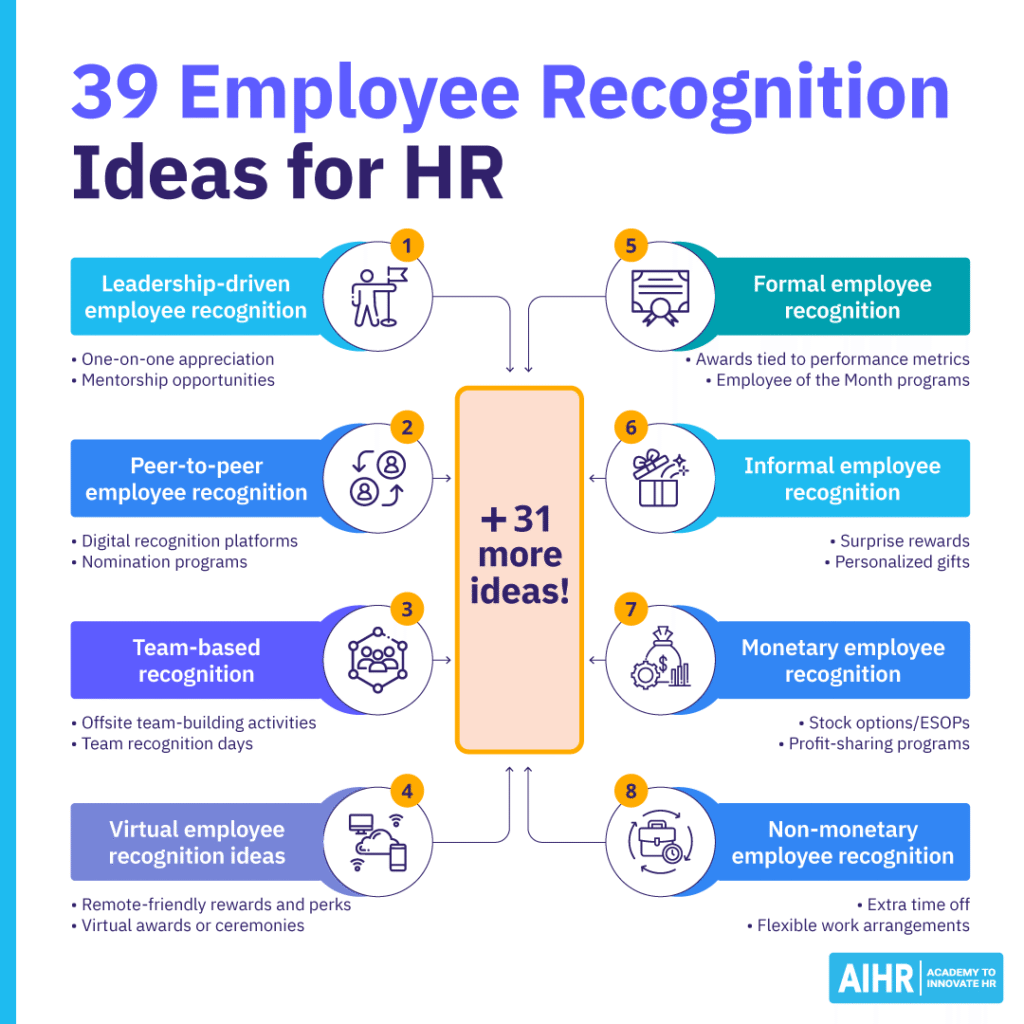
39 employee recognition ideas to consider and implement
– Leadership-driven employee recognition
– Peer-to-peer employee recognition
– Team-based employee recognition
– Virtual employee recognition ideas
– Formal employee recognition
– Informal employee recognition
– Monetary employee recognition
– Non-monetary employee recognition
How to choose and implement the right employee recognition ideas

What is employee recognition?
Employee recognition refers to the way organizations acknowledge and appreciate employees for their contributions, efforts, or achievements at work. It goes beyond formal rewards and can include everyday actions such as verbal praise, written feedback, public acknowledgment, or structured recognition programs tied to performance or behaviors.
From an HR perspective, employee recognition is not just about rewards or perks. It is a strategic tool that reinforces desired behaviors, supports engagement, and helps employees feel valued for their work. When recognition is consistent and aligned with organizational goals, it contributes directly to performance, retention, and a positive workplace culture.
Why is employee recognition important?
Employee recognition matters because it directly influences how employees feel about their work and how they perform. Here is why employee recognition is important:
- It makes employees feel appreciated and valued, which directly impacts motivation and job satisfaction.
- Recognition reinforces positive behaviors and performance, encouraging employees to repeat and build on what they are doing well.
- Employees who feel recognized are more engaged and committed to their work, which supports stronger individual and team performance.
- Regular recognition helps build trust between employees and leadership by showing that contributions are not overlooked.
- Feeling valued at work increases employees’ likelihood of staying with the organization, helping reduce turnover and associated hiring costs.
- A culture of recognition contributes to a more positive work environment, where employees feel encouraged, supported, and willing to collaborate.
39 best employee recognition ideas for HR
Below are 39 impactful ideas, categorized into different types of employee recognition, to help you develop an effective employee recognition program that will benefit your organization and its workforce.
Leadership-driven employee recognition
Leadership-driven employee recognition comes directly from executives, managers, and supervisors. Because it is delivered by those in decision-making roles, it sends a strong signal that employee contributions are noticed, valued, and aligned with organizational priorities.
1. Shoutouts and public recognition
Public recognition during team meetings, all-hands sessions, or company-wide forums allows leaders to highlight specific contributions in front of peers. This not only boosts the morale of the individual being recognized but also reinforces which behaviors and outcomes are valued, encouraging others to follow similar examples.
2. Personalized ‘thank you’ notes
Personalized recognition through handwritten or digital notes for specific contributions adds a personal touch and shows genuine gratitude. These notes should be tailored to each individual and their specific achievements to make them feel truly valued. This recognition letter template can help you get started.
3. One-on-one recognition conversations
Setting aside time during one-on-one meetings to recognize accomplishments provides a focused, sincere way for managers to show appreciation. It also strengthens the manager-employee relationship and creates space for constructive feedback.
4. Leadership lunches or dinners
Informal meals with high-performing employees create opportunities for relationship building beyond day-to-day work interactions. These moments help employees feel seen by leadership, while also creating space for meaningful conversations, idea sharing, and mutual understanding.
5. Mentorship and leadership development opportunities
Offering mentorship programs or leadership development opportunities to high-potential employees recognizes their performance while supporting their long-term growth. It signals confidence in their potential and demonstrates the organization’s commitment to developing future leaders.
6. Executive shadowing opportunities
Executive shadowing enables high-performing employees to observe senior leaders in their day-to-day roles. This form of recognition gives employees exposure to strategic decision-making and leadership perspectives, while signaling trust and confidence in their potential. It is particularly effective for recognizing employees who demonstrate strong leadership behaviors and long-term growth potential.
Peer-to-peer employee recognition
Peer recognition empowers employees to acknowledge their colleagues’ contributions. Because recognition comes from those working closely together, it helps build a culture of appreciation, collaboration, and mutual respect.
7. Digital recognition platforms
Using online or app-based systems that make it easy for employees to give and receive praise is a great way to encourage peer-to-peer recognition. Look for digital platforms with features like point systems, virtual badges, and public display boards to showcase achievements.
8. Nomination programs
These programs encourage employees to nominate colleagues for awards or recognition based on specific criteria such as teamwork, innovation, or customer service. Nominations are usually submitted via online forms, emails, or other company channels. This helps employees to actively participate in recognizing their peers’ outstanding work.
9. ‘Living our culture’ recognition programs
Also known as “caught you doing good,” these programs encourage employees to share observations of colleagues demonstrating exceptional behavior at work. This fosters positive reinforcement and encourages employees to model desired behaviors.
10. Employee-led knowledge sharing sessions
Inviting top performers to share their expertise with other teams or departments recognizes their value while boosting knowledge-sharing and cross-functional collaboration. Beyond allowing employees to showcase their skills, this can help foster a culture of knowledge sharing and continuous learning.
Build recognition programs that employees actually feel
Great recognition isn’t just a “nice-to-have”, it’s a strategic lever in your total rewards approach, shaping how people experience fairness, performance, and belonging at work.
✅ Design recognition initiatives as part of a total rewards strategy (alongside pay, benefits, and wellbeing)
✅ Use compensation analytics to connect recognition with performance, engagement, and retention outcomes
✅ Apply benchmarking and market data to keep rewards competitive — and recognition credible
✅ Strengthen trust by addressing pay equity and aligning reward drivers with a culture of fairness and appreciation
🎓 Learn at your own pace with the online Compensation & Benefits Certificate Program.
Team-based recognition
Team-based employee recognition emphasizes collective achievements rather than individual performance. It reinforces the importance of collaboration, shared accountability, and cross-functional effort, helping teams feel proud of what they accomplish together.
11. Offsite team-building activities
Offsite activities recognize strong team performance by giving teams dedicated time away from day-to-day work to connect and recharge. Activities such as escape rooms, outdoor experiences, or facilitated workshops encourage collaboration, improve communication, and help strengthen trust among team members.
12. Group awards
Group awards celebrate teams that achieve shared goals, such as delivering successful projects, improving performance metrics, or navigating complex initiatives. Recognizing teams rather than individuals reinforces collective ownership and highlights the value of collaboration in achieving results.
13. Team recognition days
Team recognition days are dedicated moments to celebrate collective accomplishments through events, activities, or presentations. Giving teams visibility in broader forums, such as leadership meetings or company-wide updates, reinforces pride in shared success and helps others learn from effective teamwork.
14. Visible recognition spaces
Visible recognition spaces make employee achievements easy to see and celebrate across the organization. Employee recognition boards or walls can take the form of physical bulletin boards in the workplace or digital dashboards for hybrid and remote teams. By publicly showcasing contributions, these spaces encourage peer recognition and reinforce a culture of appreciation.
15. Early departures
Allowing teams to leave work early after reaching key milestones is a simple but meaningful way to recognize collective effort. This type of recognition offers an immediate, tangible benefit while signaling appreciation for sustained collaboration and performance.
16. Team-based skill development workshops
Providing training or development opportunities to high-performing teams recognizes past success while investing in future capability. Workshops focused on leadership, communication, project management, or technical skills support continuous improvement and position recognition as a long-term commitment rather than a one-time reward.
Virtual employee recognition ideas
Virtual and remote employee recognition focuses on acknowledging employee contributions in distributed, hybrid, or fully remote work environments. When employees are not physically present, recognition needs to be intentional and visible to ensure remote workers feel included, appreciated, and connected to the organization.
17. Online recognition posts or channels
Dedicated recognition channels on collaboration tools, such as Slack or Microsoft Teams, allow employees and managers to publicly share their appreciation. Making recognition visible in shared digital spaces helps normalize appreciation and ensures contributions are acknowledged beyond immediate teams.
18. Virtual awards or ceremonies
Virtual award ceremonies provide a structured way to recognize achievements across locations. These can include live-streamed presentations, digital certificates, or recorded messages from leadership, offering remote employees the same sense of occasion as in-person events.
19. Remote-friendly rewards and perks
Remote recognition should include rewards that are accessible regardless of location, such as digital gift cards, online subscriptions, wellness benefits, or additional flexibility. Choosing location-agnostic rewards ensures recognition feels equitable and relevant for all employees.
20. Asynchronous recognition videos
Asynchronous recognition videos allow leaders or peers to record short messages acknowledging employee contributions. These videos can be shared on internal platforms, making recognition more personal while accommodating different time zones and schedules. This approach works particularly well for distributed teams that cannot attend live recognition moments.
Formal employee recognition
Formal employee recognition programs involve structured processes and established criteria to acknowledge and reward outstanding employee contributions. These programs typically include annual award ceremonies to facilitate public recognition.
21. Annual award ceremonies
Annual award ceremonies are formal events where organizations publicly recognize top performers for their achievements. These ceremonies often include presentations or speeches and are designed to create a sense of occasion and prestige around employee recognition.
22. Awards tied to performance metrics
Performance-based awards recognize employees who consistently meet or exceed clearly defined performance metrics such as productivity targets, customer satisfaction scores, or project delivery goals. These awards provide transparency and fairness by linking recognition to measurable outcomes, helping employees understand how their contributions directly support organizational success.
23. Employee of the Month programs
Employee of the Month programs recognize individuals who consistently demonstrate exceptional performance, dedication, or contributions. This approach provides ongoing, consistent recognition throughout the year.
24. Service awards
Service awards recognize long-term commitment by celebrating employee tenure milestones, such as five, 10, or 20 years of service with the organization. These awards reinforce loyalty and demonstrate appreciation for sustained contribution.
25. Promotion and career milestone recognition
Promotion ceremonies celebrate employee promotions and upward mobility in the company. They can include formal announcements, presentations, or recognition from colleagues and supervisors. The key purpose of these ceremonies is to highlight the employee’s achievements and their new role within the organization.
Informal employee recognition
Informal employee recognition involves spontaneous acts of appreciation from an employee’s managers or peers. These gestures can be simple yet impactful, fostering a positive, appreciative work environment that motivates employees to continue doing well.
26. Surprise rewards
Unexpected rewards can create a positive, uplifting work environment. These can range from simple gestures, like a manager bringing their team coffee and donuts, to more personalized gifts, such as small plants, desk accessories, books, or gift cards.
27. Personalized gifts
Gifts that reflect an employee’s interests show a genuine understanding and appreciation of them. Encourage managers to learn about their team’s hobbies to personalize such gifts better. Giving staff non-monetary gifts can also increase their productivity significantly, which also benefits the organization.
28. Recognizing birthdays at work
Celebrating birthdays at work is a simple and informal way to acknowledge employees without turning the moment into a mandatory event. Employee birthday recognition can include a short message from a manager, a digital team card, or optional flexibility on the designated day. Keeping this recognition consistent and voluntary helps employees feel noticed while respecting personal boundaries.
29. Spontaneous group celebrations for small wins
Spontaneous celebrations acknowledge everyday wins that may not warrant formal recognition but still deserve appreciation. These can include quick team gatherings, treats, or informal shoutouts following small successes. Recognizing these moments helps sustain motivation and reinforces a culture that notices progress regularly.
Monetary employee recognition
Monetary recognition involves rewarding employees with financial incentives, such as bonuses, raises, or profit-sharing. These rewards provide tangible credit for outstanding performance and are typically a significant motivator for many employees.
30. Gift cards
Gift cards allow employees to choose their own rewards and are suitable for spot incentives. Personalizing the gesture by providing a gift card for a family meal at an employee’s favorite restaurant makes this form of recognition more unique.
31. Bonuses
Performance bonuses are awarded to employees who meet specific targets, such as exceeding sales quotas or completing projects ahead of schedule. There are also spot bonuses, unexpected rewards for exceptional work, that offer a quick, effective way to recognize and reward top performers.
32. Profit-sharing programs
Profit-sharing programs distribute a portion of the company’s profits among top-performing employees. This encourages employees to feel invested in the company’s success, motivating them to perform at a high level and contribute to positive business outcomes.
33. Stock options/ESOPs
Stock options or Employee Stock Ownership Plans (ESOPs) give staff the right to buy company stock for a discount. If the company’s stock price appreciates, its financial rewards significantly increase. Giving top-performing employees a stake in your organization’s future can foster greater commitment.
Non-monetary employee recognition
Non-monetary recognition refers to rewards and appreciation that do not involve money but still motivate and engage employees. This includes verbal praise, awards, professional development opportunities, flexible work arrangements, extra time off, and public recognition.
34. Extra time off
Extra time off (e.g., additional vacation days, personal days, or early departures) gives your team valuable breaks for rest, family, or personal pursuits. This form of recognition demonstrates your appreciation for staff contributions and promotes work-life balance, which is crucial for employee wellbeing and productivity.
35. Flexible work arrangements
Offer employees the flexibility to adjust their work schedules to better suit their personal and professional needs. This may include options like remote work, flexitime, or compressed workweeks. Flexible work arrangements also improve employee satisfaction, reduce stress, and enhance work-life balance.
36. Volunteer days
Volunteer days provide employees with paid time off to volunteer at local charities or community organizations. This helps top performers give back to their community, promotes corporate responsibility, and strengthens your company’s image as a socially conscious organization.
37. Employee Appreciation Day celebrations
Employee Appreciation Day celebrations provide a dedicated opportunity to recognize employees collectively. Organizations may mark the occasion with messages from leadership, events, or special gestures of appreciation. Recognizing this day consistently helps reinforce appreciation as an ongoing organizational priority rather than a one-off initiative.
38. Company-sponsored events
Reward and recognize top performers with complimentary or discounted tickets to sporting events, concerts, or other exciting events that may pique their interest. These events provide opportunities for outstanding employees across different departments and teams to socialize, relax, and enjoy themselves outside of work.
39. Access to exclusive perks
Access to exclusive perks provides employees with valuable benefits and discounts on a range of goods and services. These perks may include discounts on gym memberships, insurance, travel, airport lounges, and other lifestyle products and services. This allows you to pamper your company’s best performers and enhance their overall wellbeing.
How to choose and implement the right employee recognition ideas
A successful employee recognition program doesn’t happen by accident. The best ones are deliberately built: they support business goals, reflect company culture, and align with what employees actually value. Use the steps below to select and roll out recognition ideas that work in your organization.
Step 1: Define what you want recognition to improve
Start with your organization’s priorities. What are you trying to drive, protect, or strengthen right now: innovation, operational efficiency, customer service, productivity, retention, or collaboration? Once you’re clear on the goal, decide what success looks like in practice and connect it to KPIs. This helps you avoid recognition that feels random and instead build programs that reinforce the outcomes the business cares about.
Step 2: Help managers choose the behaviors to reinforce
Next, help managers translate the goals into observable behaviors. For example, if the goal is customer service, managers might reward proactive problem-solving or consistently strong customer feedback. If innovation is the priority, managers might recognize employees who test new ideas, improve processes, or share lessons learned. Being specific makes recognition easier to apply fairly and consistently.
Step 3: Ask employees what good recognition looks like to them
Before you decide on rewards or formats, gather employee input. Use a short survey, focus groups, or team discussions to learn what people find meaningful and what feels performative or uncomfortable. Ask what kinds of recognition they prefer (private vs public, team vs individual, formal vs informal), and what rewards or perks they actually use. If you have new hires, it can also help to ask what worked well in their previous organizations.
Step 4: Make sure it fits your culture and ways of working
Recognition should feel natural in your workplace. If your culture is team-oriented, include plenty of peer and team-based recognition. If your organization values learning, connect recognition to development opportunities and knowledge sharing. If you are remote or hybrid, build in visible, inclusive recognition that does not depend on being in the office. This step helps prevent a program that looks good on paper but never becomes part of everyday work.
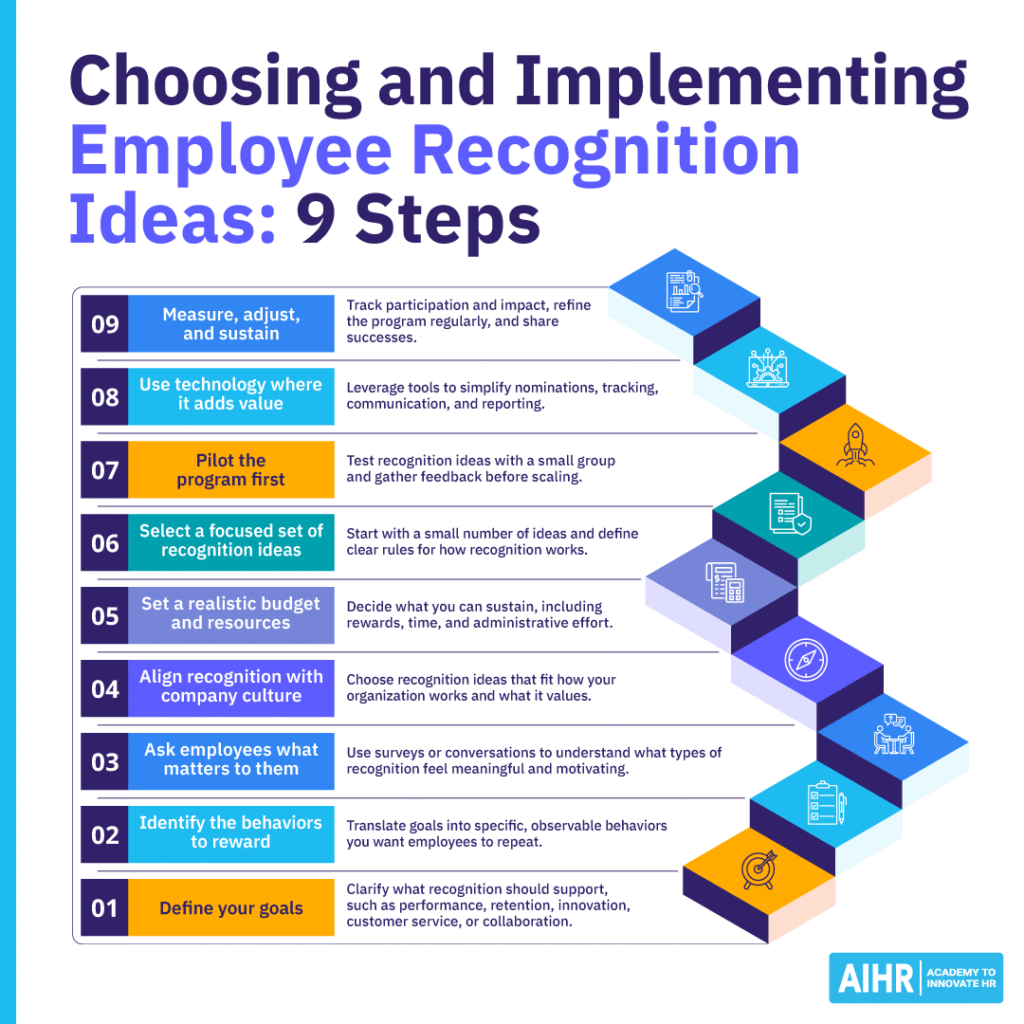
Step 5: Set a budget and decide what you can run consistently
Decide how much you can realistically invest and what mix of recognition makes sense for your organization. Budget is not only about rewards. Consider the time and effort required as well: who will manage nominations, track rewards, communicate the winners, and keep the program moving? Many organizations do best with a mix: low-cost, frequent recognition (praise, notes, shoutouts) supported by a smaller number of higher-impact rewards.
Step 6: Pick a small set of ideas and build a simple process
Instead of launching everything at once, select a short list of recognition ideas that align with the goals and culture, and then define how they will work. Set clear eligibility criteria, who can nominate, who approves, how often recognition happens, and how it is communicated. Clarity is crucial here, as recognition programs can quickly lose credibility if employees perceive them as inconsistent or unclear.
Step 7: Pilot the program with one group first
Start with a small-scale pilot in one team, function, or location. This lets you test whether your recognition ideas are being used, whether they feel fair, and whether managers and employees understand the process. Gather feedback during the pilot, not just at the end, so you can adjust quickly if something isn’t landing well.
Step 8: Use technology where it genuinely helps
If your organization is large, distributed, or struggling with consistency, employee recognition platforms can make participation easier. Use technology to support nominations, automate reminders, track reward budgets, and report on usage. Avoid adding a tool just for the sake of it. The best platforms remove friction and increase participation.
Step 9: Measure impact and keep it fresh
Track how the program is performing over time. Useful measures include participation rates, engagement survey trends, retention, recognition frequency by team, and employee feedback on fairness and usefulness. Review results regularly and make small updates rather than letting the program run unchanged for years. Share wins and stories internally to show that recognition has a real impact and to encourage consistent participation.
To sum up
A strong employee recognition program doesn’t have to be expensive or complex, but it should be consistent and meaningful. By combining leadership, peer-to-peer, formal, and informal recognition, your company can boost employee morale, engagement, and productivity.
To keep your recognition efforts effective, regularly gather employee feedback, track results, and adjust programs as needed. A thoughtful approach ensures employees feel valued, motivated, and committed to the company’s success.