

An annual review template is one of the simplest ways to make performance reviews more consistent, fair, and useful. It gives managers a clear structure to evaluate performance, document examples, and agree on next steps, while helping employees understand what is expected of them and how they can grow.
That structure matters. Gallup found that only 2% of CHROs strongly agree their performance management system inspires employees to improve, which points to a clear gap between the intent of performance management and how it is experienced in practice. A well-designed annual review template will not fix a weak performance process on its own, but it can make reviews more objective, easier to complete, and more development-focused.
In this article, we’ll explain what an annual review is, why using an annual review template matters, the different types of templates available, and what to include if you want a template that managers will actually use. We’ve also included a free template you can download and customize.
Contents
What is an annual review?
Why use an annual review template?
Types of annual review templates
Free annual review template
7 more performance review templates to download
What to include in an annual review template
How to use an annual review template effectively
Key takeaways
- An annual review is a structured yearly evaluation of performance, behaviors, and goal progress.
- An annual review template helps you make reviews more consistent, fair, and easier to document.
Different templates work for different needs, including ratings, goals, competencies, 360-degree feedback, and role-specific reviews. - The best templates stay concise, ask for evidence, and end with clear next steps for development.
What is an annual review?
An annual review is a structured, once-a-year evaluation of an employee’s performance, outcomes, and behaviors against role expectations. It is also called a performance review. In most organizations, it looks at what the employee achieved, how they worked, where they did well, and where they need more support.
A good annual review does more than score past performance. It helps align the employee’s work with the team’s and the business’s goals. It also creates space to discuss strengths, growth areas, and career goals, then turn those into SMART goals for the next review cycle.
An annual employee review template helps make this process easier to run. Managers can use it to assess employees against the same criteria, ask similar questions, and document feedback in a consistent way. That matters because reviews often influence pay, promotions, development plans, and, in some cases, formal performance decisions.
Annual reviews are also important from a fairness and compliance perspective. A structured process provides managers with a clearer way to deliver evidence-based feedback, rather than relying on memory or instinct. It also creates a written record of performance discussions, agreed goals, and support offered over time.
That doesn’t mean annual reviews should stand alone. They work best when they sit inside a broader performance management process with regular check-ins during the year. Strong review processes help employees see a clearer path for growth, not just a score at the end of the year.
Annual review templates help bring structure to performance conversations, but they are most effective when they support bigger goals like employee development, succession planning, and retention.
AIHR’s Talent Management & Succession Planning Certificate Program helps you build the skills to connect performance insights to stronger talent outcomes.In the program, you’ll learn how to:
✅ Build a strategic talent management practice
✅ Forecast talent demand and segment talent effectively
✅ Apply talent supply strategies
✅ Create stronger succession pipelines
✅ Support career growth and talent mobility
✅ Use talent data to guide decision-making.
🎓 Learn at your own pace with the online Talent Management & Succession Planning Certificate Program.
Why use an annual review template?
There are many advantages to using an annual review template. The biggest benefit is that it brings structure to a process that can otherwise feel inconsistent, rushed, or overly subjective.
- Creates consistency across teams: An annual review template ensures all employees are assessed using the same criteria, questions, and rating logic. This helps managers evaluate performance more consistently and makes it easier to compare reviews across departments.
- Supports fairer evaluations: Without a structured template, managers may rely too heavily on instinct or recent events. A template encourages them to use evidence and examples to support their feedback, which helps reduce bias and makes evaluations more objective.
- Saves time for managers and HR: A standardized template makes the performance review process easier to manage. Managers do not have to build reviews from scratch, and HR can streamline training, review submissions, and calibration discussions.
- Improves the quality of feedback: A strong template prompts managers to give more specific, constructive feedback. Instead of vague statements, they are encouraged to reference actual results, behaviors, goal progress, or peer input. This makes the feedback more credible and more useful for the employee.
- Strengthens documentation: Annual review templates create a clear record of performance, achievements, development needs, and agreed next steps. This documentation can support promotion decisions, compensation discussions, performance improvement efforts, and dispute resolution.
- Makes workforce data easier to analyze: When the same template is used across the organization, HR can compare results more easily and identify trends in performance, skill gaps, and development needs. This can also support monitoring for consistency and inclusion across teams.
- Builds employee trust: When employees understand how their performance is being measured and what is expected of them, the review process feels more transparent. Over time, that clarity helps build trust in both the manager and the wider performance management process.
Types of annual review templates
Here are some common types of annual performance review templates.
| Annual review template type | What it is | What it includes | Best for | Example of feedback |
| Rating-based template | Uses a set rating scale, often 1 to 5, to assess performance, skills, and behaviors. | Rating definitions, competency sections, goals, comments, and a development plan. | Standardization, benchmarking, and easier comparison across teams. | “Gosia delivered the Q3 project early and kept rework low. Rating: 4 out of 5.” |
| Goal-based (OKR/KPI) template | Tracks performance against agreed objectives and measurable results. | Objectives, key results, KPIs, progress notes, ratings, and comments. | Roles where measurable outcomes matter most, including sales and project roles. | “Objective: Increase trial-to-paid conversions by 15%. Result: 17% increase achieved. Rating: Exceeded objective.” |
| Competency-based template | Focuses on role or company competencies such as teamwork, communication, or problem-solving. | Competency list, rating scale, examples, and development actions. | Organizations that want to emphasize behavior and capability, not just outcomes. | “Core competency: Teamwork. Rating: 5. Jasminder supports cross-functional work and keeps projects moving.” |
| 360-degree feedback template | Collects input from multiple people, such as peers, managers, direct reports, and clients. | Instructions, confidentiality note, questions, rating scales, and open comments. | A broader view of performance, especially for leadership or highly collaborative roles. | “Iman could improve workload prioritization when handling several client deadlines at once.” |
| Role-specific template | Measures performance against the actual responsibilities and skills of one role. | Role scope, key responsibilities, technical skills, behavior metrics, goals, and development notes. | Tailored feedback and targeted development. | “Accomplishment: Increased Instagram followers by 35% in 12 months. Next goal: Build influencer partnerships to grow brand reach.” |
A role-specific or competency-based approach often works well when jobs differ widely across the organization. A rating-based format works best when you need more standardization. Many organizations use a blended approach rather than choosing just one.
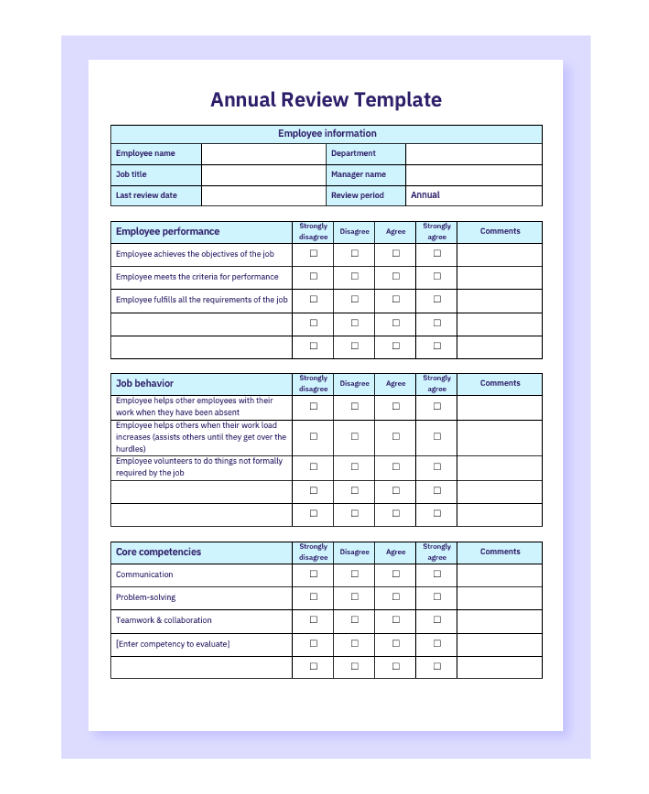
Free annual review template
Download AIHR’s free annual review template and customize it to match your organization’s goals, culture, and review criteria. A ready-made template gives managers a strong starting point and helps you roll out a more consistent process faster.
7 more performance review templates to download
An annual review template is often the main document in the review cycle, but it’s rarely the only one you need. Depending on how your organization runs performance management, these related templates can help you collect better input, tailor reviews to different roles, and turn feedback into action.
1. Self-performance review template
Use this before the annual review meeting so employees can reflect on their achievements, challenges, and development goals. It helps managers gather input they may not otherwise see and makes the conversation more balanced.
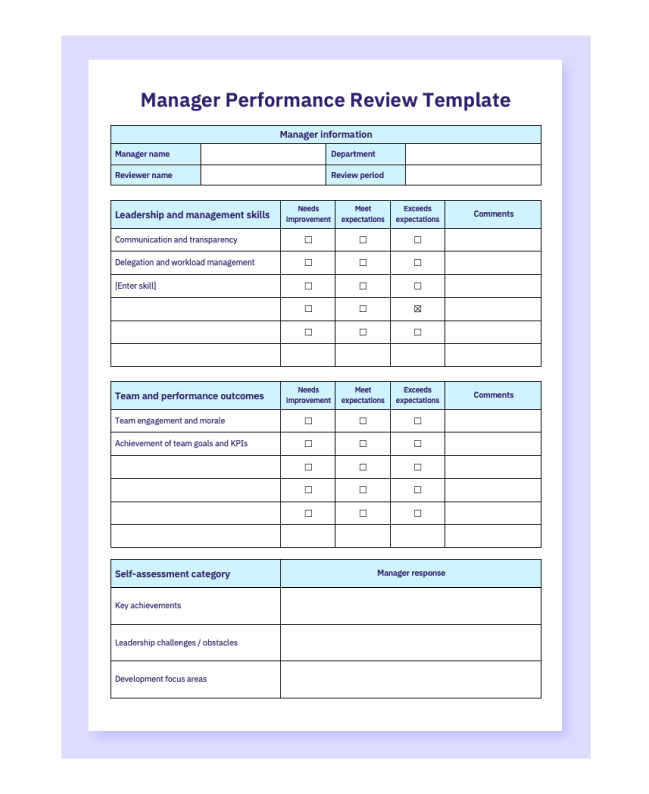
2. Manager performance review template
This template is designed for people managers who need to evaluate direct reports consistently. It usually includes performance outcomes, team contribution, strengths, growth areas, and next-step goals.
3. Competency-based performance review template
Choose this when you want to assess how work gets done, not just what gets delivered. It helps managers evaluate behaviors and skills such as communication, collaboration, problem-solving, and leadership.
4. Goal-based performance review template
This template works well when annual reviews are tied to goals, OKRs, or KPIs. It helps managers assess progress against measurable objectives and discuss what helped or blocked performance during the review period.
5. 360-degree feedback template
Use this when you want broader input from peers, direct reports, or stakeholders. It’s especially useful for managers, leaders, and employees in highly collaborative roles.

6. Quarterly performance review template
This template helps you track performance more regularly between annual reviews. It’s a useful option for organizations that want more frequent check-ins and less recency bias in the annual review process.
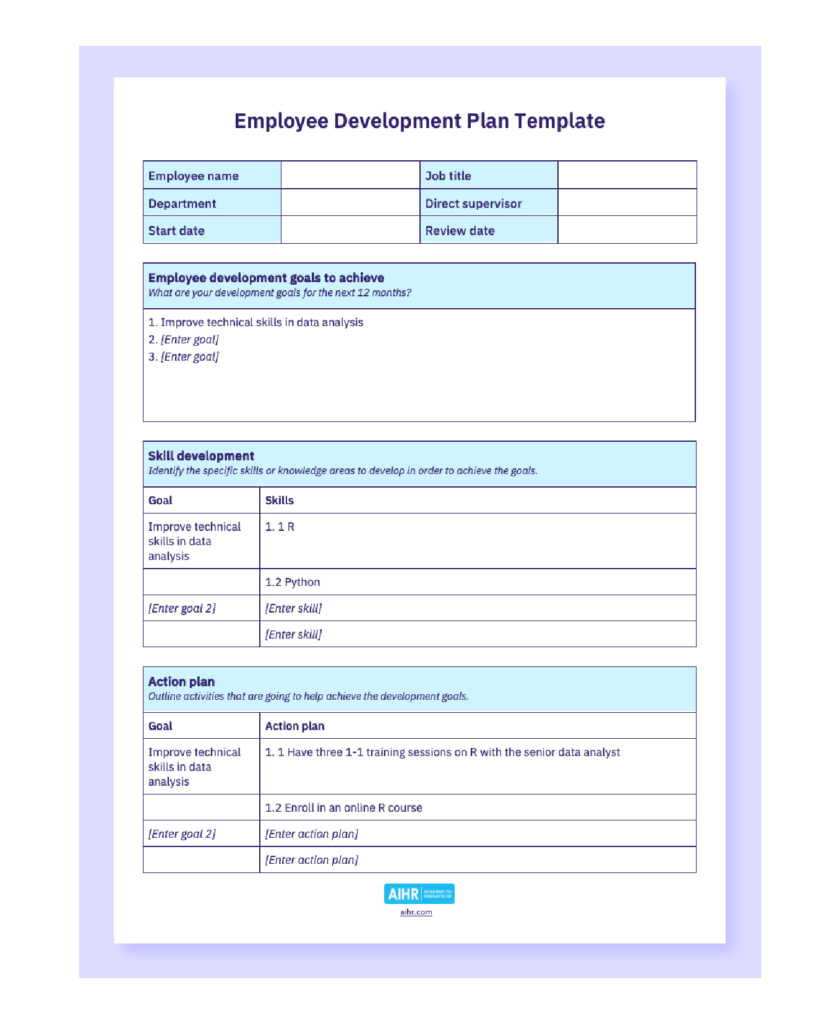
7. Employee development plan template
Use this after the annual review to turn feedback into clear action. It helps employees and managers agree on development priorities, support needed, and SMART goals for the next review cycle.
What to include in an annual review template
Now that you know the benefits of using an annual review template and the different types available, here are the main elements to include in yours:
- Employee and role details: Include basic information at the top of the template, such as the employee’s name, job title, department, reviewer’s name, and review period.
- Role expectations and scope: Add a short summary of the employee’s key responsibilities and the core expectations of their role. This helps keep the review grounded in what the job actually requires.
- Goals and outcomes: Review the goals set in the previous cycle and assess the progress made. This can include both business goals and development goals, such as improving communication, leadership, or collaboration.
- Performance competencies and behaviors: Break performance down into specific competencies or behaviors, such as problem-solving, teamwork, time management, or job knowledge, and evaluate each area using clear examples.
- Impact highlights: Include a section for notable achievements and the results they delivered. For example, this could cover improving a process, supporting team outcomes, increasing customer satisfaction, or meeting a major target.
- Challenges and learnings: Give employees space to reflect on challenges they faced, what they learned, and how they have applied or plan to apply those lessons going forward.
- Manager feedback summary: Include space for the manager to summarize overall performance, including strengths, growth areas, and any patterns that emerged during the review period.
- Employee self-assessment: Let the employee reflect on their own performance, share accomplishments, raise concerns, and highlight anything they want included in the discussion.
- Development plan: Add a section for future development priorities, such as training, stretch assignments, coaching, mentoring, or new responsibilities.
- Rating and/or overall evaluation: If you use a rating scale, explain it clearly in the template and leave space for managers to rate each competency or provide an overall performance assessment.
- Compensation or promotion recommendation (optional): Some organizations include space to note whether the employee is being considered for a salary adjustment, bonus, or promotion based on performance.
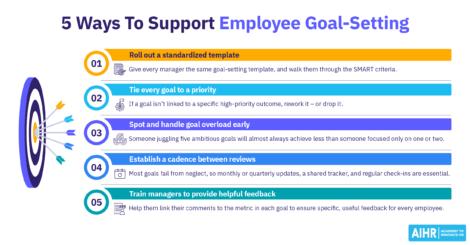
- Next-cycle goals: Use the review to agree on a small number of SMART goals for the next review period. Writing these down improves accountability and follow-through.
- Sign-off and final comments: End with space for both the employee and manager to add final comments and sign the review to confirm it has been discussed.
To keep the template practical, make sure it is detailed enough to support meaningful feedback without becoming too long or overwhelming. In most cases, two to four pages are enough. It also helps to add prompts such as “Give one or two examples” or “Describe the impact” so managers provide specific, evidence-based feedback instead of vague comments.
How to use an annual review template effectively
A strong annual performance review template only works when managers know how to use it well and employees understand what the process is for. The goal should not be to complete a form. It should be to support a fair, evidence-based conversation that improves performance and development over time. Performance management is more than annual reviews. It is an ongoing process of aligning goals, building accountability, and supporting growth.
Step 1: Define the purpose of the review before the cycle starts
Start by deciding what the review is meant to achieve in your organization. Is it mainly about documenting performance, supporting development, informing pay decisions, or all three? Be clear, because the answer shapes the template, the rating system, and the conversation itself.
This is also the time to define the review window, deadlines, and responsibilities. Managers need to know when reviews are due, what evidence they should gather, and how the completed forms will be used.
Step 2: Customize the template to match the role and review philosophy
Do not roll out a generic template without adapting it. Review forms should reflect the realities of the roles being assessed and the behaviors your organization values. For example, a template for a sales role may put more weight on target achievement and customer outcomes, while one for a people manager may need stronger sections on coaching, delegation, and team development.
Keep the template concise, but make sure it includes:
- Role expectations
- Goal progress
- Competencies or behaviors
- Evidence-based comments
- Development actions
- Next-cycle goals.
Performance review templates should create a clear framework for evaluation, development, and future goal-setting.
Step 3: Prepare managers before asking them to write reviews
Weak reviews often come from a lack of manager capability, not a lack of manager effort. Train managers on how to evaluate performance fairly, write specific comments, and separate outcomes from personality judgments. They should understand the rating scale, what “meets expectations” actually means, and how to back up comments with examples.
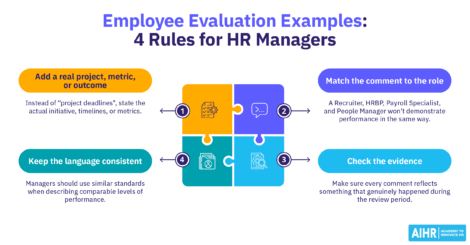
It also helps to show examples of strong versus weak review comments. For instance, “great attitude” is vague. “Handled three urgent client escalations calmly, resolved two within the same day, and kept stakeholders updated throughout” is useful.
Step 4: Ask employees to prepare a self-review first
A review should not be something that happens to the employee. It should be something they help shape. Ask employees to complete a self-assessment before the manager writes the final review. This gives them a chance to reflect on achievements, challenges, lessons learned, and career goals.
Self-reviews often surface valuable context the manager may not see, especially in cross-functional or less visible work. They also make the review discussion more balanced and collaborative.
Step 5: Gather evidence from the full review period
Managers should not rely on recent memory when completing annual reviews. That creates recency bias and makes the process feel unfair. Instead, encourage them to gather notes, project outcomes, goal updates, customer feedback, and check-in records from across the full review period.
A useful rule is this: every rating or major comment should be supported by at least one specific example. Prompts like “What happened?”, “What was the impact?”, and “What support is needed next?” help improve the quality of written feedback.
Step 6: Calibrate ratings and expectations across teams
If your organization uses ratings, calibration is essential. Without it, one manager’s “4” may be another manager’s “3,” and employees will quickly see the inconsistency. Hold calibration meetings where managers and HR review draft ratings together, compare standards, and challenge unsupported judgments.
Calibration is also where HR can spot patterns such as inflated ratings, inconsistent expectations between teams, or signs of potential bias. This makes the process more credible and more defensible.
Step 7: Run the review conversation as a discussion, not a download
The annual review meeting should not feel like the manager is reading out a verdict. It should be a two-way conversation. Start with the employee’s reflections, then discuss achievements, gaps, patterns, and goals. Make space for questions and disagreement.
A useful structure is:
- Review the employee’s biggest contributions
- Discuss areas that need strengthening
- Explore what support or development is needed
- Agree on goals and next steps.
This makes the conversation feel more constructive and less performative.
Step 8: Turn feedback into a practical development plan
A review is only useful if something happens afterward. Every annual review should end with a small number of concrete next steps. These might include skill-building, stretch assignments, coaching, shadowing, or clearer short-term priorities.
Development actions should be realistic and visible. Instead of writing “improve communication,” write “lead the monthly team update for the next quarter” or “complete presentation skills training and present the Q2 update to stakeholders.”
Step 9: Separate documentation from ongoing performance support
The annual review is an important record, but it should not be the only time feedback happens.Effective performance management depends on ongoing alignment, feedback, and accountability, not just a yearly review. Use the annual review template to document the formal conversation, then follow up through regular check-ins during the year.
This reduces surprises, improves accountability, and makes next year’s review much easier to complete.
Step 10: Review the process itself after the cycle ends
Once the cycle is over, evaluate how the process worked. Ask managers and employees what felt clear, what felt difficult, and where the template or process created friction. Look at completion rates, comment quality, rating distribution, and whether follow-up actions were actually carried out.
This helps HR improve the template over time instead of repeating the same weak process every year.

Next steps
An annual review template helps you run performance reviews that are more consistent, fair, and useful. It gives managers a clear structure for evaluating performance, documenting examples, and agreeing on next steps, while helping employees better understand expectations, strengths, and development priorities.
The real value, though, comes from how the template is used. When paired with manager training, evidence-based feedback, and regular follow-up, it can turn annual reviews from a box-ticking exercise into a meaningful part of performance management. That helps HR create stronger review conversations, better documentation, and clearer development plans across the organization.
For HR professionals, improving annual review processes is also a practical way to build skills in performance management, manager enablement, calibration, and employee development.
A next step for you could be AIHR’s Talent Management & Succession Planning Certificate Program, which supports HR professionals in building stronger talent and performance practices.