

Writing the perfect job description is a challenge for HR and Talent Acquisition professionals everywhere. With more than 20 million jobs listed on major job boards, your posting needs to work harder to stand out and attract the right candidates, not just more applicants.
If you’ve ever typed “job description example” into Google or looked for an example of a job description to copy and adapt, this guide is for you.
You’ll discover the key components of an ideal job description, see seven real job description examples from well-known companies, and get practical tips you can apply right away. We’ll also walk you through the step-by-step process of writing a job description and share a free job description template that you can download and reuse for future roles.
Contents
What is an ideal job description?
7 real company job description examples (and what to copy)
Difference between job description and job specification
How to write a job description
Free job description template
Key takeaways
- Effective job descriptions are clear, structured, and aligned with your employer brand, so candidates can quickly assess fit.
- Real-world examples and a reusable template make it easier to craft high-quality postings for any role.
- Separating must-have from nice-to-have requirements and using inclusive language broaden and improve your candidate pool.
- Clearly stating expectations, benefits, and next steps attracts better-matched applicants and improves the candidate experience.
What is an ideal job description?
An ideal job description is a clear, concise, and candidate-friendly overview of a role that helps people quickly decide whether to apply. It should also support your employer brand and make life easier for hiring managers and recruiters.
Here are the essential components of an effective job description:
- A specific job title: Use a targeted, concise title that accurately describes the role and includes standard experience levels when relevant (for example, “Senior Data Analyst,” “Customer Service Coordinator”). Avoid internal jargon or fun-but-unclear titles like “rockstar” or “ninja.”
A clear and concise summary of the role: Start with two to four sentences that describe the role’s purpose, impact on the business, and how it fits into the team. This helps candidates quickly understand what the job is about. - Key responsibilities and day-to-day tasks: Provide a structured list of responsibilities so candidates can visualize what a typical week looks like. Aim for six to 10 bullets grouped into logical themes (for example, “Project Delivery,” “Stakeholder Management”).
- Professional requirements: List the skills, knowledge, qualifications, and experience needed to perform in the role. Separate must-haves from nice-to-haves so qualified candidates don’t self-select out unnecessarily.
- What’s unique about your organization: Include a short “About us” section that shares your mission, purpose, values, and what makes you different as an employer. This is where your employer brand comes to life.
- Salary and benefits: Where possible, include a salary range and highlight benefits that set you apart (for example, flexible working, learning and development budget, extra time off, parental leave policies).
- Work hours and environment: Clarify expected hours, whether the role is full-time or part-time, and the working model (on-site, hybrid, or remote). If flexibility is an important part of your EVP, make that visible.
- Alignment with your employer brand: Keep tone and language consistent with the rest of your employer branding and career site. Candidates should recognize your “voice” across all touchpoints.
- Easy to read and scan: Use headings, short paragraphs, bullet points, and sufficient line spacing so candidates can quickly scan the posting on any device—desktop, tablet, or mobile.
- Inclusive language: Avoid gender-coded or exclusionary terms (for example, “he,” “she,” “ninja,” “young and energetic”). Use “they,” “the candidate,” or “you,” and focus on skills and behaviors rather than personal traits.
- A clear call to action: End with specific instructions: how to apply, which documents to submit, and any key timelines (for example, “Apply by October 31; we review applications on a rolling basis.”).
If you want to go deeper into role definition, you can use a roles and responsibilities template to structure expectations before you start writing the job description.

7 real company job description examples (and what to copy)
Below are seven real-world job description examples for popular roles, plus practical tips on how to apply the best elements to your own postings.
1. General manager job description example

What this job role does well:
This job description starts with a clear summary and a “main duties” section at the top. That structure allows candidates to quickly see whether the opportunity is relevant before they commit to reading the full posting.
The description also includes an “About us” paragraph that explains who Avery Healthcare is, what they do, and who they support, which helps candidates understand the context of the role. Headings and subheadings make the content easy to navigate, and the contract type and working pattern are visible early on.
The posting clearly states that a DBS check and UK professional registration are required, lists a closing date for applications, and provides a contact email for candidates who have questions.
How to apply this to your own job description:
- Include a short summary plus key duties at the top of your job description for quick scanning.
- If your role requires checks (for example, background checks, security clearance, or professional registration), be explicit to reduce the number of unsuitable applications.
List any essential qualifications or certifications (for example, “NHS Management Level 5 qualification”) to help candidates self-assess their fit. - When advertising on external job boards, include a link to your careers page so candidates can learn more about your organization and explore other available opportunities.
2. Software engineer job description example
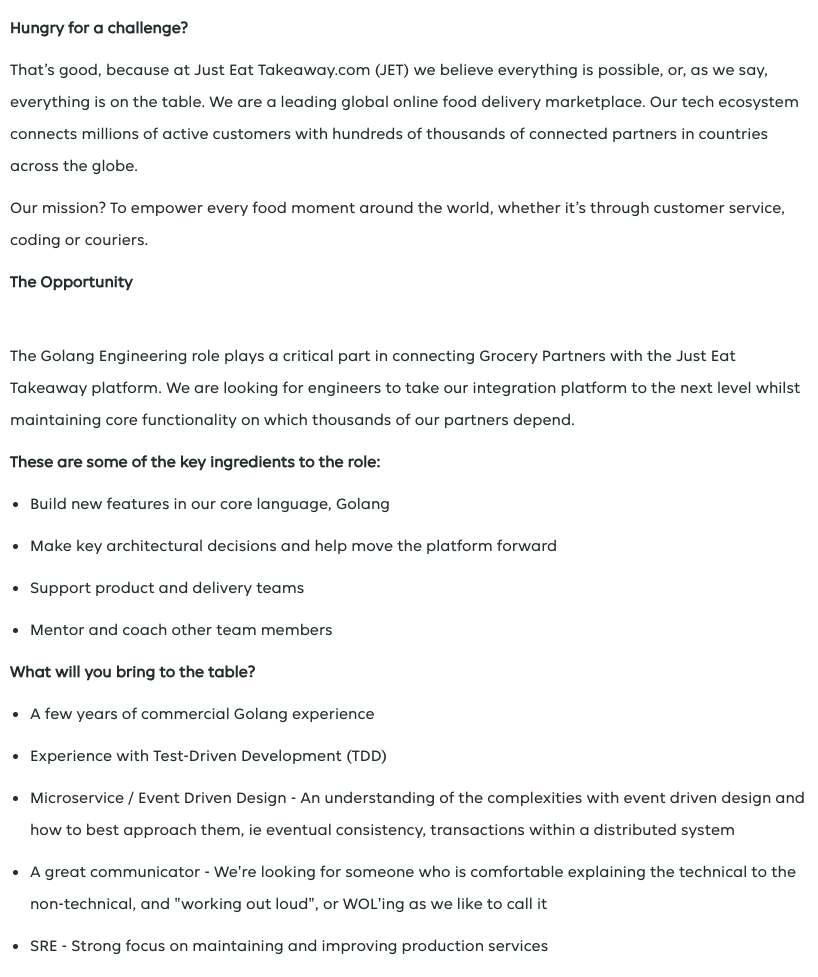
What this job description does well:
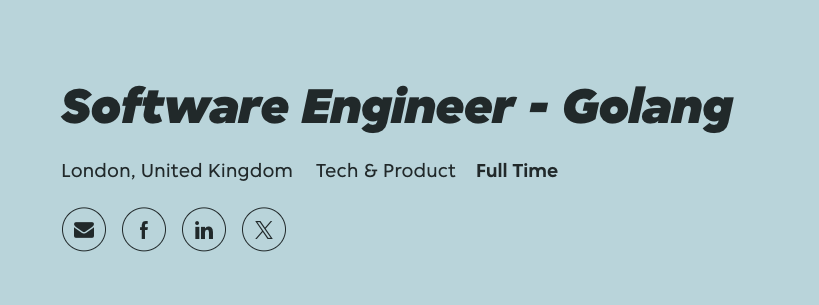
This software engineer job description uses a distinct, on-brand tone of voice that reflects the company’s personality without sacrificing clarity. It explains the broader mission of the organization and positions the role within that mission, which can be motivating for candidates.
The description outlines the desired skills and experience, avoiding labeling every requirement as essential, which helps keep the candidate pool more inclusive. It also describes the team culture and the type of person who is likely to enjoy working there and points readers to the career site for more information about the employee experience.
The posting concludes with a clear “Apply now” call to action, provides a link to the office location, invites candidates to sign up for email alerts for similar roles, and features employee testimonials in both written and video formats.
How to apply this to your own job description:
- Open with a short paragraph that connects the role to your product, mission, or customer impact
- Differentiate between must-have and nice-to-have technical skills to keep the role accessible
- Add a short section that describes team culture and preferred ways of working (for example, pair programming, code reviews, agile practices)
- Link to your careers site or engineering blog if you have more information about your tech stack and culture
- Use a clear call to action and keep the application flow simple, ideally with an “Apply now” button and a short form.
3. Sales representative job description example
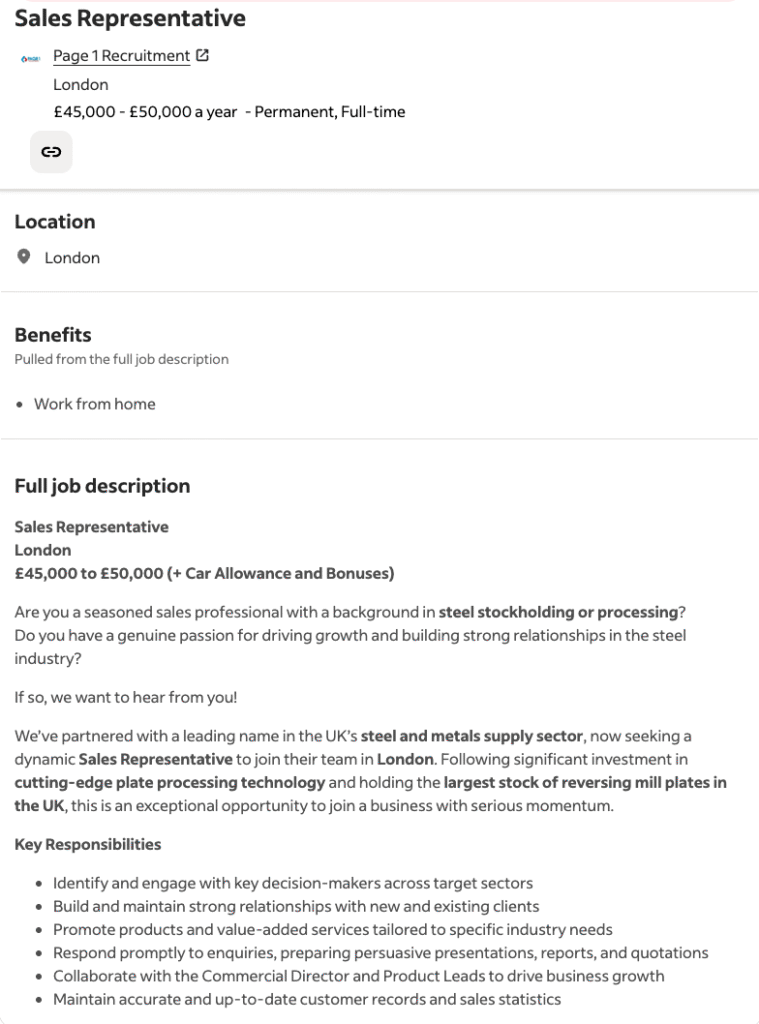
What this job description does well
This example highlights key selling points at the top, including the option to work from home, the salary band, and additional benefits such as a car allowance and performance bonuses. That combination gives candidates a quick view of the financial and flexibility aspects of the role.
The contract type is clearly stated, and the posting uses formatting, such as bold text and short sections, to draw attention to important information, including a higher-than-average number of holidays. The job description concludes with a straightforward call to action and includes a phone number, allowing candidates to contact the recruitment agency directly.
How to apply this to your own job description:
- Highlight flexible work options, on-target earnings, and high-impact benefits near the top of the posting
- Present total compensation clearly, including base salary, commission, bonuses, and allowances
- Use concise paragraphs and formatting to make key sales-related information easy to scan
- Emphasize differentiators such as above-average time off or strong incentive plans
- Provide a direct contact option (email or phone) for candidates who have questions about the role or compensation.
4. Project manager job description example

What this job description does well
The Project Manager job description begins with an “About the job” summary that provides a high-level overview of the role and its context. It then provides background on the organization’s experience in the industry, which helps candidates understand the types of projects and stakeholders involved.
The responsibilities section is detailed and clearly structured, with the requirements presented in a straightforward manner. The posting notes that a full UK security check is required and includes a comprehensive list of benefits.
A final section, titled “Belong at Bovis,” focuses on values, culture, and the company’s commitment to diversity, equity, and inclusion.
How to apply this to your own job description:
- Start with a short “About the job” summary that explains what the person will deliver and who they will work with
- Provide enough context about your organization and industry so candidates can picture the projects and stakeholders
- Clearly outline responsibilities and required experience, focusing on ownership, decision-making, and project scope
- Mention any security, compliance, or background checks early in the posting
- Add a short section that links your values and DEI commitments to specific actions or programs
Attract the right talent with solid TA practices
Learn to improve your talent acquisition process and write accurate yet standout job descriptions to attract the right candidates to your organization.
🎓 AIHR’s Strategic Talent Acquisition Certificate Program will teach you how to:
✅ Build an effective TA strategy to attract top talent for critical vacancies
✅ Leverage data to enhance your end-to-end recruitment funnel
✅ Keep top talent engaged and enthusiastic with a memorable candidate experience
✅ Align your TA practices with HR practices and overall organizational strategy
5. Data analyst job description example
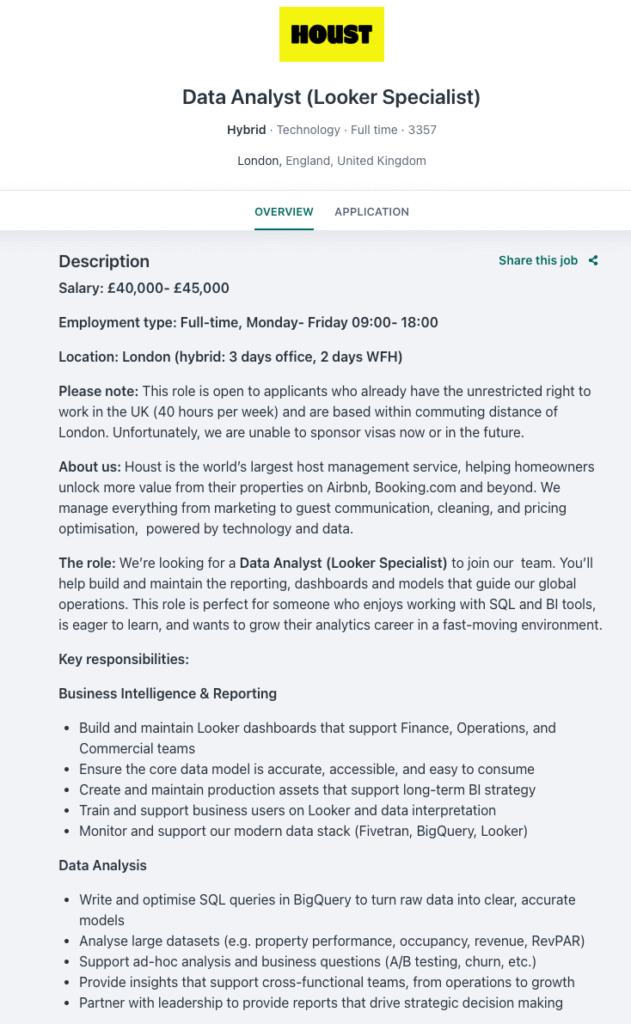
What this job description does well:
This Data Analyst job description makes core information easy to find.
Salary range, employment type, and working model are clearly displayed at the top, which helps candidates quickly understand whether the basics align with their expectations. An “About us” paragraph explains who the company is and what it does, which is helpful if the brand is less widely known.
Responsibilities are grouped into several sections, each covering a different focus area, which breaks up the text and makes it easier to read. The requirements section includes specific examples of tools and software, giving candidates a concrete sense of the technical skill set required.
The description also touches on culture, notes growth and development opportunities, and highlights benefits such as an extra day off on birthdays and “pawternity” leave for new pet parents.
How to apply this to your own job description:
- Place salary range, employment type, and working model at the top of the posting
- Group responsibilities into logical categories (for example, reporting, stakeholder management, forecasting, data quality)
- List specific tools, technologies, or languages used in the role so candidates can accurately assess fit
- Mention learning and development opportunities that are relevant to data and analytics professionals
- Use benefits to reinforce your culture, such as wellbeing days, flexible work, or learning budgets.
6. Marketing job description example
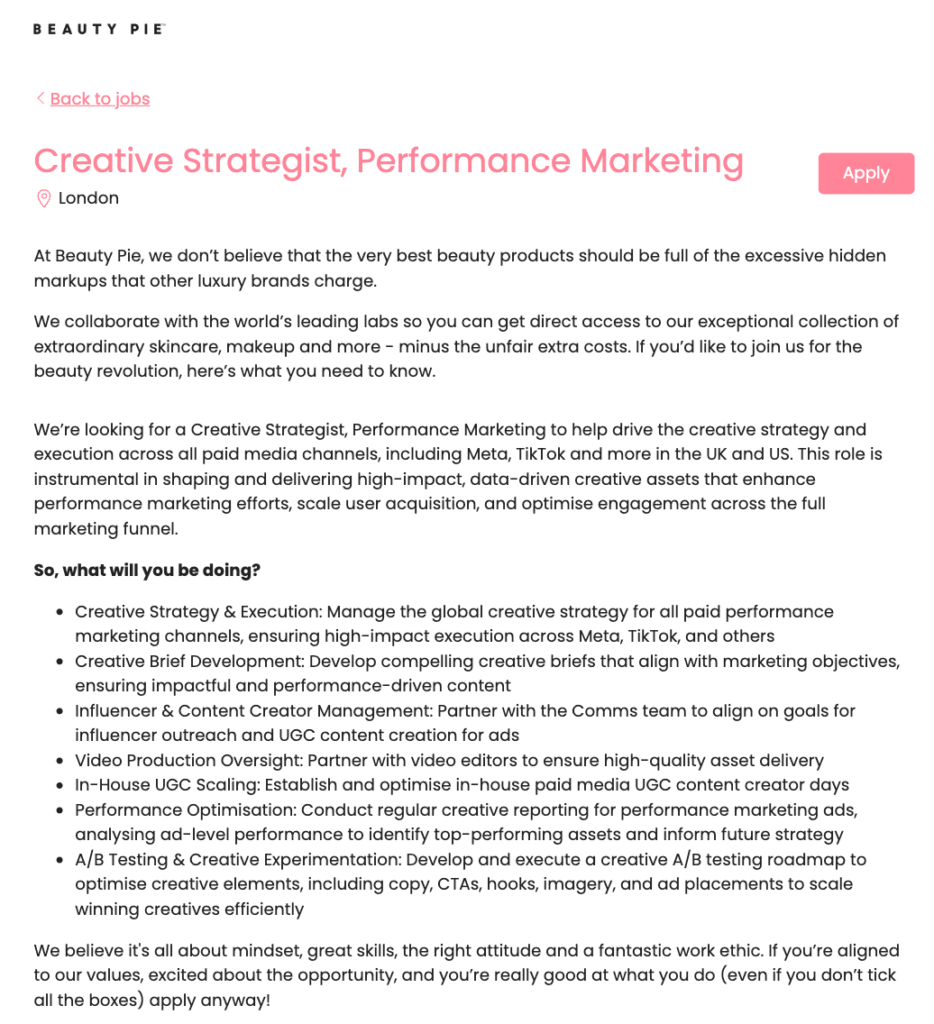
What this job description does well:
The marketing job description from Beauty Pie stands out due to its clear and engaging opening, which effectively communicates the company’s unique value proposition.
Early in the posting, the hiring team summarizes the type of person they are looking for in one sentence, which helps candidates quickly understand whether they might be a match. The description encourages people to apply even if they do not meet every single requirement, which can support a more diverse pipeline.
Values are brought to life in a “What makes someone ‘Beauty Pie‘?” section, and the company shares real statistics to support its diversity and inclusion commitments, while acknowledging where progress is still needed. The culture and working environment are described in concrete terms, and the hybrid working model is directly linked to concepts such as trust and collaboration.
The benefits package is modern and tailored to the needs of their largely female workforce, with a focus on health, wellbeing, and work-life balance. The tone throughout is conversational yet clear, and the application form is positioned directly underneath the job description, minimizing friction.
How to apply this to your own job description:
- Use your opening paragraph to clearly state your value proposition and what your organization does
- Add a one-sentence description of the type of candidate who will likely thrive in the role or team
- Encourage candidates to apply even if they do not meet every requirement, especially for senior or specialist roles
- Bring your values and DEI commitments to life with concrete examples or data instead of generic statements
- Place the application form or main call-to-action directly below the job description to make the application process easy.
7. Customer service job description example
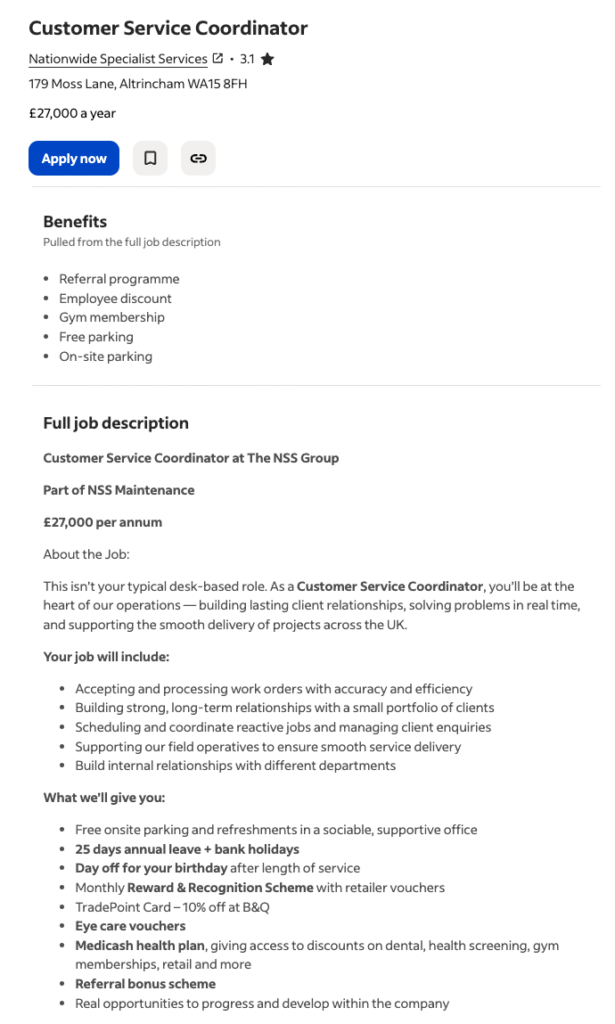
What this job description does well:
This Customer Service Coordinator job description shows that even common roles can be positioned in an engaging way. It emphasizes that the role is not a typical desk-based job, which helps correct assumptions and can attract candidates looking for variety.
The description itself is short and clear, making it easy to read on mobile devices and well-suited to candidates who are scanning multiple postings. It outlines a broad range of benefits and is open about the use of an AI recruitment assistant in the hiring process, explaining what candidates can expect.
The job posting also sets expectations about the next steps after applying and includes a link to interview tips to support applicants.
How to apply this to your own job description:
- Identify and highlight what makes the role different from a typical job in the same category
- Keep the description concise and optimized for mobile, using short paragraphs and clear headings
- Be transparent about any AI tools or assessments used in your recruitment process and explain how they work
- Clearly describe the next steps after applying, including expected timelines and stages. Offer links to relevant resources (for example, interview tips or FAQs) to support candidates.
Difference between job description and job specification
Summarizes what the job involves: its purpose, key tasks and responsibilities, reporting lines, and working conditions. Many organizations also include a high-level view of required experience and qualifications.
Focuses on the person you are looking for. It sets out the knowledge, skills, education, experience, and other requirements that are essential or desirable for success in the role. This document is typically used internally by HR and hiring managers to guide selection decisions.
In practice, many employers combine both into a single document or broader job profile. If you want to formalize this, you can use a job profile template that captures the role content and the person requirements in one place.
How to write a job description
Step 1. Conduct a job analysis
Start by understanding the role in detail. Discuss with the hiring manager and relevant stakeholders, review any existing documentation, and, where possible, consult with high-performing employees in similar roles to understand their day-to-day responsibilities.
From this, create a list of essential “must-have” responsibilities and skills and a separate list of “nice-to-have” elements. This helps you define the role clearly without making the requirements unnecessarily restrictive. For a structured approach, see AIHR’s job analysis guide.
Step 2. Tailor the description to your target audience
Consider who you are writing for. A specialist software engineer will expect detailed information about technologies, architecture, and working methods, while an entry-level customer service role may require more emphasis on training, support, and behavioral competencies.
Use language and examples that match the level and function of the role, and avoid internal jargon that external candidates will not recognize.
Step 3. Structure the content clearly
Follow a consistent structure across your job descriptions, such as:
- Job title and description
- Short role summary (two to four sentences)
- Key responsibilities
- Skills and requirements (must-haves and nice-to-haves)
- Compensation and key benefits
- How to apply and what happens next
- About the company
- Equal opportunity statement
Use headings, short paragraphs, and bullet points to make the posting easy to scan. Most candidates will skim first and only read in detail if the basics align.
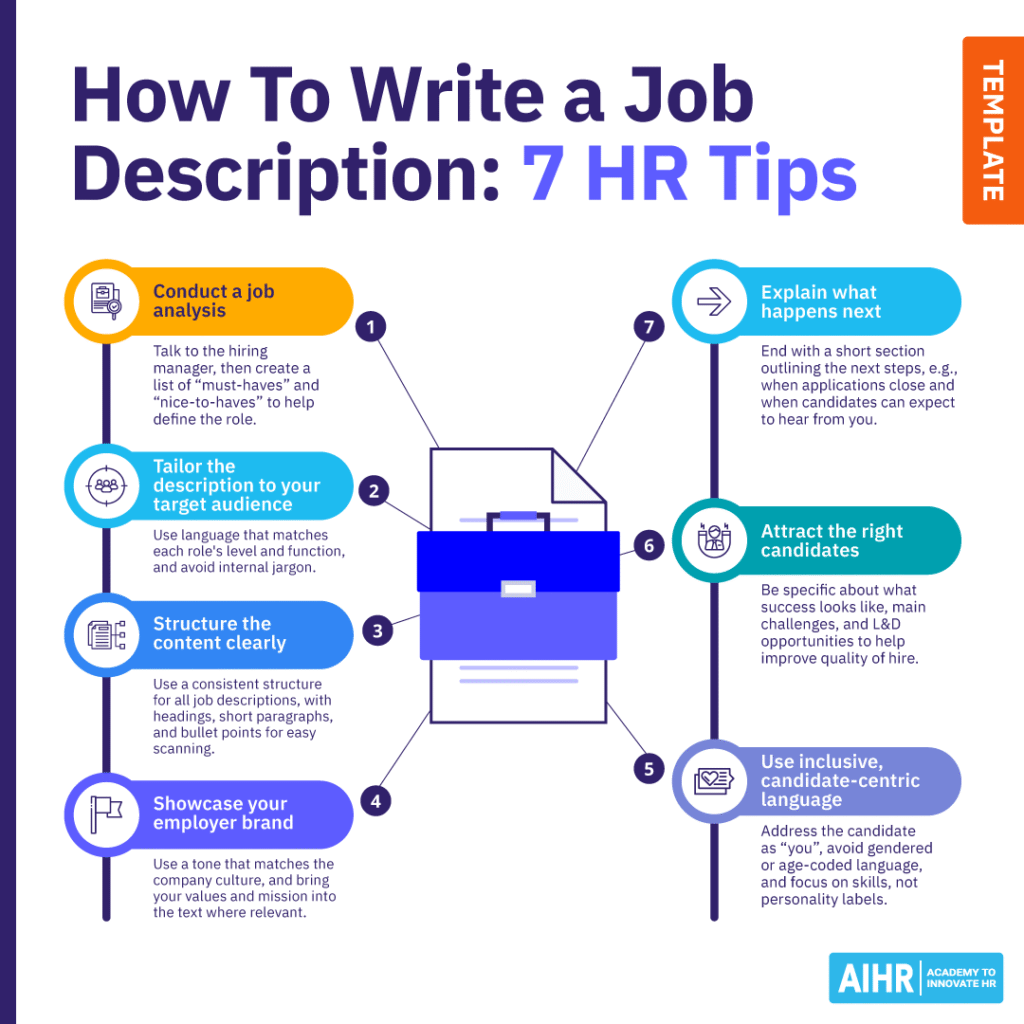
Step 4. Showcase your employer brand
Ensure that your job descriptions reflect your organization’s tone and style. Use a tone that matches your culture, whether more formal or more conversational. But keep it professional and clear.
Bring your values and mission into the text where they are relevant, and, when possible, include short examples or employee quotes that illustrate how those values are reflected in everyday work.
Step 5. Use inclusive, candidate-centric language
Write with inclusion in mind. Address the candidate as “you” where appropriate, and remove gendered or age-coded language. Focus on skills, competencies, and outcomes rather than personality labels.
Separate must-have requirements from nice-to-haves to avoid unintentionally narrowing your candidate pool, particularly for underrepresented groups.
Step 6. Attract the right candidates (and deter the wrong ones)
A good job description is selective. It should attract candidates who are likely to be successful and engaged in the role and discourage those who would not be a good match.
To do that, be specific about what success looks like, what the main challenges are, and what you offer in return in terms of development, flexibility, and culture. Clear expectations at this stage can improve both quality of hire and retention.
Step 7. Explain what happens next
End with a short section that outlines the next steps. Let candidates know when applications close, if applicable, when they can expect to hear from you, and what the first stage of the process will look like.
For example, you might state that you review applications weekly and invite shortlisted candidates to a short screening call. This kind of transparency fosters trust and enhances a positive candidate experience, even for those who are not selected.
Free job description template
To make the process easier, we have created a job description template you can adapt for any role. You can use this template across different functions and levels and adjust it for specific job boards or talent segments.
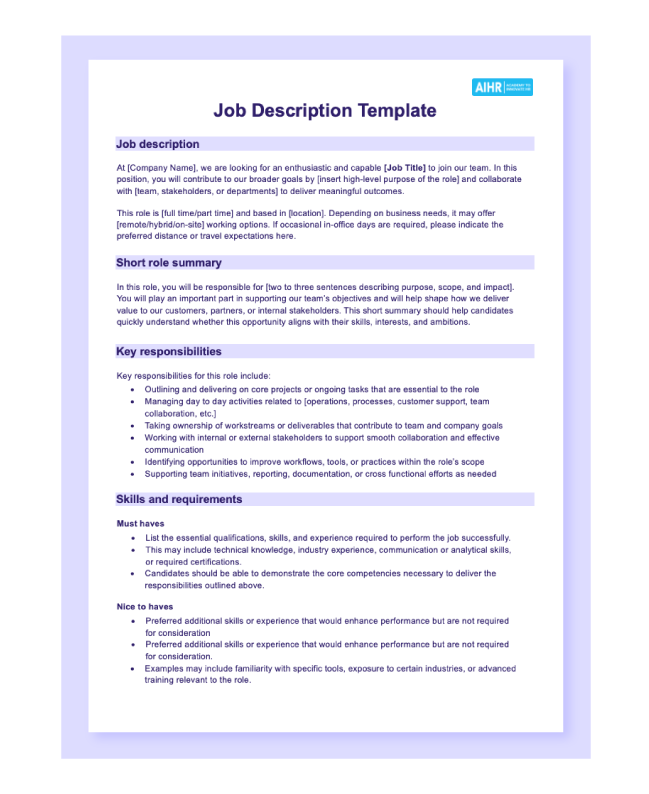
If you want role-specific examples, explore our job description resources on the HR Career Hub, including:
- HR Business Partner job description
- Learning and Development Consultant job description
- Head of People Analytics job description
To sum up
Effective job descriptions help you communicate your employer brand, attract the right candidates, and set clear expectations for performance and growth. Use the job description examples in this article to see what organizations are doing well and adapt those ideas to your own context. Combine them with the free job description template so that you have a consistent, repeatable way of writing job postings for future roles.
If you want to build a more strategic approach to attracting and selecting talent, consider AIHR’s Strategic Talent Acquisition Certificate Program, where you can deepen your skills in employer branding, candidate experience, and data-driven hiring.