

Choosing a learning and development course starts with three questions: What skills do you need to build? Do you need a short course or a recognized credential? And how well does the program support your career goals? With so many options available, the challenge is finding a course that offers practical value now and helps you grow over time.
HR and learning and development (L&D) roles now require more than organizing training. Professionals need to design learning strategies, close skills gaps, and show measurable impact. This guide explains what a learning and development course is, how it differs from certifications and certificate programs, and how to choose the right option for your goals.
Contents
What is a learning and development course?
Learning and development course vs. certification vs. certificate program
How to choose the right learning and development course
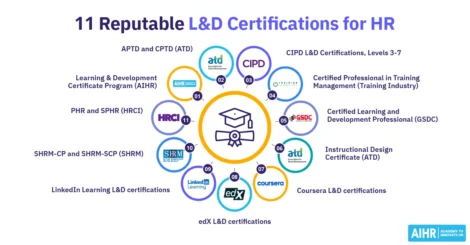
6 best L&D courses, certifications, and certificate programs to consider
Are learning and development courses worth it?
FAQ
Key takeaways
- Company culture drives business success and impacts employee motivation and retention.
- A strong company culture includes clear values, trustworthy leadership, and a respectful work environment.
- Organizations must intentionally shape their culture through specific behaviors and leadership choices.
- Positive company culture examples include Patagonia, Pixar, and Costco, showcasing values in action.
- To improve company culture, focus on communication, employee feedback, and aligning practices with core values.
What is a learning and development course?
A learning and development course is structured learning that helps HR and L&D professionals build knowledge or skills related to workplace learning. In practical terms, a course usually focuses on one topic or a defined set of capabilities, such as how to design training, facilitate learning, identify skill gaps, or measure whether learning is working.
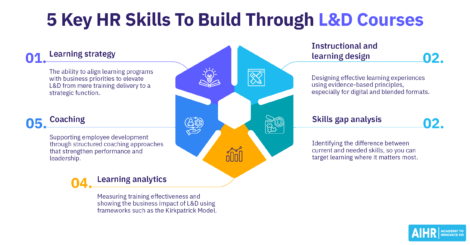
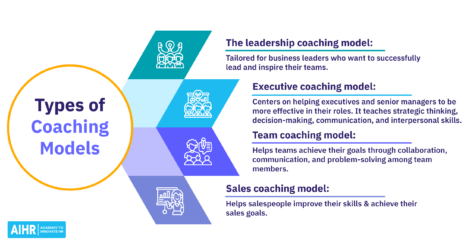
These courses are often taken by L&D specialists, HR professionals, talent development practitioners, people managers, and anyone responsible for employee growth or capability building. Depending on the topic, they can help learners build foundational L&D knowledge or develop more specific skills, such as instructional design, facilitation, digital learning, stakeholder management, coaching, or learning analytics.
Learning and development courses vary widely in scope. Some give you a broad introduction to L&D, while others focus deeply on one area. That’s why the best course depends less on the label and more on the specific skills and outcomes you want to gain.

Learning and development course vs. certification vs. certificate program
A learning and development course is usually a single learning experience focused on one topic or skill area. It may be short or in-depth, but it typically has a narrower scope and is often chosen to solve a specific development need.
A learning and development certification usually leads to a recognized credential after you complete assessments or meet set requirements. In many cases, the focus is not only on learning content but also on proving competence and gaining professional recognition.
A learning and development certificate program is often broader than a single course. It may include several modules or courses within one learning path. It usually culminates in a certificate of completion and is designed to help you build a more comprehensive skill set in a specific area.
Learning providers don’t always use these labels consistently, which can make it a bit confusing. One provider may call something a course, while another may use the term certification or a certificate program for a similar offer. So, look beyond the name to understand what it covers, whether you will receive a credential, and whether the program is designed for skill-building, professional recognition, or both.
How to choose the right learning and development course
The best learning and development course is not always the longest or most recognizable one. It is the one that fits your current role, supports your career direction, and gives you skills you can apply in practice.
Here’s a practical way to compare your options:
1. Start with your current role and experience level
Your starting point should shape your choice. If you are new to learning and development, look for a course or certificate program that builds a strong foundation in topics such as instructional design, adult learning, training delivery, and learning strategy.
If you already work in L&D, you may get more value from a specialized option. This could include learning analytics, stakeholder management, facilitation, digital learning, or consulting with the business.
2. Decide how much depth you need
Not every learning option offers the same level of depth. In most cases, the choice comes down to three formats:
- Short course: Best if you want a quick introduction or focused upskilling in one topic.
- Certificate program: Best if you want broader, structured skill-building across several topics.
- Certification: Best if you want a credential that may signal expertise or assessed competence.
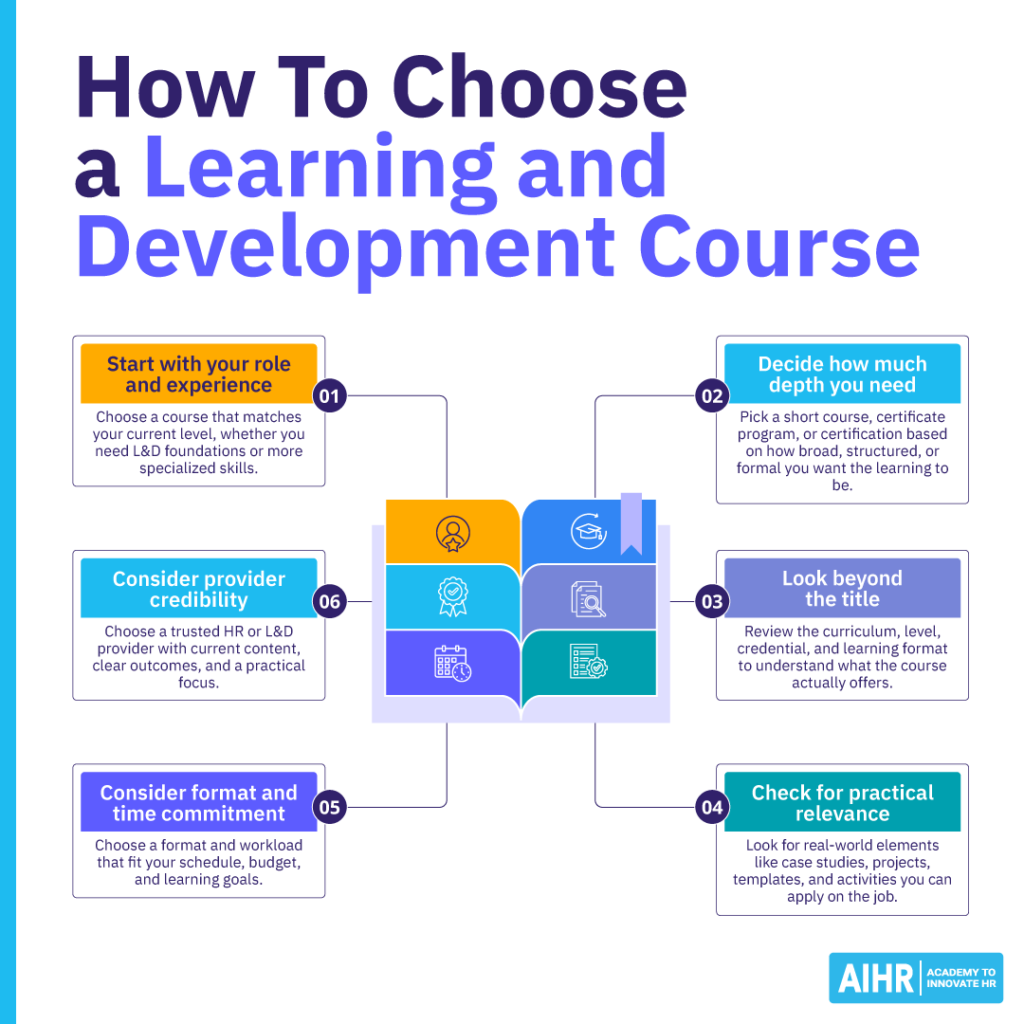
3. Look beyond the title
A course can sound impressive but still be too basic, too theoretical, or too narrow for your needs. Before you choose, look closely at what you will learn, what credential or proof of completion you will receive, and whether the program is designed for skill-building, career progression, or both.
You should also check:
- Whether the course is beginner, intermediate, or advanced
- Whether it focuses on theory, application, or both
- Whether it includes assessments, projects, or practical assignments.
4. Check the curriculum for practical relevance
The strongest learning and development courses connect clearly to real work. Look for content that helps you solve the kinds of problems you are likely to face in practice, such as designing training, improving learner engagement, measuring impact, partnering with stakeholders, or building learning journeys.
Also, pay attention to whether the program includes real-world applications, such as:
- Case studies
- Assignments or projects
- Templates or frameworks
- Practice activities you can use on the job.
These elements often make the difference between learning a concept and being able to apply it.
5. Consider format, flexibility, and time commitment
A course only helps if you can realistically complete it. Self-paced learning gives you more flexibility, which can be useful when balancing work and study. Live online learning offers more structure, accountability, and interaction.
At the same time, look at the total time commitment and cost. A longer or more expensive program may be worth it, but only if it aligns with your goals and delivers enough value in return.
6. Consider provider credibility
Provider credibility matters, especially if you want the training to support career progression. Look at whether the provider is known in the HR or L&D space, whether the content feels current, and whether the program is clearly built for practitioners rather than general learners.
A credible provider should also make it easy to understand the course outcomes, format, and target audience.
6 best learning and development courses, certifications, and certificate programs to consider
There are several online learning and development options for HR professionals, from short courses to formal certifications. The right choice depends on whether you want to build foundational knowledge, strengthen a specific skill set, or earn a credential that supports long-term career growth.
1. AIHR Learning & Development Certificate Program
This AIHR Learning & Development Certificate Program is designed for HR professionals who want to build practical L&D skills and transition into learning-focused roles. It is not aimed at experienced L&D specialists, but at HR practitioners looking to upskill.
Core focus areas include instructional design, learning strategy, skills-based learning, and measuring learning impact. The program focuses on designing, delivering, and evaluating learning initiatives.
Participants can expect structured, applied learning with a certificate of completion. It can be a good fit for HR professionals who want to move into L&D roles or take on more learning responsibilities within broader HR positions.
2. ATD Instructional Design Certificate
The ATD Instructional Design Certificate is available in both live online and in-person formats, focused specifically on building instructional design capability.
It covers needs analysis, designing learning experiences, developing content, and evaluating learning effectiveness. The program is aimed at professionals who want to build or strengthen instructional design skills.
Learners receive an ATD certificate of completion. It can support career growth by helping professionals specialize in instructional design or move into roles that require building structured learning programs.
3. CIPD Learning & Development Courses
The CIPD Learning & Development courses include a range of online qualifications at different levels.
These programs focus on learning strategy, organizational development, talent development, and people practice. They are suited to professionals who want a broader and more formal qualification in L&D.
Learners receive a CIPD qualification, depending on the level. These qualifications can support long-term career progression in L&D and HR roles, especially for professionals looking for a more formal pathway.
4. Coursera Instructional Design Foundations and Applications (University of Illinois)
The Instructional Design Foundations and Applications is a fully online, single, standalone course offered by the University of Illinois at Urbana-Champaign.
It covers instructional design models, learning theory, and how to design effective training programs. It is suitable for beginners or professionals exploring L&D as a career path.
Learners receive a certificate of completion. It is a useful starting point if you want to build foundational knowledge before committing to a larger program.
5. LinkedIn Learning Become an Instructional Designer
The Become an Instructional Designer learning path on LinkedIn Learning is a flexible, self-paced option.
It focuses on instructional design basics, e-learning development, and practical tools used in learning design. It is best suited to professionals who want a low-commitment way to explore L&D skills.
Learners receive a certificate of completion for completed courses. It supports career growth by helping you build baseline knowledge and decide whether to pursue more advanced training.
6. ATD Applying AI in Learning & Development Certificate
The ATD Applying AI in Learning & Development Certificate is a live, instructor-facilitated three-day program available in both in-person and virtual formats. It is open to all talent development professionals who want to build AI-enabled L&D skills.
Core focus areas include using generative AI to support learning design and improve L&D workflows. Learners build practical knowledge of how AI can be applied in learning and development settings.
Participants receive an ATD certificate of completion. It can support career growth by helping professionals add a more modern, digital capability to their L&D skill set.
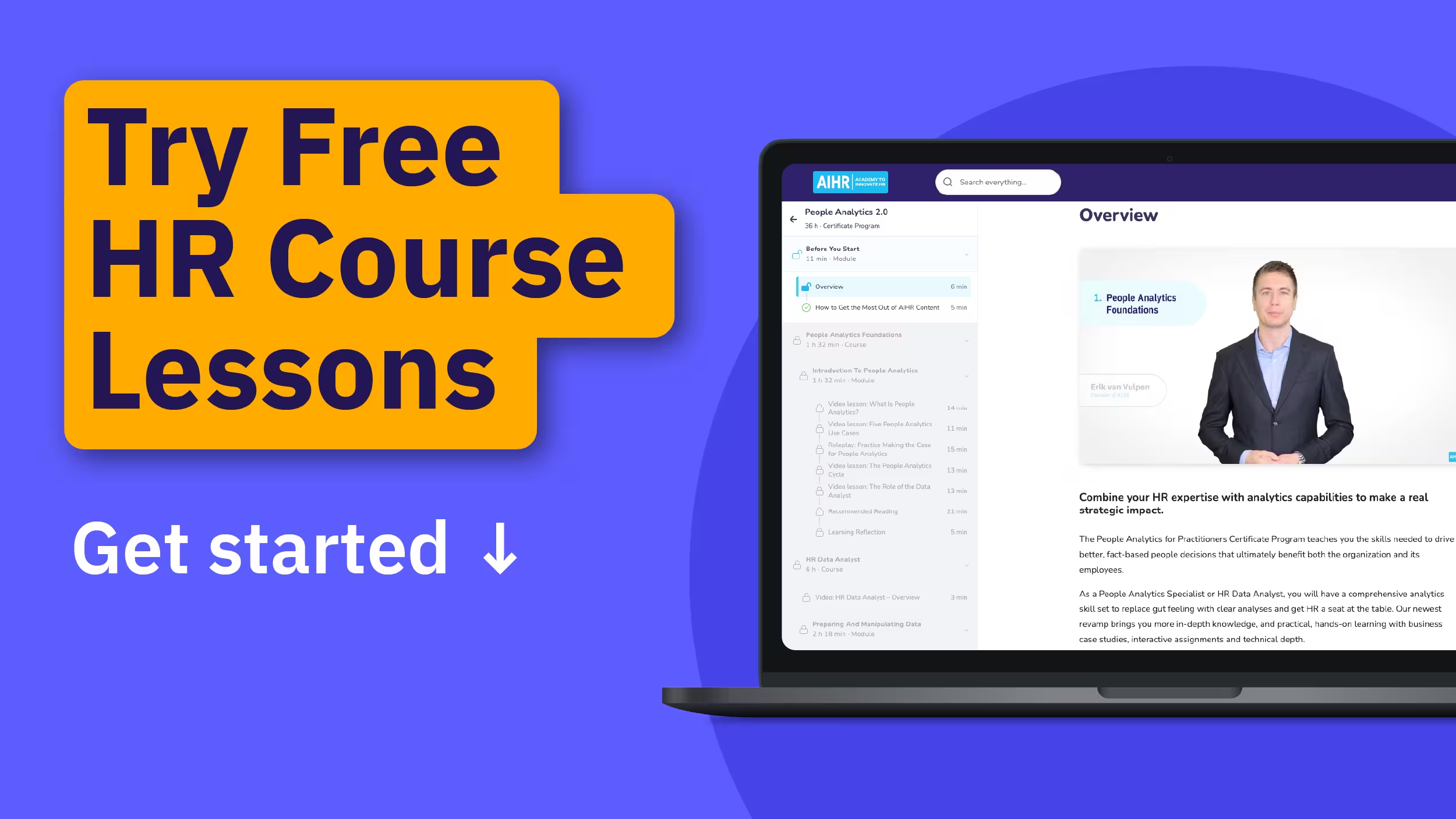
Choosing the right L&D course is easier when you can see how the learning connects to real workplace impact.
AIHR’s Demo Portal lets you explore selected lessons and resources from the Learning & Development Certificate Program, so you can get a feel for how the program helps you:
✅ Design an L&D strategy that aligns learning with business priorities
✅ Identify current and future skills gaps using practical analysis methods
✅ Create digital learning experiences that fit learner needs and organizational goals
✅ Use learning analytics to measure the effectiveness and impact of L&D initiatives
🎓 Explore the demo lessons and discover how AIHR can help you build more strategic, data-driven L&D expertise.
Are learning and development courses worth it?
Yes. Learning and development courses are worth it for HR and L&D professionals who want to build relevant skills, enhance their credibility, and advance their careers.
The value depends on choosing the right option for your goals. A shorter course may work well if you want to build one skill quickly. A certificate program may be a better fit if you want broader capability and a more structured learning path. A certification can be useful if you want formal recognition of your knowledge or experience.
Courses tend to deliver the most value when you can apply the learning in your role. That might mean designing better learning experiences, improving facilitation, measuring learning impact, or preparing for a move into an L&D-focused role.
The practical takeaway is simple: learning and development courses are worth it when they help you build relevant skills, grow in your career, and choose a format that fits your needs.
To sum up
Choosing the right learning and development course starts with being clear on your goals, your experience level, and the skills you want to build. The best option is the one that fits your needs in practice, whether that means a short course for targeted upskilling, a certificate program for broader capability, or a certification for professional recognition.
Because providers use different labels, compare options carefully. Focus on what you will learn, the credential you will receive, and how well the course supports your day-to-day work and long-term career direction.
Building strong L&D skills can help you take on more strategic work in HR, from identifying skill gaps to designing learning that supports business needs. If you want a structured way to build those capabilities, AIHR’s Learning & Development Certificate Program may be a useful next step.
FAQ
A learning and development course is a structured program that helps HR and L&D professionals build skills related to workplace learning, such as instructional design, facilitation, and measuring learning impact. It can be a short, focused course or part of a broader learning path.
Yes. Online learning and development courses are worth it when they help you build practical, job-relevant skills and support your career goals. The flexibility of online learning also makes it easier to fit development into your schedule.
Start by defining your goals, current experience level, and the skills you want to build. Then compare options based on content, format, time commitment, and the type of credential offered. The best choice is the one that aligns with your role and career direction.
Yes, especially when they come from credible providers and demonstrate practical skills. Certifications can strengthen your credibility, show commitment to professional development, and help you stand out for L&D and HR roles.