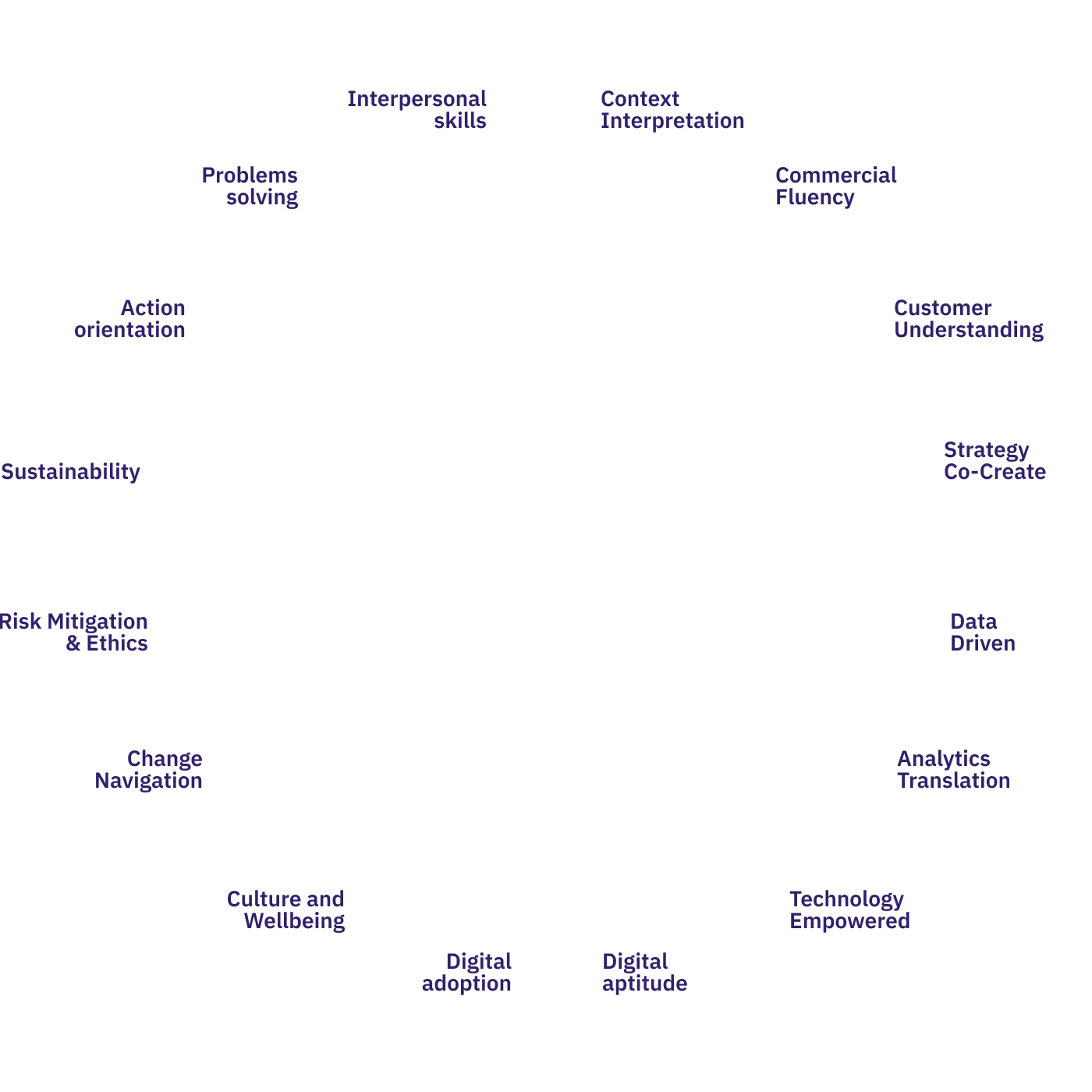
Your score on the Business Acumen competency indicates that you might have had limited opportunity and exposure to developing business acumen-related knowledge and skills. This could suggest that you could benefit from improving your understanding of industry developments, market, and economic trends, key business objectives, and value drivers.
Knowledge in these areas can significantly impact your ability to devise effective strategies, plan for the future, and ensure that HR initiatives can positively impact business performance and growth. In addition, improving your business acumen can help you to build and provide solutions that truly serve employees’ needs while creating and maintaining a positive employee experience.
Your current level of business acumen could negatively impact your ability to align HR initiatives with the organization’s strategy, make informed decisions, gain influence, serve employee needs, and drive innovation. Developing business acumen skills is crucial for HR professionals to be effective strategic partners who can contribute to the organization’s overall success.
Based on your competency score, you may need to focus on improving your Data Literacy skills and knowledge. Specifically, your results suggest that you could benefit from enhancing your ability to critically analyze data, extract relevant information, and use appropriate data for specific purposes.
Being data-driven means utilizing data skills to create, analyze, and apply data for evidence-based practices. In addition to being able to analyze and use data, it is also crucial for HR practitioners to be able to translate and communicate complex people data into an understandable language for the business to understand, take action on, and embed in their decision-making processes.
Data literacy helps HR practitioners analyze, interpret, and communicate people data to derive actionable insights and inform decision-making to achieve strategic business objectives. Improving your Data Literacy skills could positively impact your ability to leverage data effectively, drive evidence-based HR practices, and contribute strategically to your organization’s success.
Your score suggests that you could benefit from enhancing your skills and knowledge related to digital HR and technology. More specifically, this could indicate that you currently need to gain a greater understanding of digital tools and technologies and how digital HR solutions can contribute to improved HR and business practices.
The Digital agility competency is composed of three dimensions. The first dimension relates to creating an environment ready for digital adoption by using technology in your professional capacity and integrating technology in the delivery and improvement of HR services. Digital agility is also seen as being dependent on being motivated to learn and experiment with digital applications and creating a work environment and the capabilities that enable digital transformation.
In today’s digital world, where technology is constantly evolving, having limited knowledge and skills in digital HR and technology can significantly impact your performance in an HR role. This can lead to inefficient HR processes, reduced employee engagement, difficulties in talent acquisition and management, ineffective HR analytics and reporting, and missed opportunities for HR innovation. HR practitioners must develop digital HR agility and stay updated on technology trends to enhance performance, drive efficiency, and strategically contribute to HR and organizational success.
Based on your score, it is possible that you could benefit from improving your skills and knowledge in this area. This could affect your ability to create a culture that prioritizes people, improve employee productivity and well-being, manage change effectively, and maintain ethical and sustainable standards within the organization.
The People Advocacy competency comprises four dimensions, which include driving culture and well-being, managing change, promoting ethical conduct, and leveraging HR to add value to the community and society.
HR professionals must develop and enhance their people advocacy skills through training, practice, and feedback. Doing so will enable you to better understand and advocate for employees’ needs and interests, promote the capabilities to successfully navigate change, and build a more sustainable, ethical, and successful organization.
Your level of Execution Excellence suggests that you could benefit from improving your skills and knowledge related to driving results, solving problems, and engaging with people. Such skills are essential to enable practitioners to effectively align HR practices with business objectives, tackle complex challenges, motivate employees, build strong relationships, navigate change, drive continuous improvement, and increase the strategic value of the HR function.
As an HR professional, your ability to deliver impact within the organization relies on your capacity to implement actionable and adaptive plans, find practical solutions, and use interpersonal skills to achieve shared results.
By seeking opportunities to enhance your execution excellence, you will improve your performance and contribute to the organization’s overall growth and success. These capabilities help to position HR as a strategic partner by aligning HR practices with business goals, contributing to decision-making processes, and fostering a positive work environment.
Specialist competencies refer to the competencies you need to perform in your functional specialization within HR. Functional HR specializations are grouped into six main categories:
View the full overview of specialist competencies
Note: Specialist competencies are currently not measured by this assessment.
Advisors work in the business environment and spent most of their time with business stakeholders. They translate business needs into HR solutions, speak the language of the business, and ensure that HR priorities are relevant, aligned, and create business impact.
Strategists set the HR strategy for the organization. They spent their time co-creating strategy with business leaders, translating business strategy into a people strategy, and translating business needs into HR solutions.
The service champion provides efficient HR services that create an engaging and meaningful employee experience. They help to drive operational excellence across multiple HR touchpoints.
The solution architect is an expert in HR practices. They design, operationalize, and implement HR in the business. They keep up to date with HR trends and are seen as an expert in one or more HR specializations.
Become the ultimate all-round HR Pro by expanding your skill set with modern & relevant HR skills.